Tax Burden Eased, but Regulatory Administration Burden Increased
"Labor Regulation" Burden Hits Record High... Reveals Labor Market Rigidity
It has been found that the regulatory burden perceived by companies has increased compared to 10 years ago. This is analyzed to be the result of a combination of factors such as rigid labor regulations including fixed working hours and burdens related to carbon emissions.
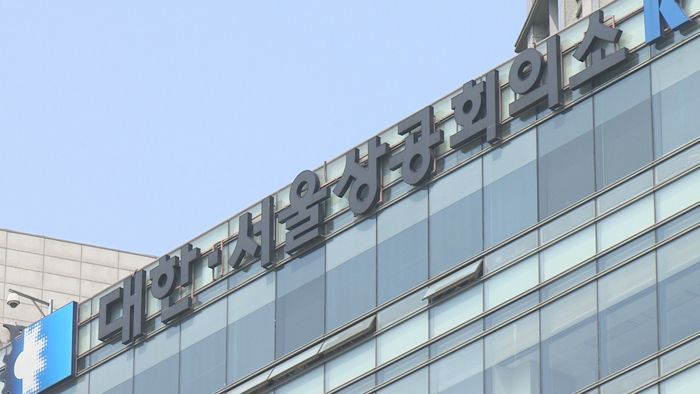
The Korea Chamber of Commerce and Industry (KCCI) announced on the 17th that these results were derived through an online roundtable discussion themed on policy evaluation over the past 10 years. The roundtable, broadcast live on YouTube, was attended by Park Il-jun, Executive Vice Chairman of KCCI, Ahn Jong-beom, Director of the Policy Evaluation Institute, Nam Hyung-gi, Deputy Minister of the Office for Government Policy Coordination, Lee Hyuk-woo, Professor at Paichai University, Jung Ji-eun, CEO of Codit, and Lee Se-bi, Youth Advisor at the Ministry of Strategy and Finance.
The Business Burden Index (BBI) is a numerical measure created by the Policy Evaluation Institute to quantify the level of burden companies feel from taxes, quasi-taxes, regulations, and administration. After the last announcement in 2015, the same structured survey was conducted in March this year targeting 913 companies nationwide, applying weights according to industry, region, and size. A baseline of 100 means 'burdensome' if exceeded, and 'not burdensome' if not.
The survey results showed the overall Business Burden Index at 105.5. Although this is a slight decrease from 109.5 in 2015, it still exceeds the baseline, indicating that companies feel burdened by various obligations.
Tax burden decreased from 120.9 to 100.7, and quasi-tax burden dropped from 122.5 to 112.5. Ahn Jong-beom, Director of the Policy Evaluation Institute, analyzed, "There were changes in tax rates, such as the corporate tax top rate adjusting from 27% in 2012 to 24% in 2023," adding, "It appears that the corporate tax burden based on profits decreased as companies’ operating profits declined."
Regulatory burden significantly increased from 88.3 ten years ago to 102.9. Burdens increased across all areas including labor regulations (112.0), entry regulations (101.1), environmental regulations (99.3), and location/building regulations (99.2).
The Policy Evaluation Institute noted, "It is important that companies feel a significant burden from labor regulations," emphasizing, "This clearly reflects the extremely low employment flexibility in our labor market centered on the 52-hour workweek regulation, and the pressure from increased regulatory laws mainly by the National Assembly."
Administrative burden was also found to be substantial. It rose by 34 points from 77.0 ten years ago to 111.0 this year. This is analyzed to be due to increased frontline regulations by local governments and administrative delays and practices that increase companies’ perceived burden.
Park Il-jun, Executive Vice Chairman of KCCI, expressed concern, saying, "Although tax and quasi-tax burdens have slightly decreased, the burden from regulations and regulatory administration has surged," and emphasized, "Impact assessments should be conducted on regulatory legislation made by the National Assembly to find reasonable alternatives, and the regulatory behavior of frontline local governments must also change." He added, "In a situation of great global uncertainty, we must boldly change the domestic regulatory environment to find opportunities."
Nam Hyung-gi, Deputy Minister of the Office for Government Policy Coordination, said, "The Business Burden Index results provide significant implications for the government's regulatory innovation direction," and stated, "The Office for Government Policy Coordination and KCCI plan to investigate the corporate policy environment for field-centered regulatory innovation in the future and will strive harder to reflect the voices from the field."
© The Asia Business Daily(www.asiae.co.kr). All rights reserved.
![Clutching a Stolen Dior Bag, Saying "I Hate Being Poor but Real"... The Grotesque Con of a "Human Knockoff" [Slate]](https://cwcontent.asiae.co.kr/asiaresize/183/2026021902243444107_1771435474.jpg)















