Explaining Instagram Acquisition in Antitrust Trial
"Tried Dozens of Apps but Success Was Difficult"
Mark Zuckerberg, CEO of Meta, who has been engaged in a legal battle with the U.S. Federal Trade Commission (FTC) over the acquisition of Instagram and WhatsApp more than a decade ago, testified on the 15th (local time) that the reason for acquiring Instagram was because the camera application was better than Facebook (Meta) at the time.
According to The New York Times (NYT) and the Associated Press (AP), Zuckerberg appeared as a witness on the second day of Meta's antitrust trial held at the U.S. District Court in Washington, D.C., and responded to the FTC's questions accordingly.
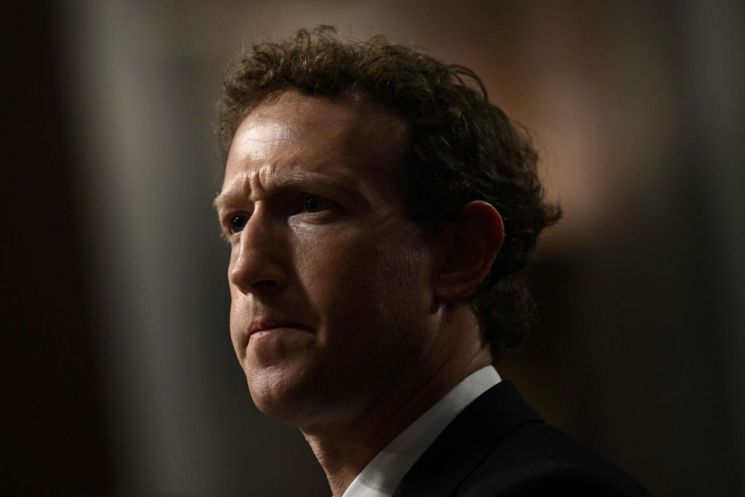
When asked by the FTC's attorney whether Zuckerberg thought Instagram, which was rapidly growing at the time of acquisition, could pose a threat to Meta (then Facebook), he replied that Instagram had better camera features than Facebook at that time. The term "camera features" refers to functions within the mobile app including photo and video shooting, editing, applying filters, and sharing.
He stated, "We were analyzing whether to 'build it ourselves or acquire it' while developing our own camera app," adding, "We judged that Instagram was better in that regard, so we thought it was better to acquire it."
He continued, "Creating a new app is difficult, and most of the attempts we made did not work well," adding, "We tried to create dozens of apps, but the majority of them were unsuccessful."
He also mentioned that it is common for companies to compare the pros and cons of developing new products internally versus acquiring startups that have products they want to add.
This statement came during the FTC's process of demanding explanations about emails exchanged more than a decade ago between Meta executives, including former COO Sheryl Sandberg. The emails contained content about past acquisitions and threats from competitors. An email exchanged in 2013 included instructions to block overseas competitors, including Asian messenger apps such as Kakao and WeChat, from advertising on Facebook.
Foreign media evaluated that Zuckerberg's remarks appear to support the FTC's claim that Meta has employed a "buy or bury" strategy of acquiring or eliminating potential competitors over the past decade.
Zuckerberg refuted the claim that Instagram was acquired to neutralize a threat. Meta argues that even if such intentions existed in the past, they are not relevant to the current situation.
The FTC also claims that Meta has maintained a monopoly in the platform market for sharing content with family and friends. It views Snapchat and MeWe, a privacy-focused app launched in 2016, as major competitors in the U.S. However, Meta argues that the scope of the social networking service (SNS) market defined by the FTC is too narrow, excluding major competitors such as TikTok and YouTube.
Regarding the claim that Meta did not invest after acquiring Instagram, Zuckerberg dismissed it, saying, "We made tremendous investments after acquiring Instagram."
Meta acquired Instagram for $1 billion in 2012 and WhatsApp for $19 billion in 2014. In response, the FTC filed a lawsuit in 2020, alleging that these acquisitions were illegal monopolistic acts that hindered market competition. If the FTC wins, Meta may be forced to divest the two apps.
© The Asia Business Daily(www.asiae.co.kr). All rights reserved.
![Clutching a Stolen Dior Bag, Saying "I Hate Being Poor but Real"... The Grotesque Con of a "Human Knockoff" [Slate]](https://cwcontent.asiae.co.kr/asiaresize/183/2026021902243444107_1771435474.jpg)















