Ulsan Sees Largest Increase Among Non-Metropolitan Areas
Lifting of Toheoguyeok and Expectations of Interest Rate Cuts Overlap
Impact of Expanded Toheoguyeok Designation Remains to Be Seen
The nationwide housing market outlook as seen by housing developers has recorded an upward trend for three consecutive months. This is analyzed to be due to the spread of rising house prices to major areas in the Seoul metropolitan area following the lifting of the Land Transaction Permission Zone (Toheoguyeok), combined with expectations of interest rate cuts.
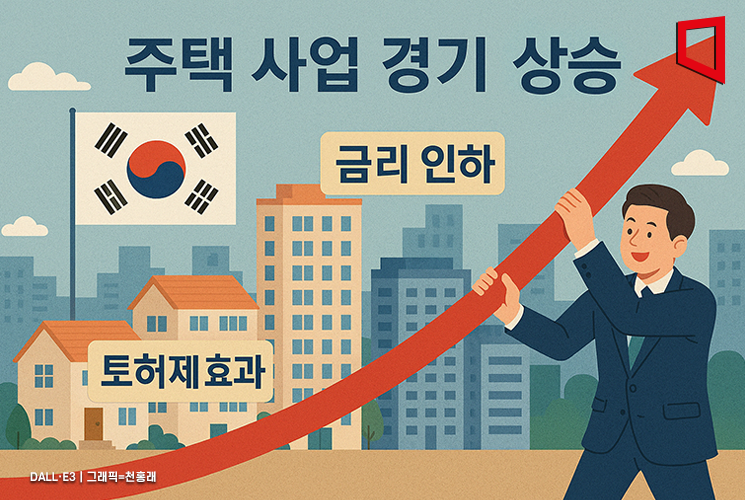
According to the 'April Housing Business Outlook Index' by the Korea Research Institute for Human Settlements on the 15th, the national index stood at 85.5, an increase of 11.5 points compared to the previous month. This index had fallen to 61.6 in January, down 14.1 points from the previous month, but turned upward starting in February.
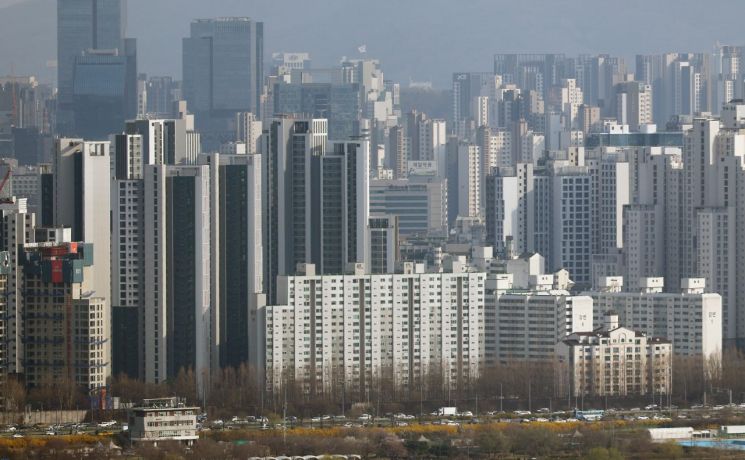 View of apartments in Seocho-gu and Gangnam-gu areas as seen from near the Han River in Seoul. Photo by Yonhap News
The Housing Business Outlook Index indicates that when the index exceeds the baseline of 100, a higher proportion of companies expect the housing business to improve.
By region, the Seoul metropolitan area was forecasted at 84.2, up 18.8 points. Gyeonggi Province rose 19.5 points (60.5→80.0), Seoul increased 18.6 points (79.0→97.6), and Incheon went up 18.4 points (56.6→75.0), leading the upward trend.
In non-metropolitan areas, the index rose in all regions except Daejeon, Gangwon, and Chungnam, with an overall increase of 9.9 points to 85.8. Among non-metropolitan areas, Ulsan showed the largest increase of 29.5 points (70.5→100.0), while Daejeon recorded the largest decline of 5.9 points (94.1→88.2). Ulsan is the only metropolitan city in the provinces where house prices have turned upward since the second half of last year, as unsold housing inventory has been depleted.
Provincial areas were forecasted at 85.5, up 7.5 points. Jeju rose 16.5 points (64.7→81.2), Jeonbuk 15.2 points (66.6→81.8), Gyeongnam 11.6 points (75.0→86.6), and Chungbuk 11.2 points (88.8→100.0) in order. Conversely, Gangwon showed a decline of 5.5 points (88.8→83.3) compared to the previous month.
The lifting of the Toheoguyeok has led to the spread of rising house prices to major areas in the Seoul metropolitan area, which is analyzed to have raised expectations for a housing market recovery. The Korea Research Institute for Human Settlements explained, "The rise in house prices that began last month centered on the three Gangnam districts has spread to major areas in the Seoul metropolitan area, increasing apartment transaction volumes. Additionally, expectations of interest rate cuts seem to have positively influenced the sentiment of developers."
However, with expanded regulations implemented since last month, there are also forecasts that it remains to be seen whether the positive trend will continue in the future. The April survey by the institute was completed at the time of regulation implementation, so the effects of the expanded designation of the Toheoguyeok have not been reflected.
The institute added, "Since the re-designation of the Toheoguyeok expanded to include the three Gangnam districts and adjacent areas from the 24th of last month, the market has rapidly cooled. Whether this positive outlook will continue remains to be seen."
© The Asia Business Daily(www.asiae.co.kr). All rights reserved.


















