Fine Dust Seasonal Management from December to March
Average Ultrafine Dust Concentration at 20.3㎍/㎥
Decreased by 3.3% Compared to Previous Period
Lowest Level Since System Implementation in 2019
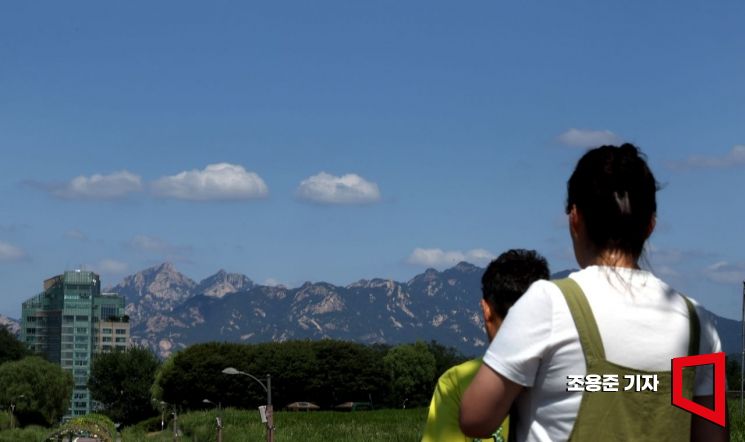
During this fine dust management period, the concentration of ultrafine dust (PM-2.5) decreased by 3.3% compared to the previous period, marking an all-time low.
On the 15th, the Ministry of Environment announced that the nationwide average concentration of ultrafine dust during the '6th Fine Dust Seasonal Management Period' was 20.3㎍/㎥. The Fine Dust Seasonal Management System is a policy that strengthens emission and reduction measures from December to March of the following year, when fine dust concentrations are high, to improve air quality. This is the sixth implementation, showing a decrease of 0.7㎍/㎥ (3.3%) from 21.0㎍/㎥ during the 5th seasonal management period. It is the lowest level since the seasonal management system began in 2019.
The number of days rated as 'Good (15㎍/㎥ or less)' increased by 7 days, from 47 to 54 days. The number of days rated as 'Bad (36㎍/㎥ or more)' decreased from 15 to 12 days. However, due to atmospheric stagnation and other reasons, the number of emergency reduction measures increased from 2 to 3 days, indicating some partial deterioration on certain days.
The Ministry of Environment evaluated that the high-intensity reduction measures significantly reduced the factors causing fine dust. The Ministry temporarily suspended the operation of 30 coal-fired power plants and imposed output limits of 80% on up to 47 plants. In the transportation sector, operation of grade 5 vehicles was restricted in the Seoul metropolitan area and special metropolitan cities, and operation of grade 4 vehicles was restricted in administrative and public institutions.
Meteorological conditions also had a positive impact on reducing ultrafine dust concentrations. The 6th seasonal management period had 11 more high wind speed days and 12 fewer stagnant days compared to the previous period. Thanks to the increase in days with strong winds, fine dust did not remain over the Korean Peninsula.
Accurate analysis results will be disclosed next month after scientific verification, including air quality data modeling.
Meanwhile, the Ministry of Environment emphasized that it will actively implement response measures to protect public health if yellow dust and high concentrations of ultrafine dust occur this month.
© The Asia Business Daily(www.asiae.co.kr). All rights reserved.
![Clutching a Stolen Dior Bag, Saying "I Hate Being Poor but Real"... The Grotesque Con of a "Human Knockoff" [Slate]](https://cwcontent.asiae.co.kr/asiaresize/183/2026021902243444107_1771435474.jpg)















