Reducing Payment Collection Risks for Stable Project Execution
The risk of a wave of bankruptcies among construction companies is beginning to spread to major construction firms. If large construction companies enter court receivership amid a prolonged real estate market downturn, numerous subcontractors and partner companies are expected to face bankruptcy as well. Experts advise that if a major construction company files for rehabilitation, it is necessary to actively utilize the 'direct payment system,' where the client pays subcontractors directly without going through the main contractor.
Construction Recession Unavoidable Even for Large Corporations
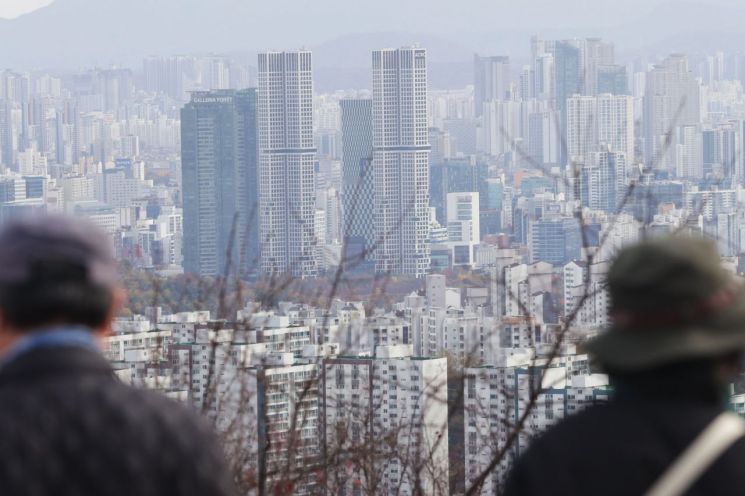 Outstanding Payments of 17 Trillion Won Accumulated Among Top 10 Construction Companies. Yonhap News
According to the Financial Supervisory Service's electronic disclosure system, among the top 10 construction companies, GS Construction (249%), SK Ecoplant (233%), and Hyundai Engineering (241%) had debt ratios exceeding 200% as of Q4 2024. In the construction industry, a debt ratio below 200% is generally considered healthy, so these major construction firms are showing red flags in their financial status.
The construction industry has been suffering from a triple burden of rising raw material costs, labor costs, and high interest rates since COVID-19 and the Russia-Ukraine war. Additionally, with an increase in unsold units and falling sale prices, large construction companies are securing liquidity through asset sales and business downsizing. Lotte Construction is considering selling assets worth about 1 trillion KRW, including its headquarters site in Seocho-gu, Seoul. SK Ecoplant is reportedly pushing for the sale of subsidiaries such as SK Ocean Plant, a marine wind power subsidiary, following large-scale workforce reductions at the end of 2024. GS Construction is also reviewing the sale of its elevator subsidiary GS Elevator and water treatment specialist subsidiary GS Inima. Daewoo Construction has decided to sell a stake in its News Stay (corporate rental housing) project worth 180 billion KRW, and DL E&C and HDC Hyundai Development Company are reportedly considering relocating their downtown Seoul headquarters.
The insolvency of major construction companies could cause serious ripple effects beyond the companies themselves, impacting the entire construction ecosystem due to the industry's unique business structure and complex interests. Especially since many construction firms have fiscal years ending in March, decisions on project financing (PF) loan extensions or fund recoveries tend to cluster around April, which experts believe could lead to an increase in court receivership filings during this period.
Jeon Dae-gyu (57, Judicial Research and Training Institute class 28), a former chief judge at the Seoul Rehabilitation Court, said, "Construction projects involve complex rights relationships, and in business structures involving multiple companies like joint ventures, creditor agreements are not easy." He expressed concern, adding, "Ultimately, new orders must support normalization, but this seems difficult in a shrinking construction market." Another lawyer who worked at the Seoul Rehabilitation Court said, "The recent consecutive rehabilitation filings by construction companies remind me of the 2008 financial crisis. Since the construction industry involves stakeholders such as PF lenders, unsold buyers, and subcontractors, damage can spread rapidly, so urgent measures to minimize harm are needed."
"Direct Payment Agreements Should Be Actively Reflected in Rehabilitation Plans"
As payment delays to subcontractors occur due to the financial difficulties of major construction companies, the 'direct payment system' is emerging as a means to protect subcontractors. Article 14 of the Act on the Fair Transactions in Subcontracting allows the client to pay the subcontractor directly if the main contractor fails to fulfill the payment guarantee obligation. This reduces the risk of subcontractors not receiving payments and ensures stable project execution. However, in construction subcontracting governed by the Framework Act on the Construction Industry, direct payment rights do not arise solely from a direct payment agreement; progress inspections and direct payment claim procedures are generally required. Consequently, if a creditor of the main contractor places a provisional seizure before the subcontractor files a payment claim, the subcontractor’s right to claim payment may not be recognized.
A presiding judge who has handled many rehabilitation cases said, "In cases where third-party seizures occurred after a direct payment agreement, raising questions about the effectiveness of subcontractors' direct payment claims, the Supreme Court ruled that the Framework Act on the Construction Industry should be interpreted in line with the purpose of the Subcontracting Act, meaning subcontractors gain direct payment claim rights at the time the direct payment agreement is made." He added, "If a major construction company enters rehabilitation, early repayment through direct payment agreements will become even more important to reduce damage to subcontractors and small partner companies. Since rehabilitation procedures themselves are designed to prevent chain bankruptcies and protect small creditors, both clients and contractors need to actively incorporate repayment plans through direct payment agreements into rehabilitation plans."
Ahn Jaemyung, Legal News Reporter
※This article is based on content supplied by Law Times.
© The Asia Business Daily(www.asiae.co.kr). All rights reserved.

















