On the 14th, NH Investment & Securities stated that the escalating tariff war triggered by Trump is worsening the outlook for the U.S. economy and the dollar, predicting a gradual continuation of a weak dollar trend going forward.
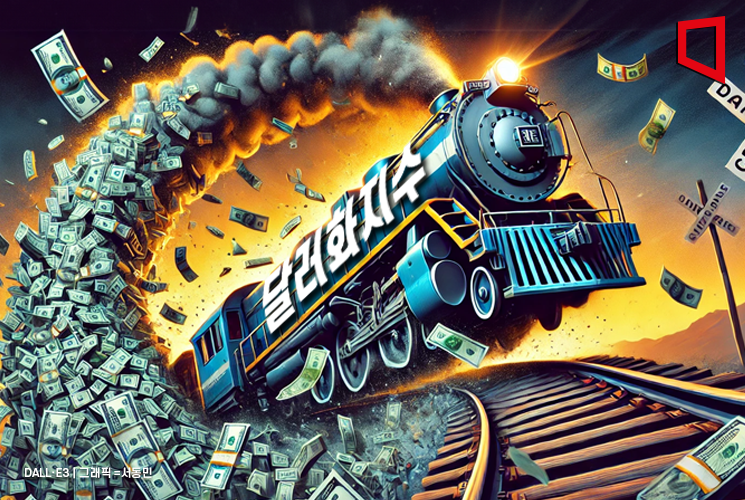
Amin Kwon, a researcher at NH Investment & Securities, said, "Our annual dollar index floor for this year is around 97, but we believe there is a high possibility that the floor will drop further." The dollar index, which represents the value of the dollar against six major currencies, had fallen below the 100 mark for the first time since October last year.
Researcher Kwon noted that "(recently) as the tariff war intensifies, safe-haven assets such as the Swiss franc and Japanese yen have strengthened," but he pointed out that the dollar index has deviated from the so-called 'dollar smile' pattern. He explained, "Although the U.S. Federal Reserve (Fed) is still maintaining a conservative stance, considering the potential for a halt in quantitative tightening (QT) and interest rate cuts in the future, as well as the fact that the dollar was unusually overvalued, the dollar is temporarily an exception."
Kwon mentioned that the tariff war could lead to a repeat of the situation seen during Donald Trump's first administration in 2018, but he emphasized that the overall growth structure and liquidity conditions are different from back then. He explained, "Currently, U.S. exceptionalism is weakening first due to tariff-related concerns," adding, "Growth and liquidity conditions are completely opposite." He further predicted, "In the cycle following the Russia-Ukraine war, momentum in manufacturing and investment sectors, which had supported the U.S. economic upturn, is weakening and is likely to slow further in conjunction with government spending cuts."
Accordingly, Kwon analyzed, "Although there remains the option of tax cuts and financial deregulation, considering the rebound in non-U.S. markets this year, the growth gap is narrowing," and "Since financial tightening is not intensifying further, it will support additional dollar weakness." He forecasted, "Given the rise in long-term interest rates and the government's conservative stance on fiscal spending, the outlook for further dollar decline is valid," and predicted, "The gap between the dollar and the Korean won will adjust as the dollar-won exchange rate falls (won strengthens)."
© The Asia Business Daily(www.asiae.co.kr). All rights reserved.
![Clutching a Stolen Dior Bag, Saying "I Hate Being Poor but Real"... The Grotesque Con of a "Human Knockoff" [Slate]](https://cwcontent.asiae.co.kr/asiaresize/183/2026021902243444107_1771435474.jpg)















