Amid U.S. President Donald Trump's imposition of a 25% tariff on automobiles, there are predictions that the global automotive industry's cost burden could increase by up to 200 trillion won annually.
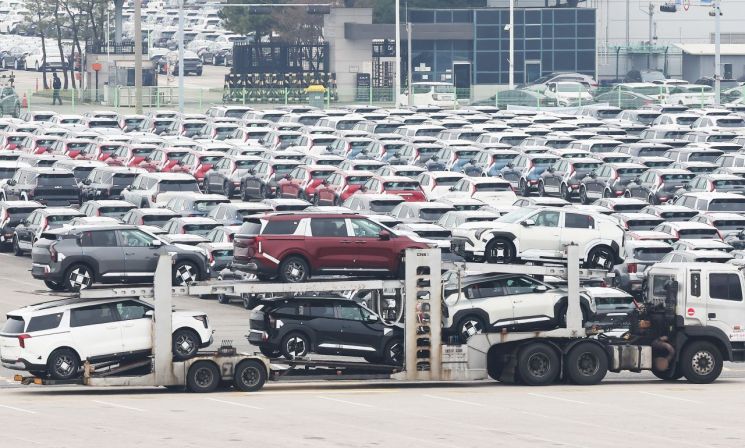
On the 12th (local time), the U.S. CNBC broadcast reported that unlike the recent adjustments in reciprocal tariff levels by country made by the Trump administration, the automobile tariff remains firm.
The Boston Consulting Group (BCG) forecasts that the automobile tariffs will add an annual cost of $110 billion to $160 billion (approximately 156.9 trillion to 228.2 trillion won) to the industry. It is expected that 20% of new car sales in the U.S. could be affected, and global manufacturers' production costs may also increase.
The think tank Center for Automotive Research (CAR) predicted that the cost for the U.S. automotive industry alone, including the 'Big 3'?General Motors (GM), Ford, and Stellantis (41.9 billion dollars; about 59.7 trillion won)?will increase by about $107.7 billion (approximately 153.6 trillion won).
Some speculate that this cost burden will lead to increased consumer expenses through vehicle price hikes. Investment bank Goldman Sachs reflected the tariff impact by forecasting that new car prices in the U.S. will rise by $2,000 to $4,000 (approximately 2.85 million to 5.7 million won) over the next 6 to 12 months. UBS predicted that the cost of imported cars produced by GM in Mexico and Canada will increase by $4,300 (about 6.13 million won) per vehicle.
Mark Delaney, a Goldman Sachs analyst, said, "Prices of both imported cars and vehicles manufactured in the U.S. are expected to rise," adding, "It will be difficult to fully pass this on (to consumers) amid an overall demand slowdown."
© The Asia Business Daily(www.asiae.co.kr). All rights reserved.
![Clutching a Stolen Dior Bag, Saying "I Hate Being Poor but Real"... The Grotesque Con of a "Human Knockoff" [Slate]](https://cwcontent.asiae.co.kr/asiaresize/183/2026021902243444107_1771435474.jpg)















