Over 2,500 Proposals Received from Citizens, Businesses, and Officials
10 Additional Deregulation Plans Announced, Including Eased Subsidy Support Criteria
Regulatory Deregulation Achievements to Be Shared in May... Ongoing Efforts Planned
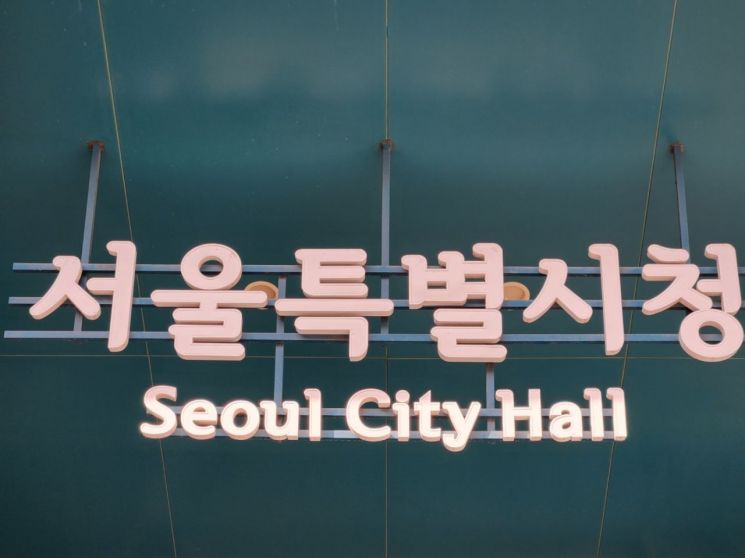
The Seoul Metropolitan Government officially concluded the '100-Day Intensive Regulatory Deregulation Period.' In line with Mayor Oh Se-hoon's New Year's administrative agenda of 'regulatory deregulation,' over 2,500 proposals were made during the 100 days starting January 3, resulting in the elimination of a total of 123 regulations.
According to Seoul City on the 13th, during the past 100 days, proposals that could be immediately implemented upon reporting and receipt were prioritized for review, leading to the deregulation of more than 10 cases each week.
Representative deregulations based on citizen proposals include ▲partial allowance of commercial activities in parks (No. 5) ▲removal of the upper age limit for middle-aged participants in attractive jobs (No. 7) ▲relaxation of age restrictions for participation in Wrist Doctor 9988 (No. 84) ▲abolition of regulations prohibiting pet ownership and entry in youth safety housing (No. 104), among others.
On this day, Seoul City wrapped up the 100-day intensive regulatory deregulation period by announcing 10 additional deregulation plans. The main contents include the overhaul of outdated systems and improvements to issues perceived as regulatory inconveniences in citizens' daily lives. First, they will proceed with 'Improvement of the inspection regulation for admission tickets at municipal sports facilities' (No. 114). When private operators who have obtained permission to use various event facilities such as sports and cultural arts issue admission tickets electronically, the existing manual inspection procedure for paper tickets will be omitted.
They will also expand various supports such as easing subsidy support criteria for the establishment of maintenance project associations and youth-specialized programs. Deregulation plan No. 115 is 'Easing the city subsidy requirements for the direct establishment system of maintenance project associations.' The direct establishment system allows for the rapid formation of an association by skipping the existing 'promotion committee' procedure during maintenance projects. Until now, residents had to obtain consent from more than 75% to receive city subsidies. With this revision, the resident consent rate required to receive city subsidies will be lowered from 75% to 50%, broadening the eligibility for subsidy support.
No. 116 is 'Relaxation of the budget limit for regional specialized projects at Seoul Youth Centers.' Under the 'Seoul Youth Center Installation and Operation Guidelines,' the budget for regional specialized projects necessary for operating customized programs by region was uniformly regulated to be within 20% of the total project cost. This will now be expanded according to the characteristics of each center.
They will also promote easing the burden of installing subsidy signboards (No. 117). Previously, all subsidy recipients were uniformly required to bear the cost of installing signboards. This regulation will be revised to allow exceptions based on the nature and necessity of the project. Subsidy signboards are not simple promotional materials but facilities serving the public interest by providing public information and ensuring transparency. It was pointed out that making private operators bear the entire installation cost was unreasonable.
No. 118 is 'Streamlining application documents for the purchase of personal care products for people with brain lesions.' This aims to reduce the inconvenience of issuing and submitting documents required for the application process, alleviating the physical and mental burden on applicants.
Deregulation plan No. 119 is to switch the application process for socially disadvantaged persons at the Seoul Women's Development Center from first-come, first-served in-person reception to online. No. 120 is 'Improvement of the notification procedure for administrative litigation stay orders.' Starting in April, the decision results of stay orders will be promptly notified via text messages to reduce inconvenience for claimants and support swift responses.
They will also address 'Improvement of the public disclosure method for high-amount tax delinquents who have faithfully paid their arrears' (No. 121). Despite paying more than 50% of the delinquent amount and being excluded from the disclosure list, names continued to appear in electronic public notices, raising concerns about unnecessary damage to personal honor and credit.
'Support for pre-technical consulting on public construction contract amount adjustments' (No. 122) is also included. Currently, for construction projects implemented and completed by city headquarters, business offices, and autonomous districts, the appropriateness of contract amount adjustments is checked, and excessive payments are reclaimed through post-inspections. However, the industry perceives post-inspection-based refunds as excessive regulation, and disputes over refunds continue, prompting improvements. Additionally, they will promote 'Expansion of the opening of non-open public data' (No. 123). Public data previously restricted due to privacy or security reasons will be provided to citizens through limited opening or data processing methods.
Seoul City plans to hold a performance report meeting in May to review the achievements and limitations of regulatory deregulation. The meeting will reflect on the progress so far and share future directions. Cooperation plans with the central government, which holds legislative authority, will also be discussed to achieve substantial regulatory improvements that citizens can feel.
Jung Sang-hoon, Director of Planning and Coordination at Seoul City, said, "The 100 days of regulatory discovery and deregulation have become an important momentum to upgrade the lives of Seoul citizens by one level," adding, "We will continue to boldly eliminate unnecessary regulations and fulfill the public role of reducing obstacles to citizens' economic activities."
© The Asia Business Daily(www.asiae.co.kr). All rights reserved.
![Clutching a Stolen Dior Bag, Saying "I Hate Being Poor but Real"... The Grotesque Con of a "Human Knockoff" [Slate]](https://cwcontent.asiae.co.kr/asiaresize/183/2026021902243444107_1771435474.jpg)
















