Water Exchange at the Border Based on the 1944 Treaty
U.S. Pressures Mexico Over Water Supply Shortfall Due to Drought
The conflict between the United States and Mexico over river water supply in the border region is escalating again during the second term of the government, following the first term of Donald Trump's administration.
On the 11th (local time), the Mexican government announced that it plans to immediately increase water supply to the Texas region in the U.S. to compensate for the recent shortfall in water discharge that has strained relations with the U.S. President Claudia Sheinbaum stated at her regular morning press conference, "We conveyed our proposals to the U.S. side yesterday (the 10th), including short-term measures to resolve the water supply issue to the United States," adding, "This included a plan to immediately increase water discharge for Texas farmers in the U.S." She also explained to the U.S. side that there have been difficulties in securing available water resources due to severe droughts in the border area over the past three years.
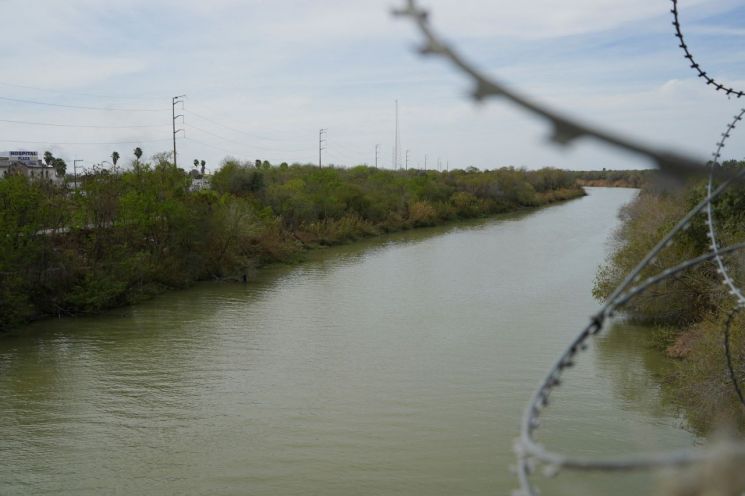 The Bravo River (known as the Rio Grande in the United States) flowing through the US-Mexico border region. Photo by Reuters and Yonhap News.
The previous day, U.S. President Trump strongly criticized, saying, "According to the agreement, Mexico is supposed to give 1.3 million acre-feet of water to Texas, but unfortunately, they are neglecting their duty," and "Mexico is stealing water."
The agreement mentioned by President Trump is the 1944 treaty on the utilization of border region river water, signed 81 years ago. The United States and Mexico, sharing a long land border, reached an agreement after discussions on how to divide the water of rivers in the border region. According to the agreement, Mexico must send about one-third of the flow of the Bravo River (called the Rio Grande in the U.S.), approximately 430 million cubic meters of water, to the United States annually. The U.S. also agreed to send about 1.9 billion cubic meters of Colorado River water to Mexico each year. However, due to seasonal variability in the Bravo River's flow, Mexico agreed to compensate the allocation not annually but by summing it every five years.
However, Mexico has failed to fulfill the agreement over the past 30 years. The Mexican daily El Financiero reported that Mexico's five-year water supply deadline is this October, but it has not met more than 70% of the allocation. This is due to drought caused by climate change and a rapid increase in automobile and electronics manufacturing facilities in the northern border region.
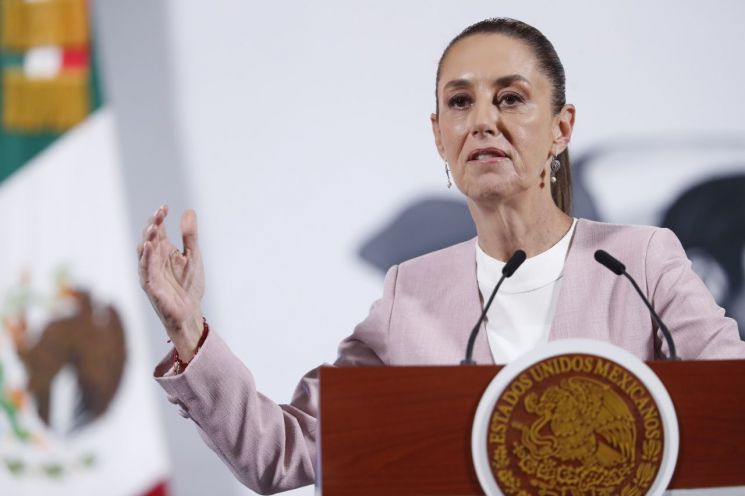
President Sheinbaum said, "We are seeking ways to uphold the water trade, and through negotiations with the U.S. side, we expect to find a solution within the next few days," adding, "The 1944 agreement is very fair, and like other issues, I am confident we will reach an amicable agreement with the United States."
Previously, five years ago in 2020 during his first term, President Trump also raised the issue of Mexico's 'water debt' and hinted at retaliatory measures including tariffs. At that time, the Mexican government under Andr?s Manuel L?pez Obrador proposed drawing water from other rivers and dams to meet the allocation, calming the U.S. Because of this, the northern state governments and farmers in Mexico fiercely protested, saying "We have no water to use either," resulting in casualties.
© The Asia Business Daily(www.asiae.co.kr). All rights reserved.