Classified as Isolated Death if Found More Than 8 Days After Passing
Proportion of Elderly Living Alone Similar to That of Elderly Couples
In Japan, which entered a super-aged society 20 years ahead of Korea, the number of 'isolated deaths' (equivalent to solitary deaths in Korea) last year reached approximately 22,000. This is the first result of an investigation conducted by the Japanese government and holds significant implications for Korean society.
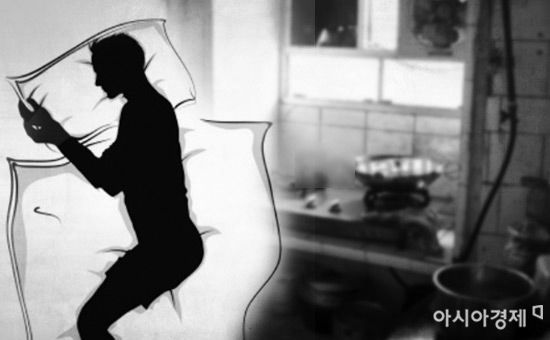 In Japan, the number of people who died alone last year, known as "koritsushi" (equivalent to solitary death in Korea), was estimated to be around 22,000.
On the 12th, local media such as Mainichi Shimbun and NHK reported that the Japanese Cabinet Office estimated the number of isolated deaths last year to be 21,856. The Japanese National Police Agency classified deaths discovered more than eight days after the person died alone at home as 'isolated deaths' out of 76,020 cases of solitary deaths last year. Until now, Japan had not released related statistics at the government level.
Looking at the age distribution of isolated death victims in Japan, those aged 70s numbered 8,321, those in their 60s were 5,409, and those aged 80 and above were 4,207, with people aged 60 and over totaling 17,937, accounting for 82.1% of the total. By gender, males accounted for 17,364 cases, or 79.4%. Regarding the time of discovery, 253 cases were found more than a year after death, and 6,945 cases were found after more than a month.
Last year, Asahi Shimbun reported that from January to March 2024, 21,716 people died alone at home, of which 17,034 (78%) were elderly aged 65 or older.
According to a 2022 report released by the Japan Insurance Association, when analyzing solitary deaths by gender, males accounted for 83.2%, about five times more than females (16.8%). The leading cause of death was disease, such as myocardial infarction, at 66.8%, followed by suicide at 9.8%.
This survey result is nearly six times the 3,661 solitary deaths recorded in Korea in 2023. The reason Japan has a particularly high number of solitary deaths is attributed to the large number of elderly people living alone. As of 2022, 31.8% of Japanese elderly aged 65 and over lived alone, a figure similar to the 32.1% living in two-person households consisting of couples.
The high number of elderly single-person households is due to the increasing number of unmarried individuals who have never married in Japan. The unmarried rate among elderly aged 65 and over was 33.5% for men and 23.9% for women in 2020. This is two to three times higher than the rates in 2010, which were 11.8% for men and 12.2% for women.
© The Asia Business Daily(www.asiae.co.kr). All rights reserved.