KDCA Urges Vaccination Even Now
Respiratory Diseases... Severe Cases Can Lead to Death
Influenza cases have increased for four consecutive weeks, mainly among school-age children and adolescents.
On the 11th, the Korea Disease Control and Prevention Agency (KDCA) announced that the number of influenza-like illness (ILI) patients at outpatient clinics during the 14th week of this year (March 30 to April 5) was 16.9 per 1,000 outpatients. The numbers have shown a continuous increase over four weeks, from 8.0 in the 10th week to 10.8 in the 11th week, 13.2 in the 12th week, and 16.3 in the 13th week.
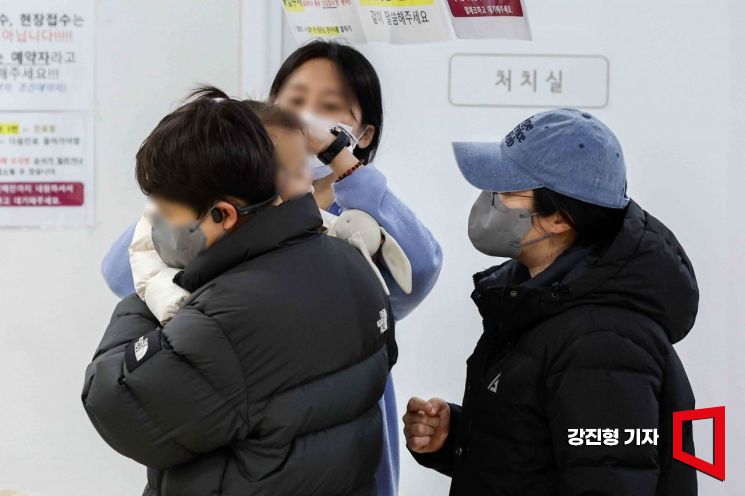 A child visiting a pediatric specialty hospital in Seongbuk-gu, Seoul, is having their temperature checked.
Influenza, commonly known as the flu, is an infectious respiratory disease caused by the influenza virus, which can require hospitalization or even lead to death in severe cases. Special caution is needed for seniors aged 65 and older, children, pregnant women, patients with lung or heart diseases, certain chronic illnesses, and immunocompromised individuals, as they are at higher risk of complications such as pneumonia or hospitalization.
Influenza-like illness patients are defined as those with a fever of 38 degrees Celsius or higher accompanied by cough and sore throat. By age group, the highest numbers were recorded among those aged 13 to 18 years (56.1 per 1,000) and 7 to 12 years (53.8 per 1,000).
According to respiratory virus pathogen surveillance results, the detection rate of the influenza virus also increased for four consecutive weeks, reaching 22.5% in the 14th week of this year. Among the viruses, influenza B virus accounted for the largest proportion at 21.1%.
The KDCA recommended vaccination, stating that the currently circulating influenza virus can be effectively prevented by vaccination, and there are no mutations affecting antiviral drug resistance, making effective treatment possible. The national influenza vaccination program for the 2024?2025 season is being administered to those at high risk of severe illness from influenza infection, including people aged 65 and older (born on or before December 31, 1959), pregnant women, and children aged 6 months to 13 years (born between January 1, 2011, and August 31, 2024).
The KDCA also advised following respiratory infection prevention measures such as hand washing, proper cough etiquette, and wearing masks to prevent influenza. The agency emphasized, "Those with symptoms of respiratory infectious diseases such as fever or cough should seek medical care at a nearby healthcare facility," and added, "Even if you were diagnosed with influenza A during this season, you can still be infected with influenza B, so those who have not yet been vaccinated should get the influenza vaccine now."
© The Asia Business Daily(www.asiae.co.kr). All rights reserved.
![Clutching a Stolen Dior Bag, Saying "I Hate Being Poor but Real"... The Grotesque Con of a "Human Knockoff" [Slate]](https://cwcontent.asiae.co.kr/asiaresize/183/2026021902243444107_1771435474.jpg)















