Gaetbada Snake Eel, Native to Warm Seas, Discovered at the Estuary of the Shimanto River in Kochi Prefecture, Japan
"It is lucky just to see a living specimen"
A rare species of 'Gaetbada snake eel' has been discovered in a river in a village in southern Japan, attracting attention. This specimen is known to inhabit warm waters and is presumed to have entered the river riding the Kuroshio Current.
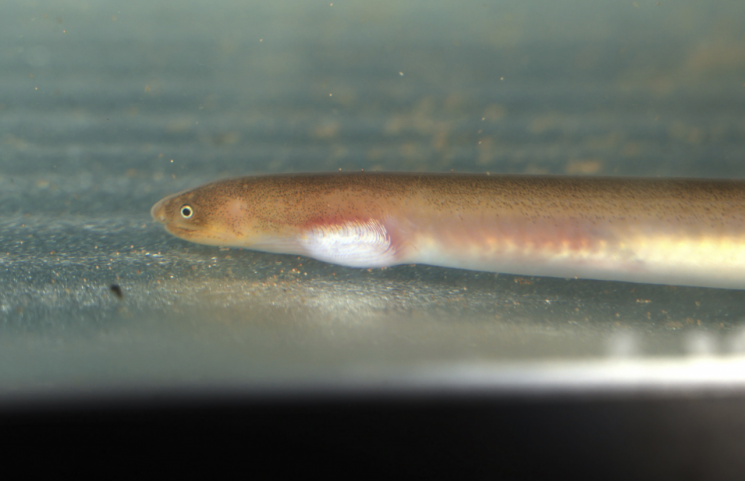 A rare species, the 'Gaetbada eel,' was discovered in the Shimanto River in Shimanto City, Kochi Prefecture, Japan. Shimanto River Museum X.
According to recent reports from the Japanese media outlet Yomiuri Shimbun, on the evening of the 28th of last month, a citizen fishing for eels at the estuary of the Shimanto River in Shimoda City, Kochi Prefecture, visited the Shimanto River Museum saying, "I caught a strange fish."
The caught fish was about 25 cm in length and resembled an eel or conger eel. Its body was light brown, and the tip of its head was rounded.
The museum posted photos of the fish on social networking services (SNS) and, after inquiries into its identity, concluded that it was a Gaetbada snake eel from the family Ophichthidae.
A netizen who specializes in studying the family Ophichthidae commented, "This species has very few collection records. It is lucky just to be able to see a living specimen. If the specimen dies, I hope it will be donated to a nearby university or similar institution."
This specimen is known to primarily inhabit warm seas. Although it has been collected in the past in Tosa Bay in southern Japan and Osaka, this is the first time a Gaetbada snake eel has been found in the Shimanto River.
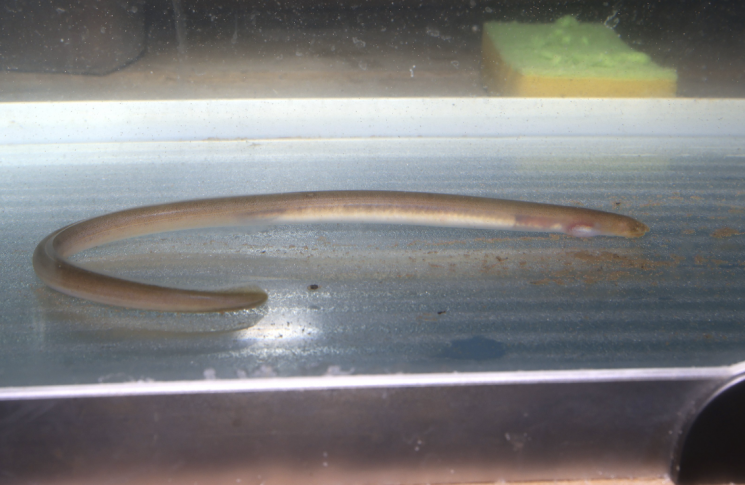 A rare species, the 'Gaetbada eel,' was discovered in the Shimanto River in Shimanto City, Kochi Prefecture, Japan. Shimanto River Museum X.
The museum speculated that the Gaetbada snake eel may have flowed into the Shimanto River riding the Kuroshio Current. The Kuroshio Current is the second largest ocean current after the Gulf Stream, which is the largest warm current in the world.
However, specific details about the habitat of the Gaetbada snake eel are not well known. The museum has placed sand in the aquarium and is feeding it shrimp and other food.
The Gaetbada snake eel currently discovered is reported to be in good health. The museum stated, "It is difficult to see because it is surrounded by sand, but occasionally it pokes its head out of the sand or from its hiding place in a pipe, showing a cute appearance."
© The Asia Business Daily(www.asiae.co.kr). All rights reserved.


















