On the 11th, Choi Eunseok, a member of the National Assembly from the People Power Party (Daegu Dong-gu and Gunwi-gun Gap), announced that he had proposed revisions to the "Child Welfare Act" and the "Restriction of Special Taxation Act" focusing on introducing the "Child Individual Savings Account (Child ISA)" to help children achieve economic independence and promote asset accumulation when they become adults.
Recently, Korean society has seen a growing income and asset gap and intensifying social competition, leading to a gradual decline in young people's expectations for upward social mobility. As a result, the so-called "Sampo Generation" phenomenon?where young people give up on marriage, childbirth, and home ownership?is spreading, raising concerns that this could negatively impact the nation's competitiveness.
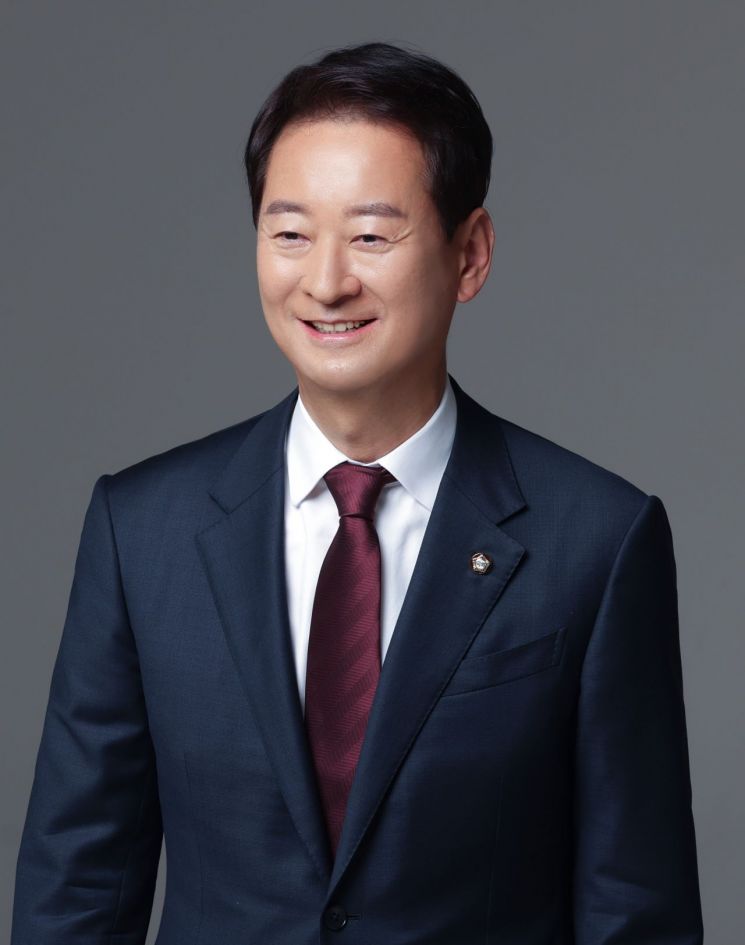
In response, Representative Choi is pushing for the introduction of the "Child ISA" system to support asset accumulation from an early age, aiming to reduce asset disparities among young people and restore the ladder of social mobility.
Major countries such as the United Kingdom, Japan, and Germany are already supporting the economic independence of future generations by encouraging asset accumulation during childhood and adolescence. For example, the UK operated the "Child Trust Fund (CTF)" from September 2002 to January 2011, where the government deposited a set amount and parents could make additional contributions, fostering long-term asset formation for children.
Afterward, the UK continued to support children's asset accumulation through the "Junior ISA (Individual Savings Account)" system, which replaced the CTF, and the system has been positively evaluated. Asset formation during childhood has become a national-level investment strategy for future generations, and it is time for Korea to establish an institutional foundation in line with this international trend.
The key point of the proposed amendment by Representative Choi is to establish the "Child ISA" system for children aged 8 to 18, helping all children accumulate assets through government support and tax benefits.
Main details include: providing a monthly government subsidy of 100,000 KRW to children from households that meet certain criteria; allowing guardians to contribute up to 200,000 KRW per month (with differentiated limits based on household income); automatic conversion to a general Individual Savings Account (ISA) at maturity; full tax exemption on income generated within the account; and providing financial education to children.
According to the amendment, if parents contribute up to 200,000 KRW per month to their child's Child ISA and the government adds a monthly subsidy of 100,000 KRW, each child could accumulate up to approximately 40 million KRW in assets. The government subsidy is provided uniformly regardless of income level, while parental contributions are adjusted according to the household's median income bracket, which is expected to have a practical wealth redistribution effect.
Representative Choi emphasized, "This system is designed not just as direct cash support, but as an investment in sustainable growth by enabling children to manage and grow their own assets." He added, "Unlike the 'Our Child Independence Fund Account' proposed by the Democratic Party last year, the Child ISA system does not overlap with the child allowance, can be operated without separate business registration by linking with the existing ISA system, and applies differentiated contribution limits based on household income, making it more effective in redistributing wealth."
© The Asia Business Daily(www.asiae.co.kr). All rights reserved.
![Clutching a Stolen Dior Bag, Saying "I Hate Being Poor but Real"... The Grotesque Con of a "Human Knockoff" [Slate]](https://cwcontent.asiae.co.kr/asiaresize/183/2026021902243444107_1771435474.jpg)















