Utilizing Remaining U.S. Military Shooting Range Buildings to Memorialize Residents' Pain
Jung Myung-geun: "A Space to Reflect on the Preciousness of Peace"
Maehyang-ri, Ujeong-eup, Hwaseong-si, Gyeonggi-do, a quiet coastal village whose name means "full of plum blossom fragrance." However, after a U.S. military shooting range was established here in 1952, this place became a land of misfortune where the sound of massive bombs was an everyday occurrence for over 50 years. "Parents raising children lived in constant anxiety, always worried and preventing them from playing whenever they heard the sound of shells." This testimony vividly illustrates the lives of Maehyang-ri residents.
A memorial hall to soothe the 54 years of wounds endured by Maehyang-ri residents on the site of the U.S. military's 'Koon-Ni Range' will open on the 21st.
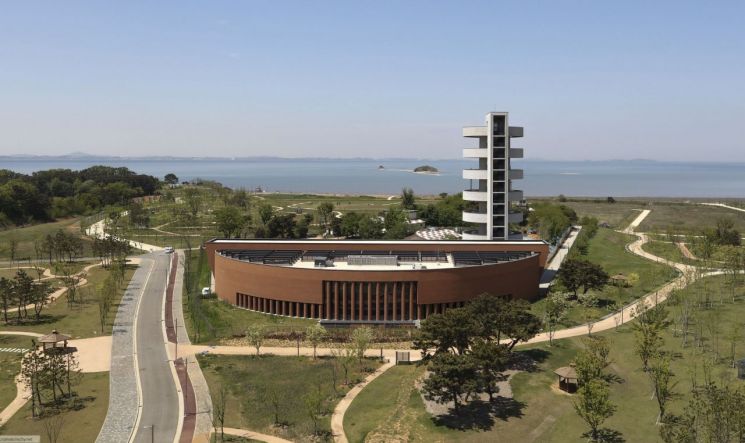 The exterior of Hwaseong's 'Maehyang-ri Peace Memorial Hall,' opening on the 21st. It conveys a message of peace and hope beyond the pain of bombing. Provided by Hwaseong City
Hwaseong City announced on the 10th that it will officially open the 'Maehyang-ri Peace Memorial Hall' built in Maehyang-ri on the 21st. The memorial hall preserves some of the facilities of the Koon-Ni Range, which was a U.S. Air Force training ground, and was completed with the touch of world-renowned architect Mario Botta.
The Maehyang-ri Peace Memorial Hall, with a building area of 2,136㎡, began construction in 2019 and was completed in 2021. After a temporary opening in December last year, it will now officially open.
Conveying a Message of Peace and Hope Beyond the Pain of Bombing
The memorial hall presents the motif of 'Path of Peace, Sea of Hope.' Reflecting this, the exhibition is organized with the remaining buildings of the Koon-Ni Range representing the 'Path of Peace' to remember history, and the memorial hall itself themed as the 'Sea of Hope,' promising peace through healing and respect. Outside the memorial hall, corridors, a memorial monument, and water features have been created to help heal the residents' pain.
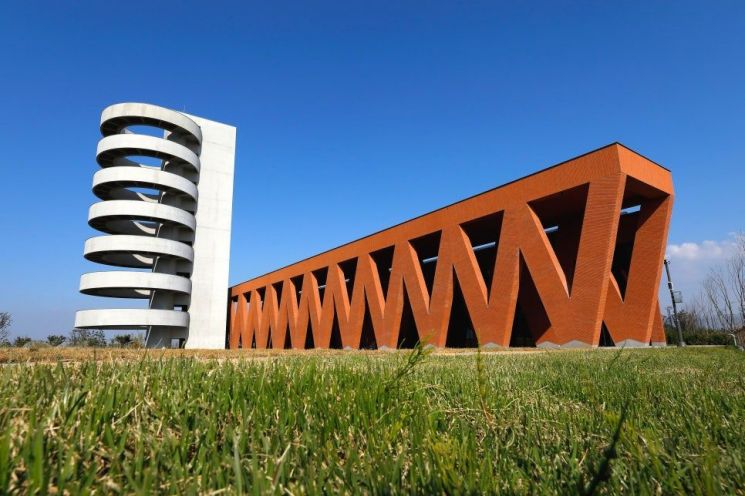 The exterior of Maehyang-ri Peace Memorial Hall. The design symbolizes a memorial. Provided by Hwaseong City
The interior of the memorial hall is designed to allow warm light to permeate throughout the space, symbolizing comfort and healing for the hearts of residents who endured long suffering.
The first floor is a children's experience room where visitors can engage with media art and various content themed on light, hope, freedom, and peace. The second floor houses a permanent exhibition room that contains various records about the installation and closure of the Koon-Ni Range, residents' struggles, and the realities of U.S. military training. The special exhibition room features exhibitions based on the themes of light and shadow.
The city has preserved spaces such as the guard post, caf?, fitness room, shooting control center, accommodations and dining hall, and officers' barracks used by the U.S. military, allowing visitors to directly experience the site as it was.
The museum identity (MI) of the memorial hall won the main prize at the German 'iF Design Award' in March last year.
Hwaseong City has also transformed 570,000㎡ of the Maehyang-ri area, including the memorial hall, into a Peace Ecological Park, creating a space for nature and healing. Within the park, on 240,000㎡, the 'Hwaseong Dream Park,' the largest little league baseball field in the country, was built.
The memorial hall operates from 10 a.m. to 6 p.m. every day except Mondays. Admission and parking are free. Group visits of 20 or more require advance reservation.
Six Years of Legal Battle Ends Half a Century of Bombing Suffering
Maehyang-ri, once a quiet coastal village, began to suffer from bombing during the Korean War in 1952. The U.S. Forces Korea established a shooting range covering 210,000 pyeong (approximately 693,000㎡) in the Maehyang-ri area, followed by air force shooting and practice bomb drops.
In 1968, with the signing of the Korea-U.S. Mutual Defense Treaty and the Status of Forces Agreement (SOFA), the U.S. military installed a land shooting range on 290,000 pyeong (approximately 958,000㎡) of farmland, establishing the full-scale shooting range. Subsequently, the U.S. military expanded the range to a total of 7.19 million pyeong (approximately 23.75 million㎡), including a 6.9 million pyeong (approximately 22.8 million㎡) sea shooting range and a 290,000 pyeong land shooting range through additional requisitions. The shooting range hosted intensive training about 250 days a year, with 600 to 700 firing sessions daily.
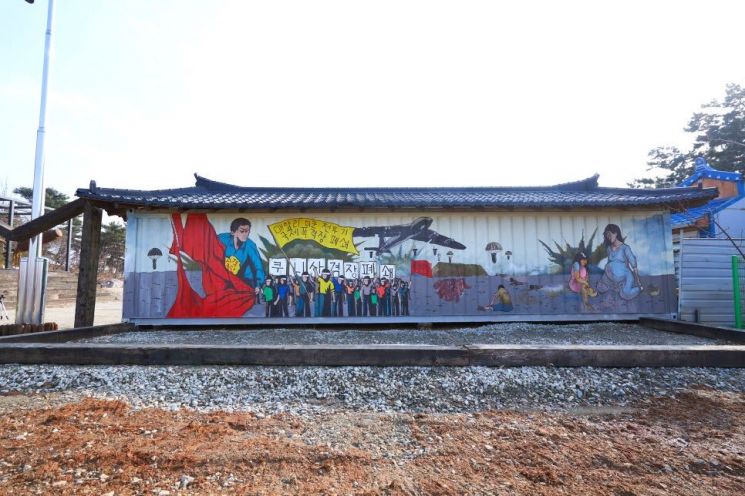 A mural painted on a residential wall by Maehyang-ri residents demanding the closure of the US military firing range. Provided by Hwaseong City.
Maehyang-ri residents had to live in pain for 54 years due to the roar of military aircraft, falling shells, and fires. There were accidents where shells fell on farms or sandy beaches, causing fatalities among residents. Hearing loss, housing damage, and livestock miscarriages were also common.
According to the 'Maehyang-ri History, Culture, and Modern History White Paper' published by the Sungkonghoe University Industry-Academic Cooperation Foundation in 2017, there were eight deaths and eleven injuries caused by shooting range accidents. The mental damage was also severe. A 2007 survey by the Wonjin Environmental Health Research Institute found that the suicide rate among Maehyang-ri residents was 2 to 7 times higher than other regions, and the rate of severe anxiety or post-traumatic stress disorder (PTSD) symptoms was nine times higher than in other areas.
The June Democratic Uprising in 1987 became a catalyst for struggle in Maehyang-ri as well. The 'Residents' Countermeasure Committee for the Abolition of the U.S. Air Force International Bombing Range in Maehyang-ri' was formed, and a petition signed by 612 residents was submitted to the Blue House. In 1998, fifteen residents filed a lawsuit against the state seeking damages, marking the start of a full-fledged legal battle.
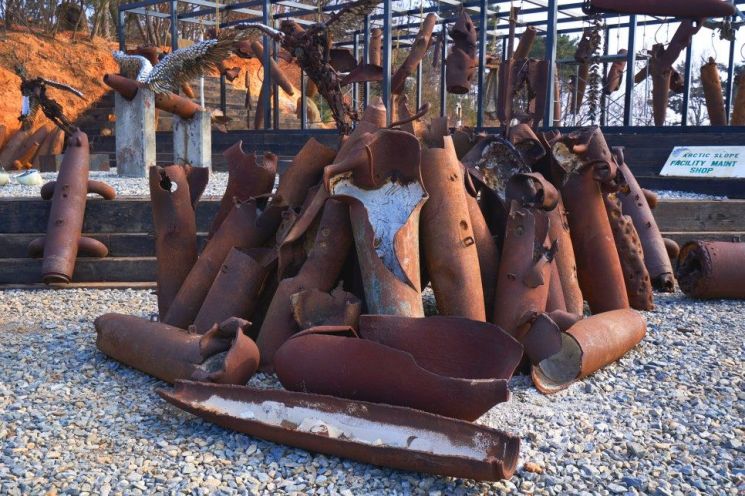 Ammunition waste collected directly by residents at the Maehyang-ri US military shooting range. Provided by Hwaseong City
Accidents continued even during the legal battle. In May 2000, a U.S. military A-10 ground attack aircraft mistakenly dropped six bombs simultaneously in the sea off Maehyang-ri and the Koon-Ni Range. This accident brought the pain of Maehyang-ri residents into the public spotlight.
The trial led to a ruling in 2001 holding the state responsible and ordering compensation. This ruling was upheld by the Supreme Court in 2004. Ultimately, in August the following year, the U.S. Forces Korea closed the Koon-Ni Range, bringing an end to the long tragedy.
Jung Myung-geun, mayor of Hwaseong City, said, "The memorial hall will be a space that remembers and never forgets the pain and courage of the residents, deeply reflecting on the preciousness of peace. I hope many people visit the memorial hall and feel the true meaning of peace through the stories of Maehyang-ri's endurance."
© The Asia Business Daily(www.asiae.co.kr). All rights reserved.
![Clutching a Stolen Dior Bag, Saying "I Hate Being Poor but Real"... The Grotesque Con of a "Human Knockoff" [Slate]](https://cwcontent.asiae.co.kr/asiaresize/183/2026021902243444107_1771435474.jpg)


















