Rep. Heo Young:
"Strategic Negotiations Needed
to Prevent Additional Burden"
U.S. President Donald Trump hinted at linking South Korea's defense cost-sharing payments to tariffs during a phone call with Acting President Han Duck-soo, prompting criticism that South Korea's defense contributions have already reached a sufficient level.
On the 9th, Rep. Heo Young of the Democratic Party, a member of the National Assembly's Defense Committee, stated regarding President Trump's indication of linking South Korea's defense cost-sharing payments to tariffs during the call with Acting President Han, "(South Korea) is already making sufficient defense contributions."
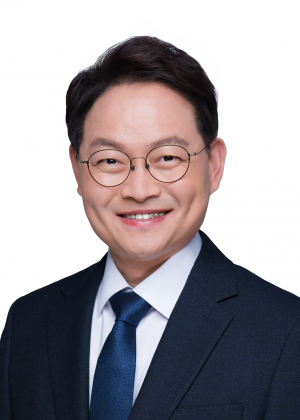
According to Rep. Heo, President Trump labeled South Korea as a "free rider on security" during his first administration in 2018 and raised the issue of defense costs. In 2018, South Korea's defense cost-sharing payment was 960.2 billion won, whereas this year it has increased by 46.1% to 1.4 trillion won. Compared to the 17% GDP growth rate in 2018, this increase in contributions is about three times higher.
Furthermore, Vincent Brooks, the commander of U.S. Forces Korea who appeared before the U.S. Senate Armed Services Committee in 2016, revealed that South Korea bears 92% of the $10.08 billion (approximately 12 trillion won) cost for relocating and constructing the largest overseas U.S. military base at Camp Humphreys in Pyeongtaek. He also stated that the cost-sharing increases according to the consumer price index, emphasizing that South Korea's benefits significantly contribute to the stationing of U.S. forces in Korea, according to Rep. Heo.
In fact, beyond the direct contributions under the Korea-U.S. Special Measures Agreement (SMA) for defense cost-sharing, South Korea supports a much larger amount through indirect costs such as defense budgets, tax and public utility reductions, and infrastructure support. As of 2021, the SMA contribution was 1.1 trillion won, but when estimating other defense budgets and indirect support costs, the total exceeded 3.4 trillion won.
Rep. Heo also claims that South Korea plays a sufficient role in arms imports. Since the first Trump administration in 2018, South Korea's arms exports to the U.S. amounted to only three cases totaling about $590 million (approximately 826 billion won), while imports from the U.S., including Foreign Military Sales (FMS) and commercial purchases, reached 30 cases totaling about $11.1 billion (approximately 15.53 trillion won), about 19 times larger.
Notably, South Korea and the U.S. have already finalized a defense cost-sharing agreement through 2030. Former President Yoon Suk-yeol and then-U.S. President Joe Biden signed the 12th Korea-U.S. Special Measures Agreement (SMA) last October, linking the increase rate of defense cost-sharing payments from 2026 to 2030 to the consumer price index (CPI).
Rep. Heo Young pointed out, "South Korea is already bearing sufficient defense costs, including the stationing costs of U.S. forces in Korea, defense budgets, tax exemptions, public utility reductions, and infrastructure support," adding, "Requesting renegotiation linked to tariffs despite the agreement on principles, duration, and increase rates already concluded between the two heads of state last year is disrespectful to an ally."
Rep. Heo also said, "The South Korean government should thoroughly consult and cooperate with the Ministry of Foreign Affairs and others through accurate data and strategic negotiations regarding contributions and support funds to ensure that no additional burdens arise from defense cost-sharing, responding meticulously from the perspective of national interest."
© The Asia Business Daily(www.asiae.co.kr). All rights reserved.

















