Korean Parents Feel Strong Responsibility for Supporting Their Children, Survey Finds
A survey found that 7 out of 10 Korean parents perceive their children's success and failure as the parents' responsibility. The report titled 'Parent-Child Relationships and Social Stratification Differences in Early Adulthood,' published on the 9th by the Korea Institute for Health and Social Affairs, included survey results from 1,600 parents aged 45 to 69 with children aged 19 to 34, conducted last September. Among respondents, 66.9% agreed that 'parents are responsible for their children's success and failure.'
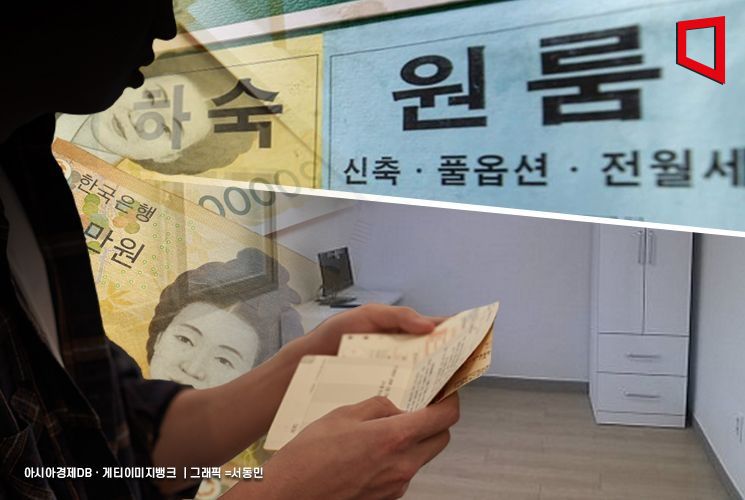 A survey revealed that 7 out of 10 Korean parents perceive their children's success and failure as the parents' responsibility. The report titled "Parent-Child Relationships and Social Stratification Differences in Early Adulthood," published on the 9th by the Korea Institute for Health and Social Affairs, included the results of a survey conducted last September targeting 1,600 parents aged 45 to 69 with children aged 19 to 34. Among the respondents, 66.9% agreed that "parents are responsible for their children's success and failure." Asia Economy
Among them, 58.1% responded 'mostly agree,' and 8.8% said 'strongly agree.' By gender, men (68.5%) showed a higher sense of responsibility than women (65.5%). By age group, agreement was highest among those aged 55-59 (70.1%), and by education level, those with a college degree or higher (73.6%) showed higher agreement rates. The agreement rate also increased with the size of assets.
The report interpreted, "This response pattern shows that parents' responsibility for their children's success and failure is not merely for moral reasons," and "Differences in agreement rates by gender, age, and social class can be seen as recognition that parenting and support influence individual success and failure."
An Independent Relationship with Adult Children Is Ideal
Most parents think it is ideal to have an independent relationship with their adult children but still believe support is necessary. 76.2% of respondents answered that 'parents and adult children should have an independent relationship.' Only 13.0% responded that 'a mutually dependent relationship between parents and adult children is desirable.'
However, regarding specific items such as education and marriage, many respondents expressed that parents should continue supporting their children. Respondents said they would support college tuition fees (83.9%), marriage expenses (70.1%), living expenses until employment (62.9%), and housing purchase costs (61.7%). Additionally, 42.1% said they intend to continue support as long as they are able.
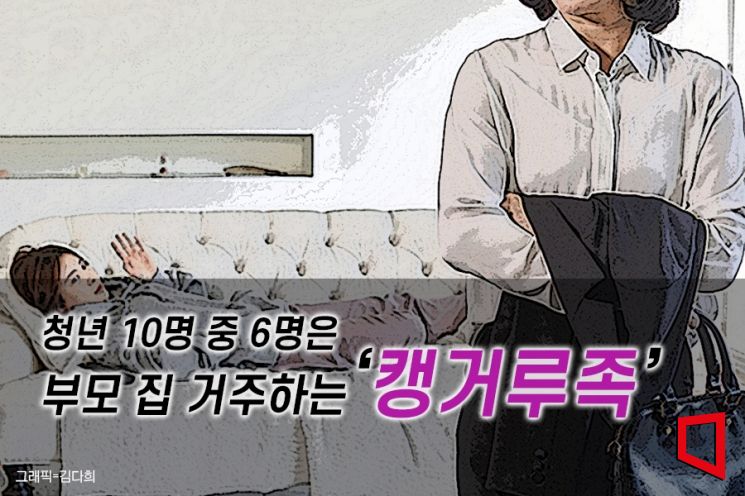
In particular, a high proportion considered college tuition as the parents' responsibility, and the younger generation shared this view. In the same study, 1,000 individuals aged 19 to 34 were asked about their agreement with parental financial support in various situations. 68.4% agreed that 'parents should support their children's college tuition fees.' 62.2% said 'parents should support living expenses until their children become financially independent.' Regarding marriage and housing purchase costs, 53.4% and 45.1% of young people respectively thought it was desirable for parents to help. 46.3% of respondents said 'even after children get a job, it is desirable for parents to help as long as they have the means.'
© The Asia Business Daily(www.asiae.co.kr). All rights reserved.
![Clutching a Stolen Dior Bag, Saying "I Hate Being Poor but Real"... The Grotesque Con of a "Human Knockoff" [Slate]](https://cwcontent.asiae.co.kr/asiaresize/183/2026021902243444107_1771435474.jpg)
















