Extension of Additional Subsidies Proportional to Corporate Discounts
Matching Rate for Discount-Linked Subsidies Raised Up to 80%
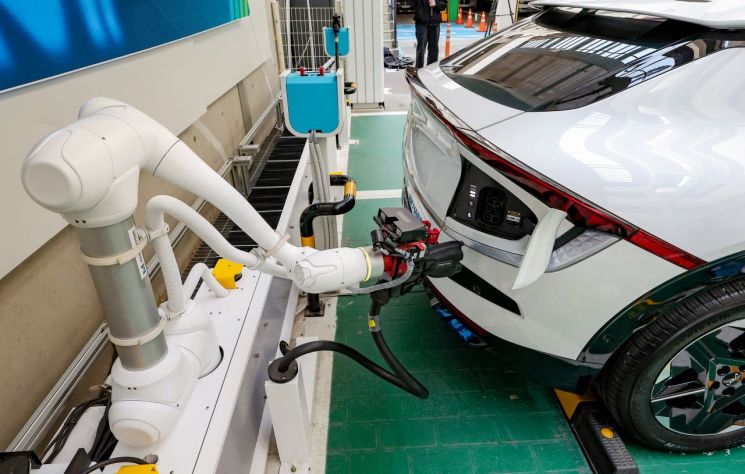
Electric vehicles are expected to become more affordable. The government is increasing subsidies, cutting taxes, and even leading public institutions to purchase electric vehicles. This strategy aims to reduce consumer burden and revitalize the domestic market.
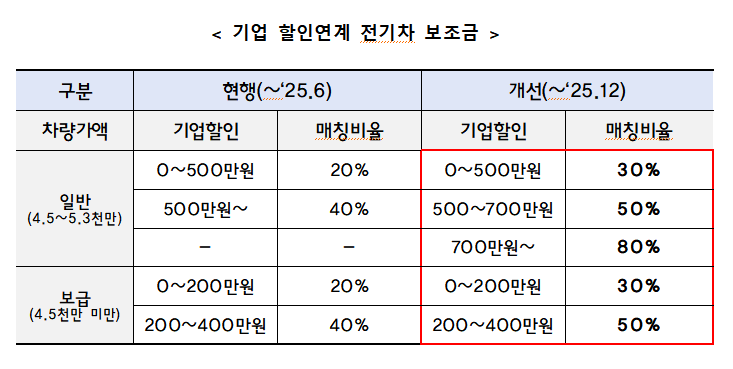
According to the "Emergency Response Measures to Strengthen the Automotive Ecosystem" announced by the government on the 9th, the corporate discount-linked electric vehicle subsidy program will be extended until December this year, and the subsidy matching ratio will be adjusted upward.
Previously, subsidies were provided up to 50% for discounts of 5 million KRW or more, but going forward, the subsidy rate will increase up to 80% depending on the discount amount. In particular, for affordable electric vehicles, a subsidy of up to 50% will be provided for discounts of 4 million KRW or more, which is expected to have a significant impact on consumer perception.
From a tax perspective, the application of the individual consumption tax flexible rate (3.5%) on electric vehicles will be maintained until the end of the year, and measures to further reduce taxes by up to 70% reflecting conditions such as replacing old vehicles are also under consideration. As a supplementary measure to enhance the price competitiveness of domestically produced electric vehicles, the government plans to operate tax support flexibly as needed.
Expansion of demand in the public sector will also proceed simultaneously. The central government, local governments, and public institutions plan to purchase more than 70% of their total vehicle purchases this year as work vehicles early, and among these, 100% will be zero-emission vehicles such as electric vehicles. This applies to 765 institutions including the government, local governments, education offices, and public institutions, and is expected to lead to actual demand creation.
The government expects that easing the price barrier in the private market will become a new breakthrough for the sluggish domestic market. A government official said, "The electric vehicle market is not just an eco-friendly transportation means but a core growth axis of our manufacturing industry," adding, "We will continue to pursue multi-layered policies from lowering consumer prices to strengthening the industrial ecosystem."
© The Asia Business Daily(www.asiae.co.kr). All rights reserved.
![Clutching a Stolen Dior Bag, Saying "I Hate Being Poor but Real"... The Grotesque Con of a "Human Knockoff" [Slate]](https://cwcontent.asiae.co.kr/asiaresize/183/2026021902243444107_1771435474.jpg)
















