Protecting the Three Pillars: Exports, Employment, and Industry Amid Tariff Hikes
Financial and Tax Support for Companies Affected by Tariffs
Expansion of R&D and Advanced Industry Funds
Electric Vehicle Subsidies and FTA Strategies in Parallel
As the second administration of Donald Trump significantly raised tariffs by item and country, our government has announced a comprehensive government-wide response plan focused on diversifying exports, minimizing damage to export companies, and maintaining domestic employment.
On the 9th, the government derived the 'Policy Directions for Responding to Changes in the Trade Environment' through the Economic Relations Ministers' Meeting combined with the Industrial Competitiveness Enhancement Ministers' Meeting, and announced all-around support measures.
This is because direct damage to domestic export industries highly dependent on the United States is inevitable. Automobiles account for 49.1% of total exports directed to the U.S., secondary batteries 47.2%, and steel 13.1%. Semiconductor exports (7.5%) are expected to slow due to rising IT device prices and decreased demand. Displays, electrical and electronics sectors are facing concerns over export disruptions due to high tariffs imposed on major production bases such as Vietnam.
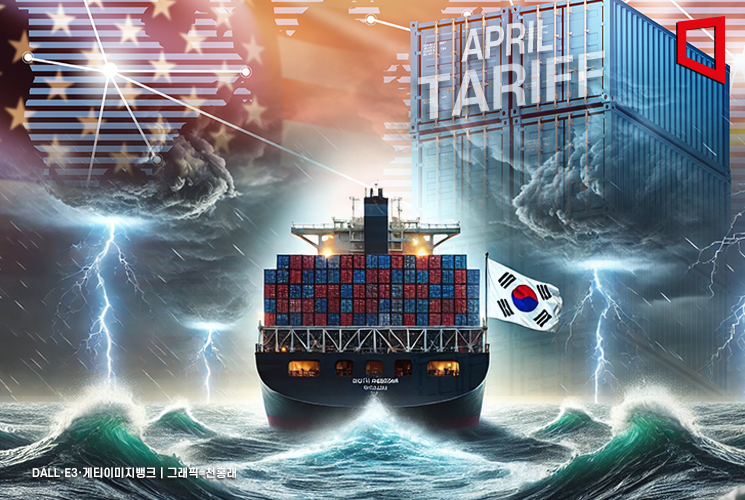
Government to Promote Comprehensive Support Measures to Minimize Export Damage
The government will directly support export-damaged companies and respond to the crisis by diversifying export markets and strengthening industrial competitiveness. At the same time, measures to reduce shocks to domestic production and employment will be implemented in parallel. First, tariff response consultation desks and nationwide relay consultation meetings will be operated so that companies can quickly obtain information and respond. The export voucher budget will also be increased by more than 100 billion KRW to support dispute resolution and alternative market discovery for affected companies.
Financial support will also be expanded. A financial program worth 2 trillion KRW will be activated for the automobile and parts industries, and a total of 25 trillion KRW for all small and medium enterprises and small business owners. Tax and tariff payment deferral measures will also be implemented. Additionally, measures to stimulate consumption such as expanding electric vehicle subsidies and reducing individual consumption tax (ICT) on new cars are being considered.
To reduce export dependence, the government will focus on targeting emerging markets including the 'Global South.' The regions hosting K fairs will be expanded, and a platform will be established to promote 30 major export projects. New support of 60 billion KRW will be provided for overseas subsidiary operation funds for small and medium enterprises, and the logistics cost limit will be raised.
Furthermore, the government will promote the conclusion and early enforcement of the Korea-China-Japan Free Trade Agreement (FTA) and agreements with other major countries, while simultaneously providing special guarantee and on-lending financial support for new market entry.
Expansion of Research and Development (R&D) and Tax Support
The government will accelerate R&D investment and institutional reforms centered on strategic industries. Preliminary feasibility studies will be exempted to promote rapid technology development, and the designation of national strategic technologies will be expanded to strengthen tax support. Policy funds will be concentrated on tariff damage, supply chain restructuring, and industrial competitiveness enhancement, with new establishment of the Advanced Strategic Industry Fund and Supply Chain Stabilization Fund.
Along with infrastructure construction such as undergrounding power transmission lines for the semiconductor cluster (1.8 trillion KRW), energy infrastructure will be expanded to meet data center demand.
Domestic investment inducement and mitigation of employment shocks will also be pursued. Domestic investment inducement will be promoted through expanded subsidies for companies returning to Korea and strengthened incentives for foreign investment. Regions affected by changes in the trade environment will be designated as industrial crisis and employment crisis areas to proactively provide funding and employment support.
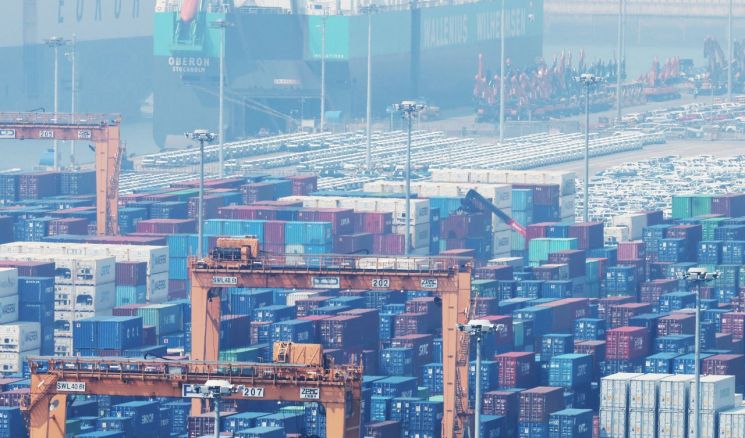
Customized Support by Industry from Automobiles to Semiconductors, Artificial Intelligence (AI), and Bio
Industry-specific customized responses will also be strengthened. The automobile industry will implement comprehensive measures including management stabilization, demand shock mitigation, and high value-added transformation. Semiconductor support will be expanded across the ecosystem including infrastructure, R&D, and workforce development, with separate response plans prepared in case of U.S. tariff imposition.
The AI sector will strengthen both infrastructure and institutional foundations, including early opening of the National AI Computing Center, enactment of the AI Basic Act enforcement decree, and securing advanced graphics processing units (GPUs). The bio industry will expand support for companies entering the U.S. market, increase R&D investment in biosimilars and new drug development, and establish bio and vaccine funds.
Secondary batteries will invest 7.9 trillion KRW in policy finance to develop ultra-gap technologies and prepare comprehensive measures to stabilize the recycled raw material supply chain. Steel will pursue low-carbon transition, anti-circumvention dumping measures, and advancement strategies. Shipbuilding will expand entry into the U.S. maintenance, repair, and overhaul (MRO) market and domestic production of parts, while petrochemicals will improve their structure through oversupply facility restructuring and high value-added strategies.
A government official stated, "In response to the rapid changes in the trade environment, we will mobilize all government capabilities to support flexible adaptation by companies and minimize damage to domestic employment and industrial infrastructure."
© The Asia Business Daily(www.asiae.co.kr). All rights reserved.
![Clutching a Stolen Dior Bag, Saying "I Hate Being Poor but Real"... The Grotesque Con of a "Human Knockoff" [Slate]](https://cwcontent.asiae.co.kr/asiaresize/183/2026021902243444107_1771435474.jpg)

















