Establishment of a National Medical School and Transformation of the Petrochemical and Steel Industries
Inclusion of Honam Mega City Economic Alliance
Efforts to Reflect Proposals to Each Political Party and Candidate
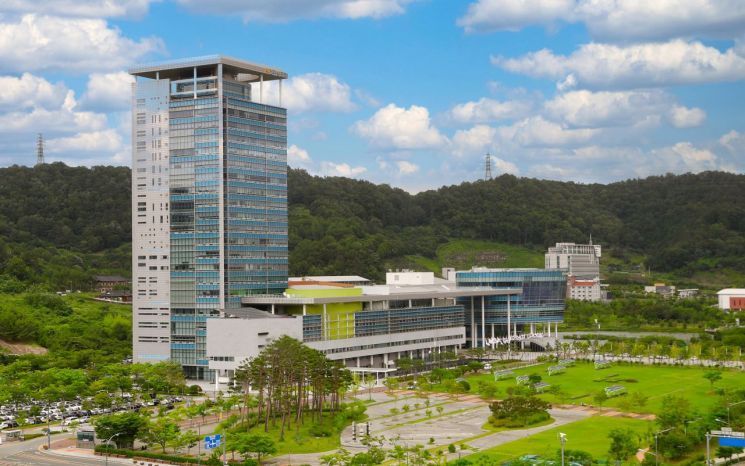
Jeollanam-do announced on the 8th a total of 75 future development pledge projects for the region, including the establishment of a national medical school in Jeollanam-do, a mega project for the transformation of the petrochemical industry, and the AI Supercluster Hub, which will be proposed to each political party and candidate in line with the 21st presidential election.
To secure future growth engines for the region, Jeollanam-do has identified “Jeollanam-do Future Development Large-Scale Projects” for national policy inclusion in cooperation with the Jeonnam Research Institute and various experts.
The pledges proposed by Jeollanam-do for the presidential election include 20 key projects to be prioritized for regional pledges for future development, 35 regional development projects linked to local issues by sector, and 20 institutional improvement and national policy proposals that need to be expanded nationwide, totaling 75 projects.
The main key pledges are: ▲Establishment of a national medical school in Jeollanam-do, which currently lacks a medical school ▲A mega project for the transformation of the petrochemical and steel industries ▲Construction of the Solaseado AI Supercluster Hub ▲Creation of a leading AI-based autonomous manufacturing zone for shipbuilding and marine industries ▲Development of an energy new city based on an energy expressway ▲Formation of a space launch vehicle industry convergence cluster ▲Expansion of Muan International Airport and a super-regional transportation network for the next 100 years.
Additionally, the top-priority projects include new growth projects to drive Jeollanam-do’s future, such as ▲Establishment of an AI advanced agriculture and livestock convergence district and the K-GIM (Gim) national strategic industry cluster ▲Creation of a global marine, tourism, and cultural hub on the southern coast, as well as super-regional SOC, agriculture and fisheries, tourism, and culture sectors.
In particular, regarding the “Honam Mega City Economic Alliance” agreement made in March by the three Honam region local governments (Jeollanam-do, Gwangju, and Jeonbuk), Jeollanam-do proposed projects such as securing renewable energy power grids for the energy expressway and super-regional SOC projects like the Honam Mega City Expressway (Goheung~Sejong) and the West Coast Railway (Gunsan~Mokpo) as leading models for Honam super-regional cooperation.
Aside from the 20 key projects, Jeollanam-do also announced 35 regional development projects in five categories?new growth engines, core SOC, future agriculture and fisheries, tourism/culture/leisure, and population/welfare?identified through input from experts and local stakeholders.
In the new growth engine category, there are 9 projects, including ▲Establishment of a southern region super-regional aviation infrastructure linked to future air mobility ▲Development of a global submarine environmental power grid ▲Creation of the Solaseado AI autonomous manufacturing demonstration hub. The SOC category includes 5 projects, such as ▲State management support for the access road to Yeosu National Industrial Complex (Yi Sunshin Bridge) ▲Establishment of a smart integrated disaster management system ▲National funding for local island and bridge (marine bridge) construction.
The future agriculture and fisheries category includes 7 projects, such as ▲Formation of a K-wine (traditional liquor) industry cluster ▲Establishment of a climate change response system for the marine and fisheries sector ▲Expansion of low-carbon smart agricultural infrastructure to respond to climate change. The tourism/culture/leisure category includes 8 projects, such as ▲Construction of the 2nd National Athletes’ Village ▲Hosting the 2031 International Garden Expo ▲Establishment of the National Goheung Dadohae Forest Healing Center. The population/welfare category, aimed at responding to regional extinction, includes 6 projects, such as ▲Creation of youth-specialized zones ▲Development of foreigner-specialized areas ▲Construction of the National Youth Didim Center Jeonnam Center.
To overcome the crisis of regional extinction, Jeollanam-do also prepared 20 institutional improvement and national policy proposals that must be adopted as national policies, including ▲Establishment of a national basic childbirth allowance ▲Nationalization of public benefit subsidies for farmers and fishermen ▲Expansion of essential medical infrastructure in depopulated areas ▲Nationwide expansion of the Jeonnam-style 10,000-won housing ▲Strengthening special support for venture companies in non-metropolitan areas ▲Stabilization of rice prices at production sites for food security ▲Expansion of funds and direct payments by 10 trillion won for agricultural income stability.
Yoon Jin-ho, Director of Planning and Coordination at Jeollanam-do, said, “We focused on identifying balanced large-scale projects essential for Jeollanam-do’s development in line with rapidly changing global trends such as AI, based on the region’s comparative advantages and resources.”
© The Asia Business Daily(www.asiae.co.kr). All rights reserved.
![Clutching a Stolen Dior Bag, Saying "I Hate Being Poor but Real"... The Grotesque Con of a "Human Knockoff" [Slate]](https://cwcontent.asiae.co.kr/asiaresize/183/2026021902243444107_1771435474.jpg)















