Last Year, School Electricity Bill Burden Reached 726 Billion KRW
Jeju Recorded the Highest Increase Rate at 85.4%
Last year, the burden of electricity bills on schools increased by about 72% compared to four years ago.
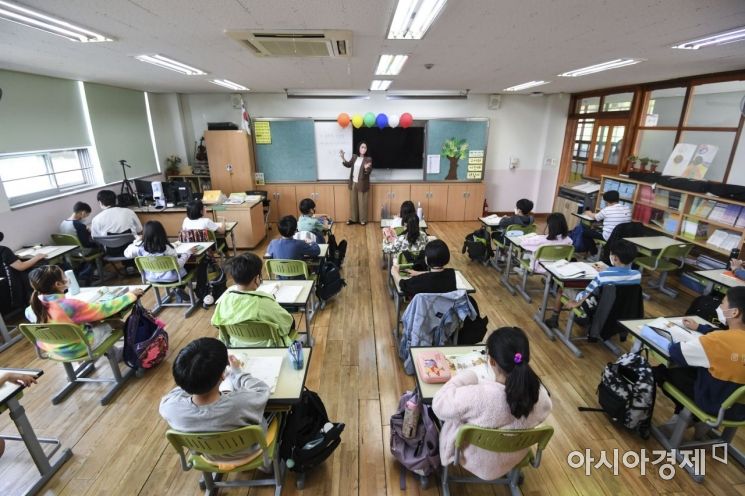
On the 8th, Baek Seung-ah, a member of the National Assembly's Education Committee from the Democratic Party of Korea, disclosed the "Status of Changes in School Electricity Bill Burden from Fiscal Years 2020 to 2024." According to the status, the electricity bill burden for kindergartens, elementary, middle, high, and special schools in 17 metropolitan and provincial areas last year was estimated at 726 billion KRW. This is a 71.9% surge from 422.3 billion KRW in 2020, four years ago.
By metropolitan and provincial offices of education, Jeju had the highest increase rate at 85.4%. This was followed by Gwangju at 83.6%, Sejong at 81.3%, Gyeonggi at 79.3%, and Busan at 78.6%. The proportion of electricity bills in nationwide school operating expenses also increased.
The ratio of electricity bills to school operating expenses decreased slightly from 3.68% in 2020 to 3.57% in 2021, when non-face-to-face classes were held due to COVID-19, then expanded to 3.72% in 2022, 4.06% in 2023, and 4.12% in 2024.
According to the data on "Electricity Bill Unit Prices and Educational Power Sales Performance over the Last 5 Years as of 2024" submitted by Korea Electric Power Corporation to Assemblywoman Baek, last year's electricity bill unit prices per kWh were 173.0 KRW for general use, 168.2 KRW for industrial use, 156.9 KRW for residential use, 143.0 KRW for educational use, and 82.1 KRW for agricultural use. The annual sales volume of electricity for educational use increased by 25.5%, from a total of 7,515 GWh in 2020 to 9,433 GWh last year.
Meanwhile, the National Association of Metropolitan and Provincial Superintendents of Education reviewed and passed a proposal at the general meeting held in Boryeong, Chungnam, on the 27th of last month, requesting the Ministry of Trade, Industry and Energy and the Ministry of Economy and Finance to reduce electricity bills to the level of agricultural use. The association expressed concern that due to the increase in electricity bills, schools have no choice but to reduce heating and cooling operations, which harms the educational environment and worsens school finances.
Assemblywoman Baek stated, "Due to the increase in electricity bills, record-breaking heatwaves, and the rapid increase in power consumption caused by the use of AI digital textbooks, local education finances will deteriorate and the burden on school operating expenses will increase," and urged, "The government should reduce the unit price of electricity for educational use to the level of agricultural use, considering the special nature and publicness of education."
© The Asia Business Daily(www.asiae.co.kr). All rights reserved.
![Clutching a Stolen Dior Bag, Saying "I Hate Being Poor but Real"... The Grotesque Con of a "Human Knockoff" [Slate]](https://cwcontent.asiae.co.kr/asiaresize/183/2026021902243444107_1771435474.jpg)















