Lifecycle Policies from Pregnancy to Child-Rearing Prove Effective
Oh Eon-seok, Mayor of Dobong-gu: "We Will Strengthen and Develop Policies for Steady Growth"
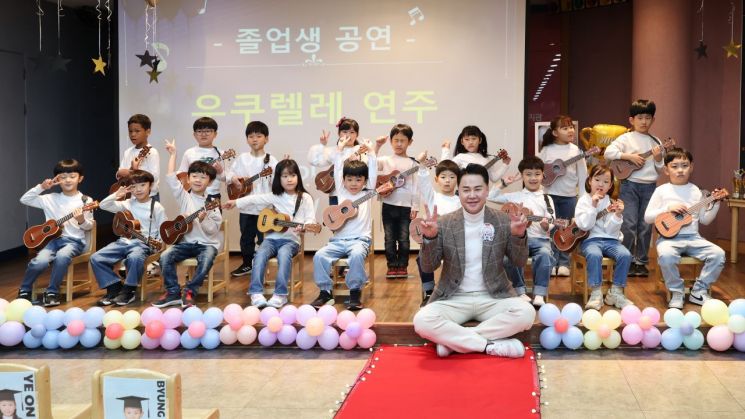
Dobong-gu (District Mayor Oh Eon-seok) has succeeded in reversing both the birth rate growth and the total fertility rate.
According to the Population Trend Survey released by Statistics Korea, the number of births in Dobong-gu increased from 971 in 2023 to 1,000 in 2024. The birth rate growth changed from -11.08% in 2023 to 2.99% in 2024, and the total fertility rate rose from 0.518% to 0.57%.
Considering that the birth rate growth had continuously recorded negative values over the past six years, this achievement is remarkable. The birth rate growth in the district over the last six years was -10.44% in 2018, -13.12% in 2019, -17.86% in 2020, -6.73% in 2021, -3.87% in 2022, and -11.08% in 2023.
This outcome is attributed to the district’s lifecycle policies covering pregnancy, childbirth, and child-rearing.
A district official stated, “While the figures are not yet satisfactory compared to nationwide data, the significance lies in the rebound of these numbers,” adding, “We will do our best to promote related measures to ensure this upward trend continues.”
In line with the government’s ‘4th Basic Plan for Low Fertility and Aging Society,’ the district is implementing various projects tailored to local circumstances. Notable examples include the ‘Dobong-type Teacher-to-Child Ratio Improvement Project’ and the ‘Seoul-type Moa Daycare Center Project.’
The ‘Dobong-type Teacher-to-Child Ratio Improvement Project’ reduces the number of children assigned to one daycare teacher to provide safer and more attentive care. The district expanded the budget from 560 million KRW last year to 900 million KRW this year. Consequently, support will increase from 48 facilities in 2024 to 83 facilities in 2025.
The ‘Seoul-type Moa Daycare Center Project’ combines 3 to 5 national, public, private, and home daycare centers to enhance the quality of childcare services. Although the budget is allocated from city funds, the district fully manages operations. While three communities operated until last year, one more community has been added this year, making a total of four communities.
Additionally, the district offers a wide range of support programs for child-rearing, especially providing extensive financial assistance where needed.
The initial support amount for pregnancy and childbirth in the district is 5.3 million KRW. This includes ▲70 million KRW for maternity transportation expenses ▲2 million KRW for the first meeting voucher ▲1 million KRW for parental allowance ▲1 million KRW for Seoul-type postpartum care expenses ▲100,000 KRW for child allowance ▲100,000 KRW for Seoul Mom and Dad Taxi ▲350,000 KRW for the mother and newborn health care service copayment ▲50,000 KRW for birth congratulatory goods. Afterward, support continues with childcare fees and kindergarten tuition assistance as the child grows.
Families raising multiple children receive more detailed support. For families with two or more children including those under 12 years old, the district subsidizes 1,000 KRW per hour for the copayment of child care services and provides 20,000 KRW monthly for five years to cover accident and illness insurance premiums for children born third or later.
Moreover, from the second half of 2023 to the first half of 2024, the district revised eight ordinances to grant usage fee reductions at 118 public facilities such as public parking lots, sports facilities, and Seoul-type kids cafes for families with two or more children. Previously, these benefits were only available to families with three or more children.
For maternal health, the district operates various support programs centered around the ‘I-Mom Health Center.’ The center offers one-stop health services from health checkups, infertility support, pregnancy registration, breastfeeding counseling, to health classes for mothers and children. Located within the district health center, it is available to all Dobong-gu residents planning pregnancy and childbirth.
To address career interruptions after childbirth, various initiatives are underway. The Dobong Women’s Center offers diverse vocational training courses, having operated 221 courses last year with nearly 1,900 participants. The center also runs an employment counseling office, registering and managing a total of 5,273 job postings and job seekers last year, and successfully facilitating 597 job placements.
Oh Eon-seok, Mayor of Dobong-gu, said, “The increase in birth numbers and fertility rates is not a one-time event but a foundation for sustainable growth. We will continue to develop and strengthen policies,” adding, “The district will strive to create an environment where parents and children can be happy together.”
This year, the district’s low birthrate response policy is divided into three major areas: ▲Creating a society where people work and care together ▲A society where everyone’s capabilities are fully realized ▲Adapting to demographic changes, with a total of 69 projects underway. A budget of 92.3 billion KRW has been allocated for this purpose.
© The Asia Business Daily(www.asiae.co.kr). All rights reserved.
![Clutching a Stolen Dior Bag, Saying "I Hate Being Poor but Real"... The Grotesque Con of a "Human Knockoff" [Slate]](https://cwcontent.asiae.co.kr/asiaresize/183/2026021902243444107_1771435474.jpg)















