Choi Sang-mok Heads to G20... Begins Restoration of Economic Diplomacy
Focus on Activating Tariff Negotiation Channels to Block External Risks
Urgent Need to Form a Trade Delegation Recognized by the New Government
Seed Money to Revive Growth, Including Support for the Automotive Industry
Momentum Building for Supplementary Budget... Rapid Shift to Fiscal Expansion Needed
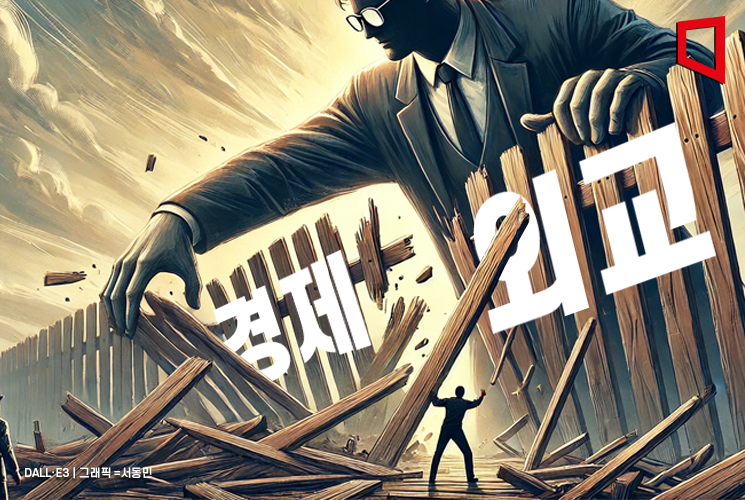
With the impeachment of former President Yoon Seok-yeol plunging the country into a presidential election crisis, concerns are growing about the future of the South Korean economy. This is because the movements of domestic and international variables threatening the Korean economy, such as the low-growth wave and the tariff bombardment originating from the United States, are gaining momentum. As the country faces a leadership vacuum for two months until the presidential election, there are increasing worries that the Korean economy, which has been drifting for nearly four months since the martial law incident, may be swallowed by the election black hole, pushing economic issues to a lower priority. To minimize domestic and external risks until the June presidential election, it is pointed out that the economic team led by Choi Sang-mok, who will play the role of the closing pitcher, must be empowered to swiftly restore economic diplomacy.
Choi Sang-mok Heads to G20... Initiates Restoration of Economic Diplomacy
Focuses on Activating Tariff Negotiation Channels to Block External Risks
Must Form a Trade Delegation Recognized by the New Government
According to the Ministry of Economy and Finance on the 8th, Choi Sang-mok, Deputy Prime Minister for Economy and Minister of Economy and Finance, will attend the G20 Finance Ministers and Central Bank Governors Meeting and the International Monetary Fund (IMF) and World Bank (WB) Spring Meetings held in Washington D.C., USA, from the 23rd to 27th. He is also planning bilateral meetings with key counterparts, including U.S. Treasury Secretary Janet Yellen, which had failed in February. The G20 Finance Ministers Meeting is a multilateral meeting where heads of major countries' economic and financial sectors gather. It is expected that this meeting will serve as a turning point to open discussions on economic issues such as tariff responses and to initiate strategic alliances. Additionally, linked to this visit to the U.S., he will meet global credit rating agencies and overseas institutional investors to explain the recent political situation in Korea and work to contain unnecessary anxiety, thereby safeguarding external credibility.
Previously, Choi, who had missed the meeting held in South Africa in February due to the limitations of the acting government system, is now initiating the restoration of economic diplomacy that had been suspended for nearly four months since the martial law incident by attending the G20. A government official said, "During the G20 meeting, we plan to hold individual meetings with finance ministers of competing countries hit by high tariffs, including the U.S., and discuss sensitive economic issues such as trade and coordinate cooperation measures. The countries for bilateral meetings and the credit rating agencies to meet are currently being coordinated and have not yet been finalized," he added.

As the United States wields the tariff sword threatening South Korea and the world, and major countries such as China and the European Union (EU) retaliate with counter-tariffs, intensifying the global tariff war, economic diplomacy to shield our companies and economy from collateral damage has become urgent. On the 8th and 9th (local time), Jung In-gyo, Director-General for Trade Negotiations at the Ministry of Trade, Industry and Energy, visited Washington D.C. to meet with Katherine Tai, U.S. Trade Representative (USTR), and others to negotiate lowering the 25% tariff rate. This is the second meeting following one in March. Despite the absence of national leadership during the impeachment crisis, the Ministry of Trade, Industry and Energy has led trade negotiations with the U.S., but the lack of inter-ministerial coordination functions clearly limits effectiveness. Earlier, Minister Ahn Deok-geun of the Ministry of Trade, Industry and Energy also met twice with U.S. Secretary of Commerce Gina Raimondo last month but returned empty-handed.
Since the U.S. government does not recognize those who will change after the June presidential election as practical negotiation partners, there are calls to urgently form a delegation that can be recognized by the new government as well. Professor Kang In-soo of the Department of Economics at Sookmyung Women's University said, "Although the golden time to respond to tariffs was missed during the impeachment crisis, resulting in the unfavorable 25% tariff, there is still room for negotiation," adding, "a delegation agreed upon by both ruling and opposition parties or a working-level negotiation team led by the Deputy Prime Minister for Economy should be formed and given full authority."
Seed Money to Revive Growth Including Support for the Automotive Industry
Momentum Gained for Supplementary Budget... Rapid Shift to Fiscal Expansion Needed
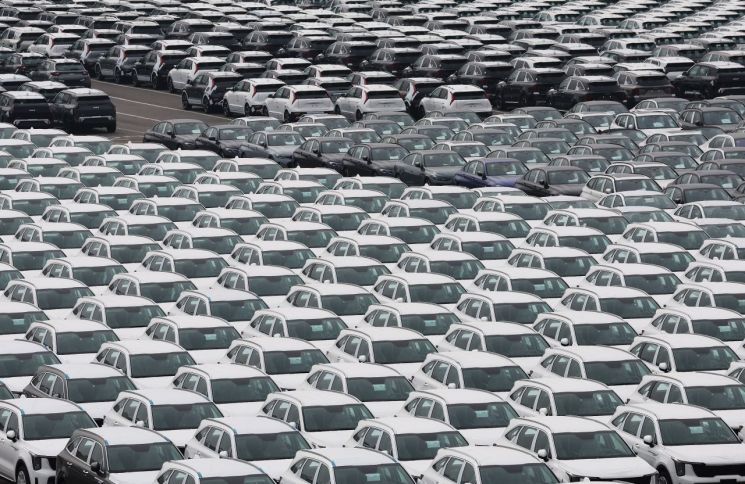
The government will soon announce a plan to provide emergency policy financing of about 3 trillion won to the automotive industry, which has been directly hit by the U.S. tariff bomb. As part of measures to revitalize domestic demand, it will also include various tax support measures, including an additional extension of the individual consumption tax (ICT) reduction on new cars, which is scheduled to expire at the end of June. A government official said, "The scale of policy financing support for the automotive industry is about 3 trillion won," adding, "It will be an expansion of existing support programs by institutions such as the Korea Development Bank." Policy financial institutions such as the Korea Development Bank, IBK Industrial Bank of Korea, Korea Credit Guarantee Fund, and Korea Technology Finance Corporation plan to supply a record-high 248 trillion won this year to support corporate management and industrial restructuring for industrial upgrading.
The government plans to finalize the automotive industry support measures at this week's Economic Ministers' Meeting combined with the Industrial Competitiveness Ministers' Meeting. In addition, the Advanced Strategic Industry Fund newly established at the Korea Development Bank last month to support future vehicles will also begin support within the year. If the related amendment to the Korea Development Bank Act and government guarantee consent pass in the National Assembly, support of up to 50 trillion won over five years will be possible. A financial authority official said, "The 50 trillion won Advanced Strategic Industry Fund is being jointly proposed by the People Power Party and the Democratic Party, and we plan to launch it as soon as possible to provide support."
Industrial restructuring burdens should not be left solely to the next government. Structural reorganization of the petrochemical industry, which is facing a crisis like a candle in the wind due to structural limits such as oversupply from China, urgently requires restructuring to avoid missing the golden time for survival. Discussions on measures to enhance the competitiveness of the petrochemical industry, which the government has been promoting since last year, have made no progress due to the martial law incident and the prolonged impeachment crisis. An industry insider said, "the later the restructuring process is delayed, the more inevitable the decline in competitiveness of Korean companies in the global market," emphasizing "government-led industrial restructuring work is urgent."
Experts agree that the government should quickly push for an additional supplementary budget (supplementary budget) of 10 trillion won before the growth spark completely dies out, so that policy momentum can spread throughout the economy in the second half of the year. Professor Kang said, "Executing the supplementary budget to revive the economy is more urgent than the presidential election," adding, "The supplementary budget should not focus solely on nationwide consumption coupons (local currency) but also expand to support small business owners and the trade sector to buffer tariff shocks and boost the sentiment of economic agents." The government has not yet submitted the supplementary budget bill but believes that a 10 trillion won supplementary budget is possible by selecting essential projects such as disaster relief, trade, and livelihood that have no disagreements between ruling and opposition parties. According to the Korea Forest Service, the damage from wildfires in the Yeongnam region is estimated to exceed 2 trillion won, and the tax revenue outlook is not bright. Therefore, it is likely that an urgent 10 trillion won supplementary budget will be passed first, with additional supplementary budgets considered later depending on tax revenue progress.
© The Asia Business Daily(www.asiae.co.kr). All rights reserved.
![Clutching a Stolen Dior Bag, Saying "I Hate Being Poor but Real"... The Grotesque Con of a "Human Knockoff" [Slate]](https://cwcontent.asiae.co.kr/asiaresize/183/2026021902243444107_1771435474.jpg)

















