The acquisition of the Chinese video platform 'TikTok' by an American company has been halted. It is believed that the Chinese government opposed the TikTok acquisition in response to the reciprocal tariffs announced by President Donald Trump.
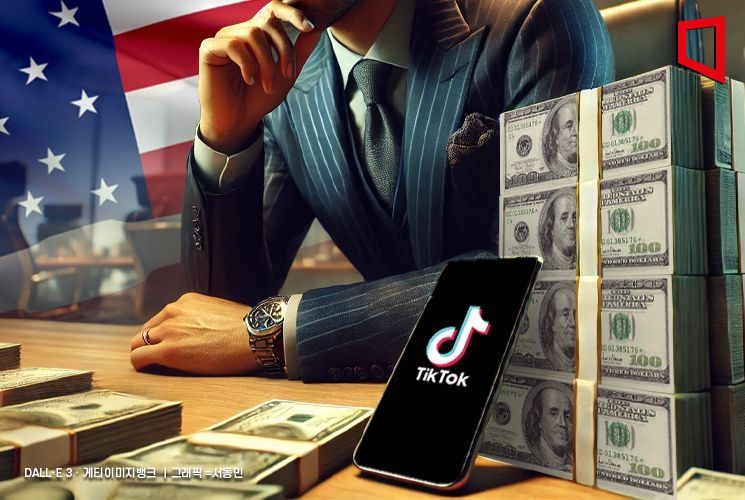
According to major foreign media on the 5th, representatives of ByteDance, TikTok's parent company in China, reportedly contacted the White House on the 3rd and informed them that "the Chinese government has decided not to approve the TikTok deal until China can negotiate trade and tariffs with the United States." This move came the day after the U.S. announced a 34% reciprocal tariff rate on China.
Initially, the U.S. raised security concerns and prepared a negotiation plan for an American company to acquire a stake in TikTok's U.S. business, pushing for a partial acquisition. The plan was to spin off TikTok's U.S. operations into a separate American corporation, with U.S. investors holding more than half of the shares in that corporation, and ByteDance holding only a minority stake.
However, after President Trump announced reciprocal tariffs on China and several other countries, the TikTok acquisition faced the risk of collapse. China opposed the TikTok sale plan by linking it to the U.S.-China reciprocal tariff negotiations.
In response, President Trump decided to extend the implementation of the so-called 'TikTok Ban Act' by an additional 75 days. Through his social media (SNS), President Trump stated, "I understand that China is upset about the additional reciprocal tariffs the U.S. plans to impose on China," but added, "We hope to continue cooperating with China in good faith." He further said, "We look forward to working with TikTok and China to finalize the deal."
Earlier, the U.S. Congress enacted the 'TikTok Ban Act' in April last year, citing that TikTok collects large amounts of personal information from Americans and threatens national security. It was essentially pressure to force TikTok to sell its U.S. business rights. However, President Trump, who benefited from the 'TikTok effect' targeting young voters during the presidential election, signed an executive order on January 20th, shortly after his inauguration, to delay the enforcement of the TikTok Ban Act until April 5th, extending it by 75 days. At the same time, he actively pursued the TikTok acquisition by directly proposing the establishment of a TikTok U.S. corporation and a 50% stake acquisition, but the recent reciprocal tariff measures have become an obstacle. The TikTok acquisition plan may become a variable in future U.S.-China reciprocal tariff negotiations.
© The Asia Business Daily(www.asiae.co.kr). All rights reserved.

















