As the United States announced plans to impose reciprocal tariffs on Japan, the Japanese government and political circles have been visibly unsettled by the unexpectedly severe measures and are busily working on countermeasures.
According to foreign media and Yonhap News on the 4th, officials from Japan's economic ministries expressed surprise at the announcement by the Donald Trump administration that it would impose a 24% reciprocal tariff on Japanese products. In response, the Japanese government convened a meeting of relevant ministers the previous day to discuss countermeasures.
First, the Ministry of Economy, Trade and Industry announced plans to establish consultation centers at over 1,000 locations nationwide and to expand financial support targeted at small and medium-sized enterprises. Within the government, there is a growing recognition that these measures alone are insufficient, and additional economic policies are needed, with the possibility of drafting a supplementary budget also being discussed.
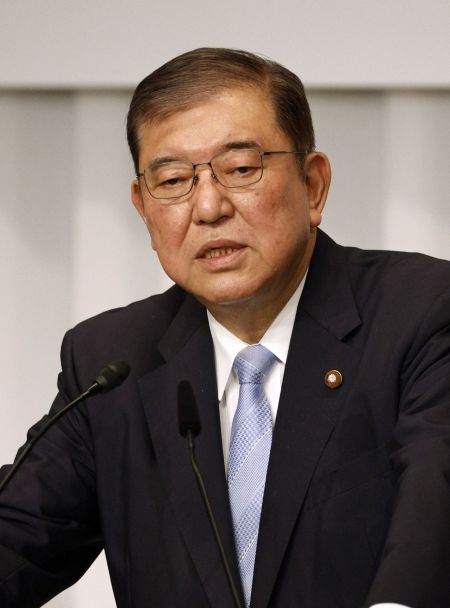
Prime Minister Ishiba held a bipartisan meeting with party leaders for the first time since taking office that afternoon to seek cross-party cooperation. He indicated a willingness to meet directly for negotiations if necessary and requested the opposition party to adjust the parliamentary schedule accordingly.
He expressed "serious concerns" that the U.S. tariff measures might conflict with World Trade Organization (WTO) agreements or the U.S.-Japan trade agreement.
Furthermore, he stated his intention to thoroughly analyze the economic impact and do his utmost to support the industrial sector, also announcing plans to establish a meeting of relevant ministers.
In Japan, bipartisan meetings of party leaders have mainly been convened to discuss responses to major disasters, such as during the Noto earthquake in January last year under former Prime Minister Fumio Kishida.
Prime Minister Ishiba, who was praised for successfully concluding a summit with President Trump in February, had maintained a strategy of requesting exclusion from tariff measures.
However, with the recent announcement including automobile tariffs and reciprocal tariffs, the Ishiba administration is reportedly facing a difficult situation. Consequently, criticism is already emerging that the government’s response has been inadequate.
© The Asia Business Daily(www.asiae.co.kr). All rights reserved.
![Clutching a Stolen Dior Bag, Saying "I Hate Being Poor but Real"... The Grotesque Con of a "Human Knockoff" [Slate]](https://cwcontent.asiae.co.kr/asiaresize/183/2026021902243444107_1771435474.jpg)
















