Excavation of Early Celadon Kiln Site in Dotong-ri, Jinan
Discovery of Additional Brick Kiln Sheds Light on Celadon Production and China-Korea Exchanges
With the support of Jinan County, North Jeolla Province (Governor Jeon Chunseong), the Museum of the National University of Gunsan (Director Kwak Janggeun) has discovered an additional brick kiln during the excavation of the Early Celadon Kiln Site in Dotong-ri, Jinan.
According to the county on the 4th, the area investigated this time is about 110 meters east of the previously designated historic site, proving that the distribution range of the kilns was wider than previously expected.
The section investigated so far is about 14 meters, but considering the shape, terrain, and waste areas of the kilns found in the previously designated historic site, the total length is estimated to reach 40 meters.
This excavation confirmed the main space where celadon was fired, showing a process in which the kiln was initially constructed with bricks and gradually transformed into a clay kiln. In particular, the fact that the ceilings of both the brick and clay kilns remain intact is the first case found on the Korean Peninsula, which holds great academic significance. The construction of the kiln by stacking bricks in layers indicates that Chinese celadon production technology was introduced and established in Korea.
The clay kiln walls show traces of more than 12 repairs, indicating that the kiln was operated for a long period. The side entrance facilities are also well-preserved, making them valuable resources for studying the celadon production process.
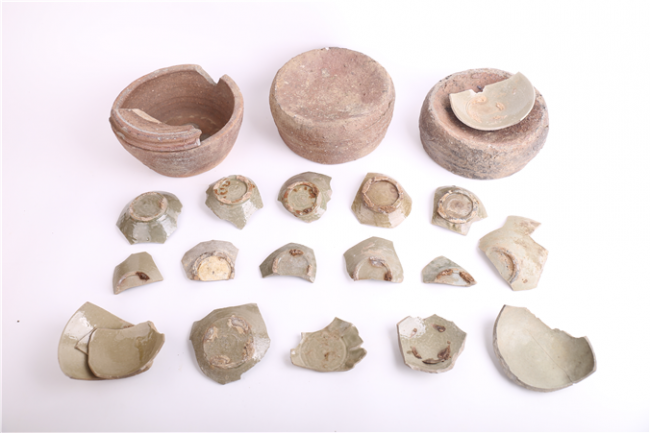
From the kiln waste dump, various relics were excavated, including celadon bowls (sabal) and plates with sunhaemurigeup, flower-shaped plates, fragments of ewers, various types of gapbal, and brick pieces. These not only demonstrate the high level of celadon production technology of the period but also serve as important materials to clarify the structure of the kiln and the exchange relationship with China.
Additionally, this kiln site in Dotong-ri, Seongsu-myeon, Jinan County, is located near Jeonju, the capital of Later Baekje. Based on radiocarbon dating and other evidence, it is suggested that the kiln may have been operated by Later Baekje.
Governor Jeon Chunseong stated, "Through this excavation, we have secured materials to clarify the structure and production technology of early celadon kilns and their exchanges with China. We will pursue further excavations and establish institutional measures such as expanding the historic site area to protect the relics." He added, "We will also strive to utilize this site as a historical and cultural tourism resource so that many people can visit Jinan and experience ceramic culture."
© The Asia Business Daily(www.asiae.co.kr). All rights reserved.
![Clutching a Stolen Dior Bag, Saying "I Hate Being Poor but Real"... The Grotesque Con of a "Human Knockoff" [Slate]](https://cwcontent.asiae.co.kr/asiaresize/183/2026021902243444107_1771435474.jpg)















