Education Prices Up 2.9% Year-on-Year Last Month
"University Tuition Hikes Significantly Impact Inflation"
Private Education Expenses Keep Rising Despite Declining School-Age Population
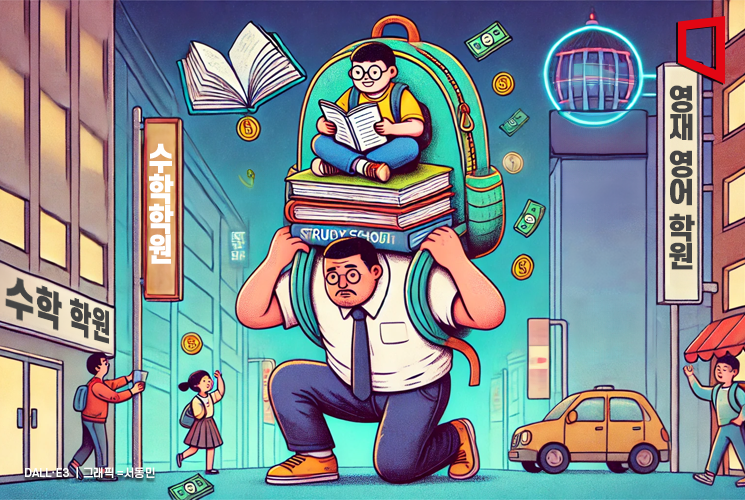
Last month, education prices rose at the fastest rate in over 16 years. This was due to increases in university tuition fees as well as higher costs for study materials and private academies. Considering the private education expenses for infants and toddlers, which are not captured in official statistics, the actual impact of education costs on inflation is likely even greater.
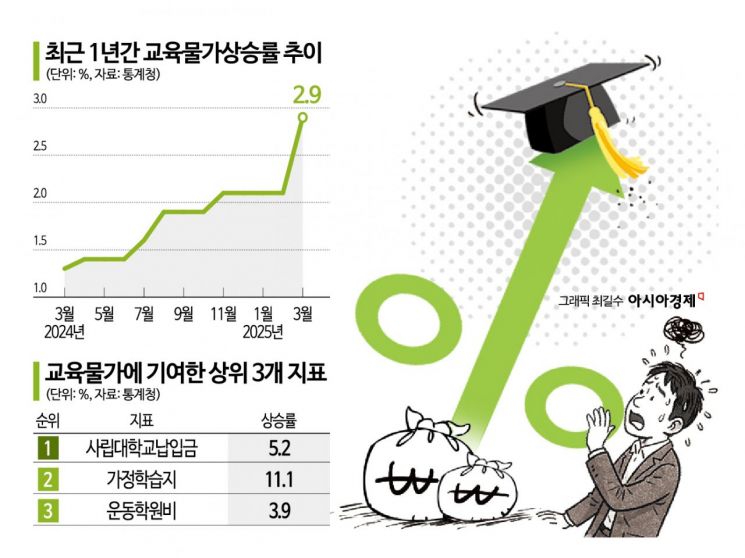
According to Statistics Korea on the 4th, the education price inflation rate last month was 2.9% compared to the same month last year. This increase is the largest in 16 years and 1 month since February 2009, when it was 4.8%. The education price inflation rate, which was 1.3% in March last year, has gradually risen over time to 1.4% in April, 1.6% in July, 1.9% in August, and 2.1% in November.
The indicator with the highest contribution to inflation was ‘private university tuition fees.’ Last month, private university tuition fees increased by 5.2% compared to the same period last year. This is the largest increase in 16 years and 1 month since February 2009, when it rose by 7.1%. A Statistics Korea official explained, “The government maintained a freeze on university tuition fees since 2009, which kept education prices from rising,” and added, “This year, the decision by universities to raise tuition fees had a significant impact on inflation.”
According to the Korea Council of Private University Presidents, as of the end of February, 131 out of 190 four-year universities nationwide (68.9%) decided to raise tuition fees. Among them, 54 universities (41%) increased tuition fees by between 5% and 5.49%. Applying a simple 5% increase to last year’s average private university tuition fee of 7.63 million KRW means an additional 380,000 KRW per year. Since national scholarships (Type II) are only provided to universities that freeze or reduce tuition fees, the actual financial burden on students may be even greater.
Not only tuition fees but other education costs are also rising simultaneously. Last month, the cost of ‘home study materials’ increased by 11.1% year-on-year, making it the second largest contributor to inflation after private university tuition fees. This increase is the highest in over 30 years since December 1996, when it was 12.8%. The inflation rate for ‘sports academy fees,’ including Taekwondo dojangs and other sports facilities, was also relatively high at 3.9%.
Rapidly Soaring Private Education Costs Also Drive Up Inflation
If the current trend continues, education expenses could become a key factor driving future inflation. Before 2009, the education price inflation rate was relatively high at 4-5%, but the tuition freeze policy helped stabilize prices, even resulting in negative inflation for 16 months starting in September 2019. However, as universities have begun raising tuition fees again and other education costs continue to rise steadily, there are forecasts that the education price inflation rate could climb back to around 3%.
The increase in private education expenses is particularly steep. According to the ‘2024 Survey on Private Education Expenses for Elementary, Middle, and High School Students’ released by the Ministry of Education and Statistics Korea on the 13th of last month, the total private education expenses for last year reached 29.2 trillion KRW, the highest ever recorded. While the school-age population is declining each year, private education expenses continue to break records annually. The overall participation rate in private education rose by 1.5 percentage points from the previous year, surpassing 80% for the first time. The average monthly private education expense per student was 592,000 KRW. The largest increase was seen in elementary school students’ expenses, which rose by 9%, followed by middle school students at 5.3%, and high school students at 4.4%.
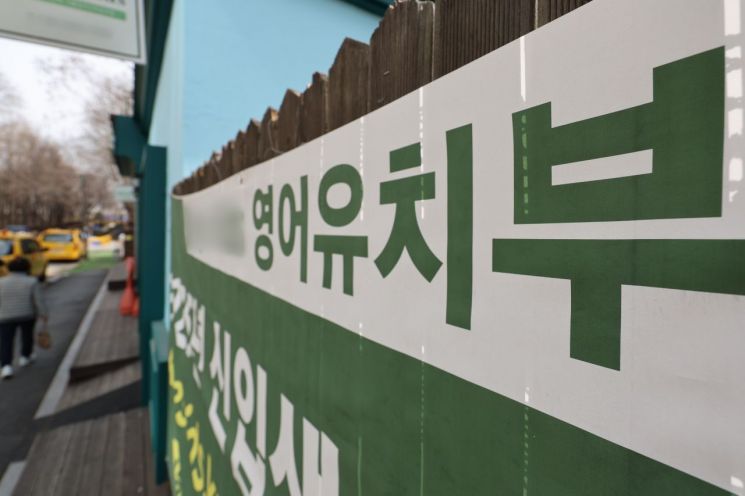
The actual burden of education costs felt by the public is likely even greater. This is because private education expenses for infants and toddlers are excluded from official national statistics. According to a survey conducted by Statistics Korea on behalf of the Ministry of Education, the average monthly private education expense per child under six years old who is not yet in school was 332,000 KRW last year. The average monthly cost of English kindergartens, known as English academies for young children, approached 1,545,000 KRW.
The government’s goal to keep private education expenses below the inflation rate has also lost its effectiveness. In 2023, the government mentioned the so-called ‘private education interest cartel’ and expressed its intention to reduce the burden of private education expenses. Song Geun-hyun, Director of Digital Education Planning at the Ministry of Education, apologized at the announcement of private education expense statistics last month, saying, “We feel sorry to the public.” Bae Dong-in, Policy Planning Director at the Ministry of Education, reiterated, “Since there are factors that are realistically difficult to control, we are trying at least to manage expenses below the inflation rate.”
© The Asia Business Daily(www.asiae.co.kr). All rights reserved.



















