iPhone 16 Pro Max Could Jump from $1,599 to $2,300
Samsung Expected to Benefit from Tariff Impact
Analysis suggests that the top-tier iPhone model could reach a price of 3.33 million won due to the reciprocal tariffs announced by U.S. President Donald Trump. If Apple passes the costs of the tariffs onto consumers, iPhone prices could rise by 30 to 40% from current levels.
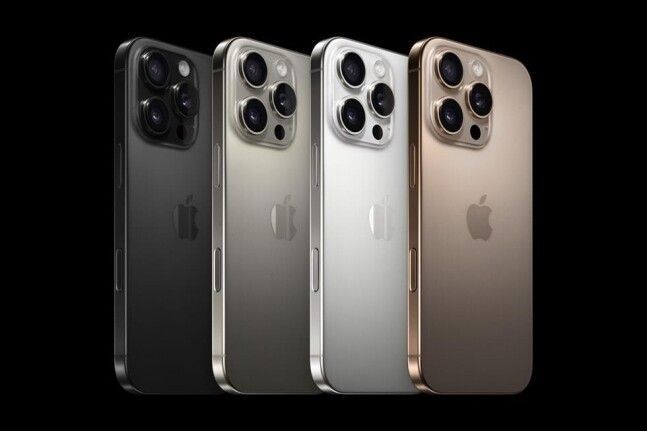
On the 3rd (local time), Reuters reported this based on the reciprocal tariffs President Trump imposed on China. Trump had previously imposed a 34% reciprocal tariff on China the day before. Adding this to the existing 20% tariff on Chinese imports, the total tariff on products imported from China would surge to 54%. Although Apple is diversifying iPhone production to Southeast Asia and other regions, most of its production still takes place in China.
Reuters, citing Wall Street’s Rosenblatt Securities, analyzed that the base model of the iPhone 16 series, launched at $799 in the U.S., could reach a price of up to $1,142 if tariffs increase. Based on the reciprocal tariffs imposed by President Trump, it predicted that Apple passing these costs onto consumers could result in a 43% price increase.
In particular, the highest-end model, the iPhone 16 Pro Max, could see consumer prices rise from $1,599 to $2,300, a 43% increase. The budget model, iPhone 16e, released in February, is expected to increase from $599 to $856. Since reciprocal tariffs are imposed on products imported into the U.S., the increased prices would apply only within the U.S.
 If the reciprocal tariffs announced by U.S. President Donald Trump are implemented, an analysis suggests that in the worst-case scenario, the price of the top-tier iPhone model could reach 3.33 million won. Reuters Yonhap News
During his first term, President Trump also imposed broad tariffs on Chinese imports, but Apple received exemptions or delays for some products at that time. Barton Crockett, an analyst at Rosenblatt Securities, said, "This time, the China tariffs are unfolding very differently from our expectations that Apple, as a leading U.S. company, would receive preferential treatment as before." Neil Shah, co-founder of Counterpoint Research, said, "For Apple to offset the tariff costs, it would need to increase prices by at least 30% on average."
However, there is also a possibility that Apple may not immediately raise iPhone prices. Given the sluggish growth in the smartphone market and Apple’s already high-price strategy, it is considered difficult for Apple to increase prices further. If demand stagnates and cost increases from tariffs materialize, Apple’s profitability will face additional pressure. Angelo Zino, a stock analyst at CFRA Research, said, "It will be difficult for Apple to pass on more than a 5 to 10% price increase to consumers," adding, "Apple plans price increases systematically every year, so it is likely to hold off major price hikes until the iPhone 17 launch scheduled for this fall."
Meanwhile, some analyses suggest this could be an opportunity for Samsung Electronics. Samsung’s low-cost smartphones, produced under the ODM (Original Design Manufacturer) model, have some units manufactured in China but are mainly exported to emerging markets rather than advanced countries like the U.S., so the impact of the tariff measures is expected to be minimal. Reuters forecasted, "If iPhone prices surge, smartphone demand will decline, and Samsung Electronics of Korea, which faces lower tariffs than China, could be more advantageous."
© The Asia Business Daily(www.asiae.co.kr). All rights reserved.
![Clutching a Stolen Dior Bag, Saying "I Hate Being Poor but Real"... The Grotesque Con of a "Human Knockoff" [Slate]](https://cwcontent.asiae.co.kr/asiaresize/183/2026021902243444107_1771435474.jpg)

















