Lutnick: "They must change their ways to sit at the negotiating table"
Rubio also suggests new talks after readjusting trade imbalances
Stern warning: "Retaliation is foolish"
U.S. President Donald Trump has formalized the imposition of reciprocal tariffs of at least 10% on all trading partners worldwide, while members of his administration have consecutively stated that they may discuss tariff reductions with countries that take steps to eliminate unfair trade barriers and adjust trade imbalances. However, regarding retaliatory measures, they issued stern warnings, calling such actions "foolish" and saying "the situation will worsen," aiming to block the possibility of counterattacks from trading partners.
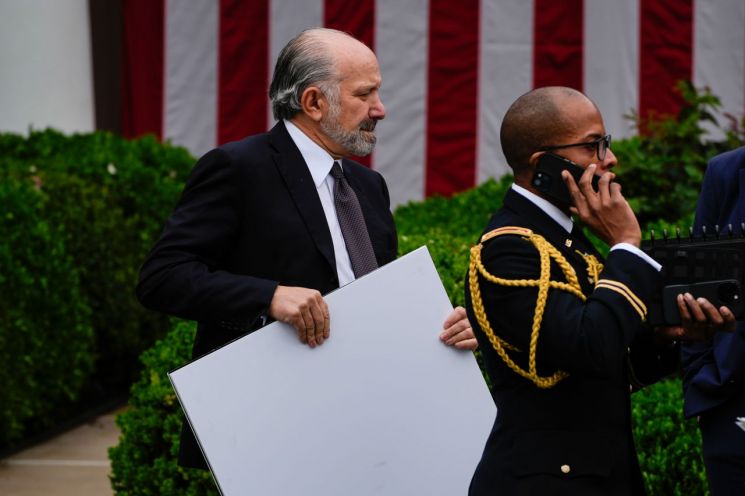
On the 3rd (local time), U.S. Secretary of Commerce Howard Lutnick said in an interview with CNN, "I don't think President Trump will withdraw the tariffs," describing reciprocal tariffs as a "restructuring of the global trade order."
He added, "But countries can correct tariffs and much more severe non-tariff barriers," and indicated that "only after that will President Trump negotiate with each country," suggesting the possibility of first removing trade barriers and then negotiating. He emphasized, "They really have to change their ways for us to sit down with them at the negotiating table."
In an interview with CNBC earlier that day, Secretary Lutnick also responded to questions about tariff reductions or exemptions by other countries, saying, "The key is whether they import our agricultural products and treat us fairly." He added, "Over time, the answer to that question will be 'yes,'" and "U.S. products will sell better in other parts of the world."
During the process of pointing out unfair trade barriers of various countries, South Korea's agricultural import regulations were also mentioned. Secretary Lutnick claimed, "We agreed in 2012 to import Korean automobiles, and Korea agreed to import our agricultural products," and "When McDonald's tried to bring in French fries, Korea said it couldn't because we couldn't prove the origin of the potatoes." This can be seen as repeated pressure to resolve not only tariffs on U.S. goods but also various non-tariff trade barriers ahead of reciprocal tariff negotiations.
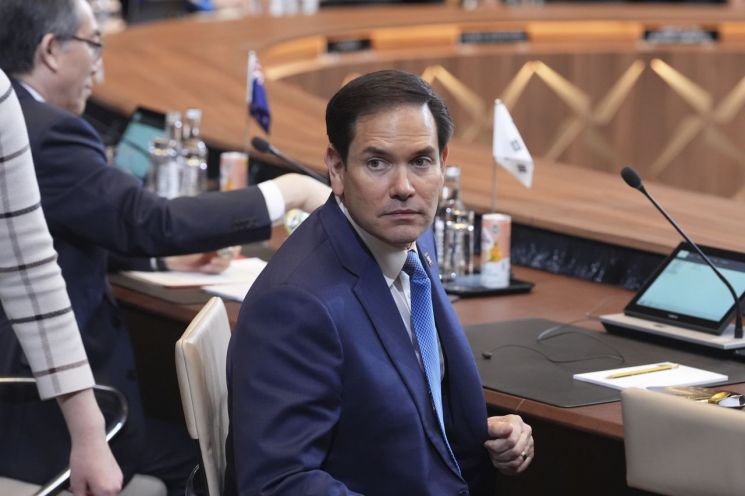
U.S. Secretary of State Mark Rubio also stated that new trade negotiations could be conducted based on reciprocal tariffs. During a trilateral foreign ministers' meeting of the U.S., South Korea, and Japan held in Brussels, Belgium, on the occasion of the NATO foreign ministers' meeting, Secretary Rubio explained that reciprocal tariffs are "measures to readjust trade imbalances, and it is important to proceed with new consultations based on this foundation." He had also previously indicated a policy of "first reciprocal tariffs, then negotiations" last month.
In addition, key aides of the Trump administration simultaneously issued warnings against retaliatory tariffs in response to the implementation of reciprocal tariffs.
In the CNBC interview, Secretary Lutnick said, "Let's try to find ways for the world to treat us more fairly and properly," and argued, "I don't think retaliation by the world is effective. That is foolish." U.S. Treasury Secretary Scott Baesant also said in a Fox News interview the day before, "The advice to all countries now is not to retaliate," adding, "If they retaliate, the situation will worsen," urging acceptance of reciprocal tariffs without resistance.
Earlier, President Trump announced country-specific reciprocal tariffs on all trading partners worldwide at the White House Rose Garden the previous day. A basic tariff of 10% was applied to all countries, and for so-called "worst offenders" judged to have high trade barriers, including both tariff and non-tariff barriers, an additional tariff of "10% plus α" was imposed. South Korea, among the countries with Free Trade Agreements (FTA), faces the highest tariff rate of 25%.
© The Asia Business Daily(www.asiae.co.kr). All rights reserved.