Status of Overseas Real Estate Alternative Investments by Financial Companies
Many Failures in Overseas Office Investments
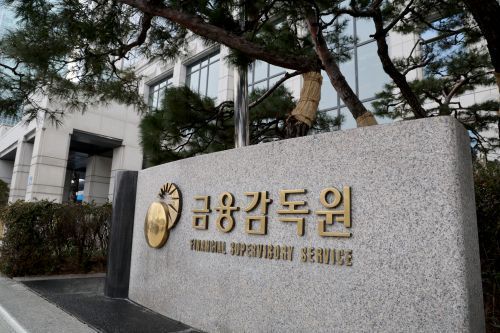
It has been revealed that the scale of overseas real estate investments by domestic financial companies at risk of not recovering their principal amounts reaches 2.6 trillion KRW.
According to the "Status of Overseas Real Estate Alternative Investments by Financial Companies" announced by the Financial Supervisory Service (FSS) on the 4th, as of the end of September last year, the total value of overseas single real estate projects invested in by domestic financial companies was 34.3 trillion KRW. Among these, 7.71%, or 2.64 trillion KRW, had occurrences of Event of Default (EOD).
EOD means that the creditor (financial institution) has the right to recover the loan amount lent to the debtor before maturity. It is a kind of "stop-loss" concept to prevent further losses on the investment. The scale of EOD occurrences has been steadily increasing from 2.5 trillion KRW at the end of March last year, to 2.61 trillion KRW at the end of June, and 2.64 trillion KRW at the end of September.
An FSS official explained, "Despite interest rates declining, the improvement of the overseas real estate market is delayed due to increased global economic uncertainty around the US presidential election." He added, "Especially, the office market continues to suffer from a recession, maintaining a high vacancy rate due to structural factors such as the spread of flexible work arrangements."
The balance of overseas real estate alternative investments in the financial sector was 55.8 trillion KRW, down 0.5 trillion KRW from the previous quarter. By sector, insurance accounted for 30.4 trillion KRW (54.3%), banks 12 trillion KRW (21.5%), securities 7.7 trillion KRW (13.8%), mutual finance 3.6 trillion KRW (6.5%), credit finance 2 trillion KRW (3.6%), and savings banks 0.1 trillion KRW (0.2%).

By region, North America accounted for the largest share at 34.1 trillion KRW (61.1%), followed by Europe at 10.8 trillion KRW (19.4%), Asia at 3.8 trillion KRW (6.8%), and other or multiple regions at 7.1 trillion KRW (12.7%).
An FSS official stated, "Financial companies are likely to face increased losses mainly in office investment assets," but added, "Since the investment scale is not large and the loss absorption capacity is sufficient, the possibility of systemic risk transmission is low." He continued, "We will guide thorough risk management focusing on projects where unusual trends have occurred or where risk exposure and loss rates are high, and encourage appropriate loss recognition."
© The Asia Business Daily(www.asiae.co.kr). All rights reserved.
![Clutching a Stolen Dior Bag, Saying "I Hate Being Poor but Real"... The Grotesque Con of a "Human Knockoff" [Slate]](https://cwcontent.asiae.co.kr/asiaresize/183/2026021902243444107_1771435474.jpg)
















