Leap Toward Becoming a Global Hub Based on Humanities
Hallym University announced on the 4th that it has been finally selected for the 2025 Humanities Korea (HK) 3.0 support project, funded by the Ministry of Education and the National Research Foundation of Korea.
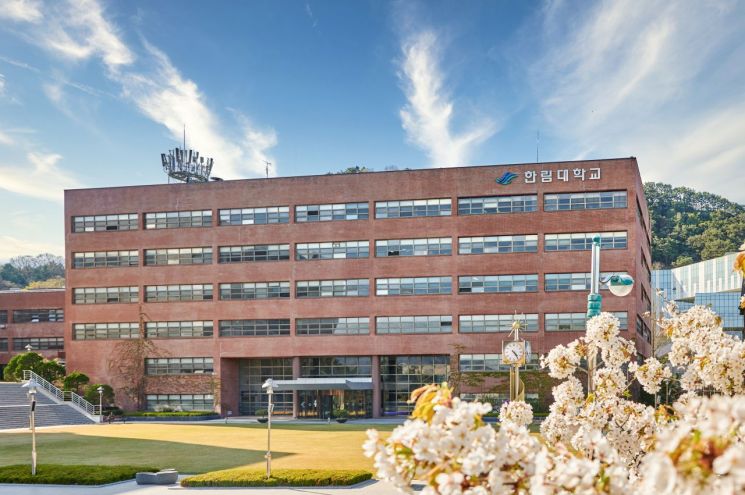
This consortium-type research involves four research institutes: the Africa Research Institute at Busan University of Foreign Studies, the Africa Research Institute at Hankuk University of Foreign Studies, the Global Social Contribution Research Institute at Hallym University, and the France-Africa Research Institute at Jeonbuk National University.
The total consortium research budget is 2 billion KRW annually, with a total of 12 billion KRW supported over six years from 2025 to 2030.
The research funds are distributed with 20% allocated to each of the four research institutes, and the remaining 20% assigned to consortium-wide joint research conducted by the four institutes.
The research project is titled “African MZ Generation and Nexus Humanities: A Study on the Dynamics of Africality and Globality.”
Its purpose is to examine the identity and potential of Africa’s young generation through the concept of nexus amid the rapidly changing global order, and to propose a new paradigm for sustainable international development cooperation through a humanities approach.
In particular, this research focuses on the African MZ generation, which is gaining global attention.
According to UN statistics, by 2050, the African MZ generation will constitute about one-third of the world’s young population and is evaluated as a generation with high potential to lead global social and economic changes.
The Global Social Contribution Research Institute at Hallym University plans to promote comprehensive growth through this project by ▲establishing a stable research foundation ▲strengthening digital research infrastructure ▲expanding global cooperation networks ▲operating educational programs for future generations.
Director Yang Ki-woong of the research institute stated, “Through in-depth research on the African MZ generation, we aim to newly present the connection points between humanities and international development cooperation,” and added, “We will strive to ensure that the research outcomes practically contribute to achieving the Sustainable Development Goals (SDGs) of the international community.”
© The Asia Business Daily(www.asiae.co.kr). All rights reserved.

















