Kim Hyung-won, Director of the Banking Supervision Department at the Financial Supervisory Service
Keynote Presentation at the Joint Policy Conference for Improving Real Estate Credit Concentration
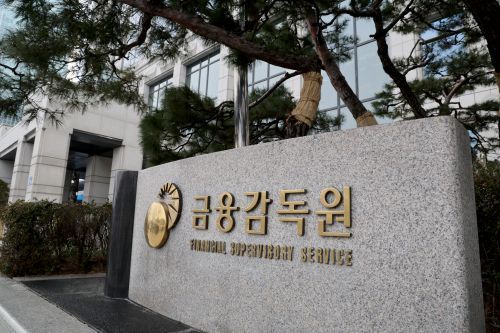
Concerns have been raised that the excessive concentration of real estate-related loans in domestic banks could lead to systemic risks in the financial sector if the real estate market weakens in the future.

On the 3rd, Kim Hyung-won, Director of the Banking Supervision Department at the Financial Supervisory Service (FSS), made this statement during a presentation titled "Current Risks from the Concentration of Domestic Banks in the Real Estate Sector" at the "Joint Policy Conference for Improving Real Estate Credit Concentration" held at the Bankers' Hall in Jung-gu, Seoul.
According to the FSS, the proportion of secured and guaranteed loans by domestic banks increased from 72.2% in 2019 to 74.4% last year. The ratio of real estate-related loans to nominal Gross Domestic Product (GDP) also rose significantly from 57.2% to 65.7% during the same period, indicating a deepening concentration in real estate.
Looking at the status of real estate-related loans, household loans increased mainly through mortgage loans, while corporate loans were predominantly non-residential secured loans, accounting for 91.8%, with their share also increasing. Director Kim noted, "The soundness of household mortgage loans and corporate non-residential secured loans remains at a good level," but expressed concern that "for individual business owners, delinquency and non-performing loan ratios exceed pre-COVID levels, and credit risks could expand if the domestic demand recovery is delayed."
By collateral type, corporate non-residential secured loans are mainly backed by factories and commercial buildings. Due to rising vacancy rates and declining rental prices in commercial properties, the delinquency rate on commercial property-backed loans is on an upward trend.
By industry, the share of real estate and construction sectors in corporate loans has steadily increased over the past five years, with construction showing the highest delinquency rates. Although the real estate sector currently maintains a sound level, the growth rate of non-performing loans has been high.
Regionally, the share of the Seoul metropolitan area (65.8%) has continued to expand, while all other regions outside the metropolitan area have seen a decrease, intensifying the concentration in the metropolitan area. Some regions outside the metropolitan area with high vacancy rates in collective commercial buildings have experienced worsening delinquency rates compared to the pre-COVID period.
Director Kim emphasized, "Although bank lending is growing mainly in corporate loans, conservative business practices focused on secured and guaranteed loans persist," adding, "As a result, the capital allocation function based on credit evaluation is deteriorating, which could weaken banks' role as financial intermediaries for productive sectors."
He also stated, "With the continuous expansion of real estate-related loan proportions, concerns about systemic risks in the financial sector during a downturn in the real estate market have increased," adding, "The cyclical relationship between real estate loans and real estate prices may act as a factor amplifying procyclicality, and as borrowers' repayment burdens increase, it could lead to prolonged consumption contraction and hinder the country's economic growth momentum."
He argued, "A systematic response to the concentration of real estate loans in the financial sector is necessary to restore banks' fundamental role as financial intermediaries and to enhance overall economic productivity," and suggested, "It is necessary to review improvements to regulatory incentive systems so that banks can strengthen their risk management independently and expand funding supply to productive sectors."
© The Asia Business Daily(www.asiae.co.kr). All rights reserved.


















