Corporate Rehabilitation Filings Up 26% Year-on-Year
Annual Record High Set
M&A Announcements Drop to Just 8 Companies
Despite a surge in companies filing for rehabilitation and bankruptcy due to the economic downturn, the number of companies entering the merger and acquisition (M&A) market has actually decreased. Experts attribute this to the growing proportion of 'zombie companies'?rehabilitated firms that are so damaged they find it difficult to recover.
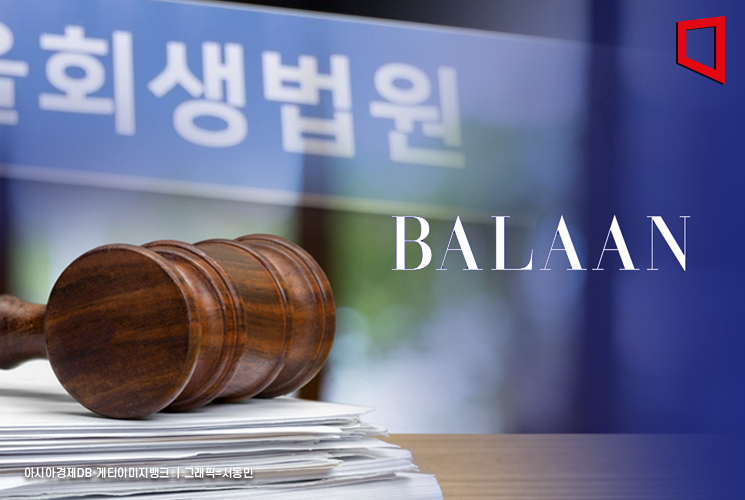
According to the Supreme Court's Judicial Administration Office on the 3rd, 196 corporations nationwide filed for rehabilitation in courts from January to February this year. This represents a 26.4% (41 companies) increase compared to the same period last year (155 companies). On an annual basis, corporate rehabilitation filings are rapidly increasing as well. The number rose from 661 in 2022 to 1,024 in 2023, and further to 1,094 in 2024, setting new records each year. Considering the current growth rate, it is expected that more companies will file for rehabilitation this year than last year.
Corporate rehabilitation is a restructuring process conducted under court supervision, also known as 'court management.' With prolonged recession dampening consumer sentiment, consumer goods companies such as Homeplus and luxury platform 'Balan' have filed for rehabilitation this year. Seven mid-sized construction companies, including Shindonga Construction (ranked 58th in construction capability evaluation), Sambu Construction (71st), and Daewoo Shipbuilding & Marine Engineering Construction (83rd), have also entered rehabilitation procedures.
However, the M&A market for rehabilitated companies is shrinking. According to courts and investment banking (IB) industry sources, eight companies announced M&A deals in the first quarter (January to March) of this year. There was one in January (Iljin Hoist Crane), two in February (Seoryeong Bus and Winia), and five in March (Embrain, Huin, Dongyang Chemical, Dogmate, and Hutech Industry). This is a 33% (four companies) decrease compared to 12 companies in the first quarter of last year.
Experts point to the reduced attractiveness of rehabilitated companies for acquisition as the cause. The number of viable M&A candidates among companies that filed for rehabilitation has decreased accordingly. Kim Sang-man, a partner lawyer at the law firm Hwawoo and an M&A expert, explained, “From the acquirer's perspective, they want companies where a small investment can quickly improve management conditions. A few years ago, many attractive rehabilitated companies were available on the market, but now, many companies are so damaged that M&A activity among rehabilitated firms is not active.”
A representative from a major accounting firm specializing in M&A also noted, “Rehabilitation through M&A is decided after consultations among the rehabilitated company, major shareholders, and court-appointed managers, with court approval. The increase in companies that are difficult to rehabilitate is reflected in this trend.”
As a result, the number of companies failing to find new owners despite multiple M&A announcements is increasing. Winia, a mid-sized home appliance company well known for its kimchi refrigerator 'Dimchae,' had its management rights sale investment contract with Seoul Private Equity (PE) terminated on the 13th of last month and has been undergoing corporate rehabilitation procedures for nearly a year and a half. If the rehabilitation plan is not approved by the 23rd, there is a high possibility that the rehabilitation process will be terminated and bankruptcy declared.
Meanwhile, the number of corporate bankruptcy filings increased by 40% (47 cases) from 117 in January to 164 in February this year. On an annual basis, the numbers have grown from 1,004 in 2022 to 1,657 in 2023, and 1,940 in 2024.
© The Asia Business Daily(www.asiae.co.kr). All rights reserved.
![Clutching a Stolen Dior Bag, Saying "I Hate Being Poor but Real"... The Grotesque Con of a "Human Knockoff" [Slate]](https://cwcontent.asiae.co.kr/asiaresize/183/2026021902243444107_1771435474.jpg)















