The Sixth Hydrogen Charging Station Nationwide Utilizing an Underground Hydrogen Pipeline
The 17th Urban Charging Station Accelerates the Transition to Hydrogen Buses
Ulsan City announced that the "Ulsan Myeongchon Hydrogen Charging Station," located within the Myeongchon Public Garage, which was completed at the end of December last year, will officially begin operations on April 7.
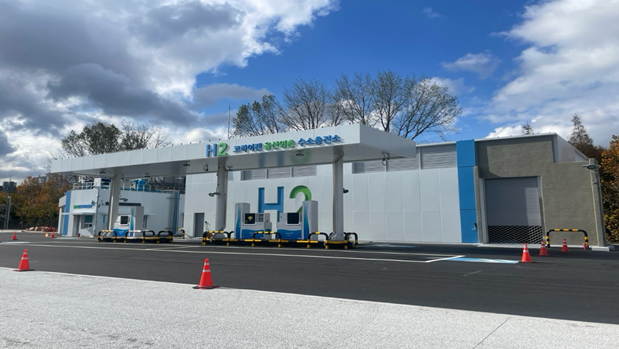
The Ulsan Myeongchon Hydrogen Charging Station is the 17th hydrogen charging station in the Ulsan area, established with a total investment of 8 billion KRW (4.2 billion KRW from the Ministry of Environment and 3.8 billion KRW from private capital).
This is the largest hydrogen charging station in Korea, capable of simultaneously charging three hydrogen buses. It can charge up to 360 large vehicles, including buses and trucks, and 1,440 passenger cars per day. Not only commercial vehicles but also regular passenger cars can be charged here.
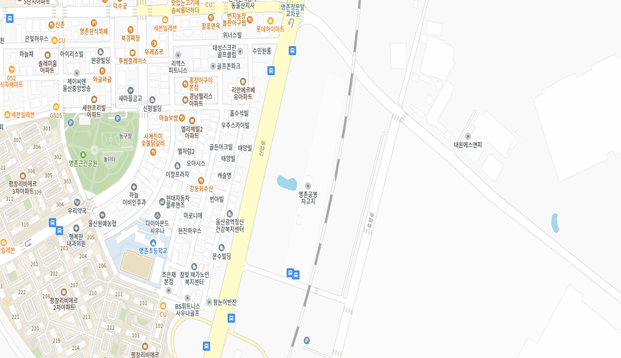
Located on National Route 7, which sees frequent passage of large commercial trucks, the station is expected to greatly enhance convenience for users of hydrogen mobility, including Ulsan city bus operators and local commercial vehicle drivers.
Unlike previous cases where local governments established charging stations with national funding, the Ulsan Myeongchon Hydrogen Charging Station was built and is operated by the private sector as part of a private subsidy project.
Although commercial vehicles such as city buses and trucks running on diesel fuel emit large amounts of carbon, the transition to eco-friendly electric vehicles has been slow due to limitations such as large battery requirements and charging infrastructure. For this reason, hydrogen electric vehicles have been considered an eco-friendly alternative, but the lack of hydrogen charging stations dedicated to commercial vehicles has been a major obstacle.
To address this, Cohyzen, a company specializing in the construction and operation of large-scale hydrogen charging stations, began construction in March 2023 and completed the project in early December last year.
The station will be operated by Kyungdong City Gas, a company specializing in hydrogen charging station safety management and recognized as the top company in the national safety management evaluation.
Notably, the station will operate using a direct pipeline supply method, sourcing hydrogen from the underground hydrogen pipeline (10.5 km) built as part of the nation’s first hydrogen pilot city project, completed in October last year, spanning from Yeocheon Five-way Intersection to Hyundai Motor Company Hyomun Intersection in Nam-gu.
This is the fifth station to use this method, following Together Charging Station, Air Products Hydrogen Charging Station, Sangae SK Hydrogen Charging Station, and Taehwagang Station Hydrogen Charging Station.
Switching from the conventional hydrogen supply method using tube trailer trucks to a hydrogen supply pipeline can improve both the economic efficiency and stability of hydrogen supply, greatly increase the station’s processing capacity, and reduce logistics costs.
Cohyzen CEO Lee Kyungsil stated that the completion of the Ulsan Myeongchon Hydrogen Charging Station is expected to further activate the distribution of large hydrogen commercial vehicles such as hydrogen buses and hydrogen trucks.
A city official said, "With the completion and operation of the largest hydrogen charging station in Korea, the transition of large diesel-based vehicles such as trucks and commuter buses to eco-friendly hydrogen mobility is expected to accelerate. We will do our best to expand infrastructure, such as the Ulsan-type hydrogen city project, for the continued growth of hydrogen cities utilizing hydrogen."
In accordance with the "2030 Ulsan World’s Best Hydrogen City Development Strategy" announced on February 26, 2019, Ulsan City is working to expand the hydrogen pipeline network so that the hydrogen economy can flourish across residential, transportation, and industrial sectors.
To ensure that hydrogen charging infrastructure is accessible within 30 minutes anywhere in Ulsan, the city is prioritizing the deployment of hydrogen pipelines in high-demand areas, gateway regions, and major transportation hubs.
© The Asia Business Daily(www.asiae.co.kr). All rights reserved.
![Clutching a Stolen Dior Bag, Saying "I Hate Being Poor but Real"... The Grotesque Con of a "Human Knockoff" [Slate]](https://cwcontent.asiae.co.kr/asiaresize/183/2026021902243444107_1771435474.jpg)
















