From Oriental Painting to Western Painting...
First Generation Modernist Artists
The Emergence of Experimental Art
Gallery Hyundai, which took its first step as 'Hyundai Hwarang' in Insadong at 10 a.m. on April 4, 1940, is celebrating its 55th anniversary this year with a special exhibition titled '55th Anniversary: The Narrative of Korean Modern Art.' The 55th anniversary exhibition is a rare case worldwide. Gallery Hyundai Director Kwon Youngsook explained, “Gallery Hyundai Chairwoman Park Myungja was the first female gallery owner in Korea and early on caught the trend of moving from Oriental painting to Western painting,” adding, “At a time when there were no art magazines in Korea, she gathered people who had studied abroad and independently published a gallery magazine, which was sent free of charge by mail, greatly influencing the domestic art scene.”
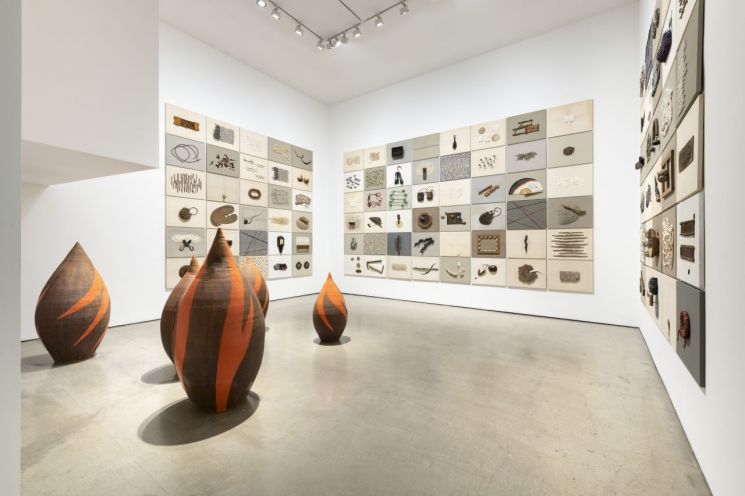 Exterior view of the new exhibition hall where the Gallery Hyundai exhibition '55th Anniversary: The Narrative of Korean Contemporary Art' is being held. Courtesy of Gallery Hyundai
This exhibition introduces 230 works by 36 modern and contemporary artists who have been part of Gallery Hyundai’s 55-year history, displayed across the main building (Hyundai Hwarang) and the new building (Gallery Hyundai).
From Oriental Painting to Western Painting... First Generation Modernist Artists
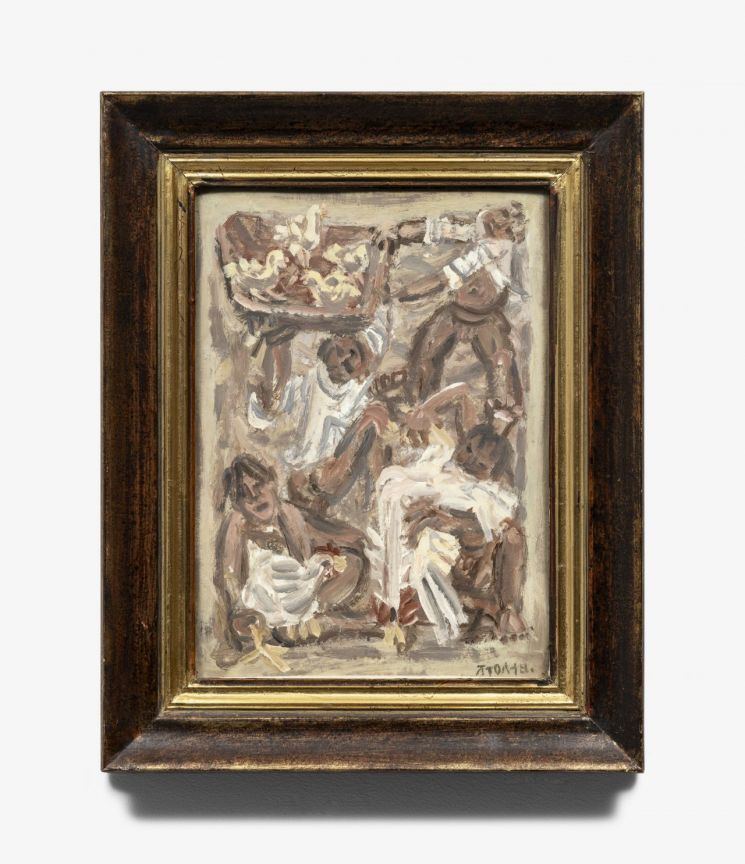
The main building is composed of about 50 works by first-generation Korean modernist artists such as Lee Jungseop, Park Su-geun, and Do Sangbong. In the 1970s, when Oriental painting was predominant, Hyundai Hwarang introduced Western painting trends faster than anyone else. On the first floor, Lee Jungseop’s (1916?1956) 'Chicken and Family,' which expresses traditional Korean subjects such as cows, chickens, and children with lyrical sensitivity and had a great impact on modern art history, was exhibited. After Lee Jungseop’s death, his solo exhibition held at Hyundai Hwarang in 1974 attracted great public attention. Director Choi Jiye explained, “The admission fee was 100 won at the time, and 90,000 people visited. Chairwoman Park Myungja purchased one of Lee Jungseop’s works with the proceeds and donated it to the National Museum of Modern and Contemporary Art.”
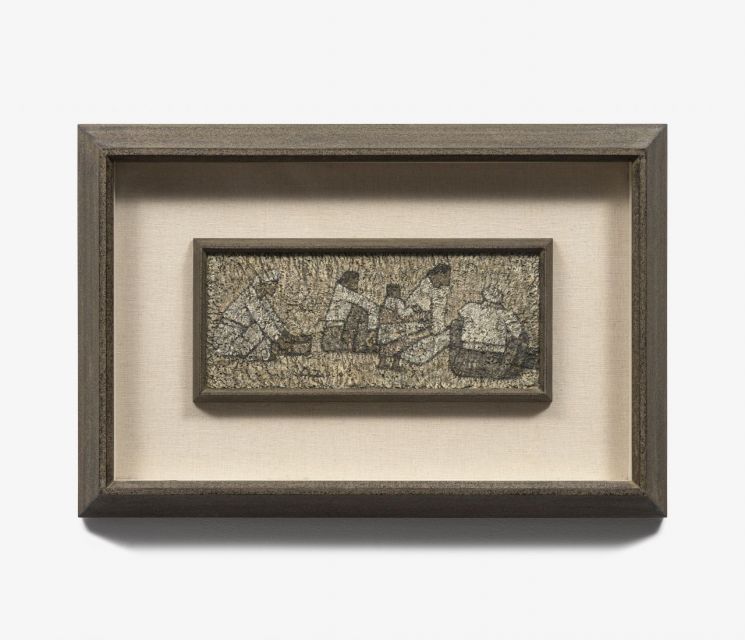
Park Su-geun (1914?1965), known as the ‘People’s Painter,’ who captured the lives and daily routines of ordinary people in grayish-white works, is represented by the piece 'On the Street.' Park Su-geun, who was close to Chairwoman Park Myungja, had promised to give one of his works as a wedding gift but passed away early and could not keep the promise. Director Choi Jiye explained, “Instead, Mrs. Kim Boksun, Park Su-geun’s wife, gifted the work ‘Dried Yellow Croaker’ to Chairwoman Park, who later donated about 50 works by contemporary artists to the Park Su-geun Memorial Hall built in Yanggu, Gangwon Province.”
Additionally, works by Cheon Kyungja (1924?2015), who pioneered a unique style in Korean color painting, Kim Whanki (1923?1974), who modernly reinterpreted traditional landscape painting elements, and Kim Heungsu (1919?2014), known for his distinctive color field division inspired by mosaic techniques, are also exhibited.
The Emergence of Experimental Art
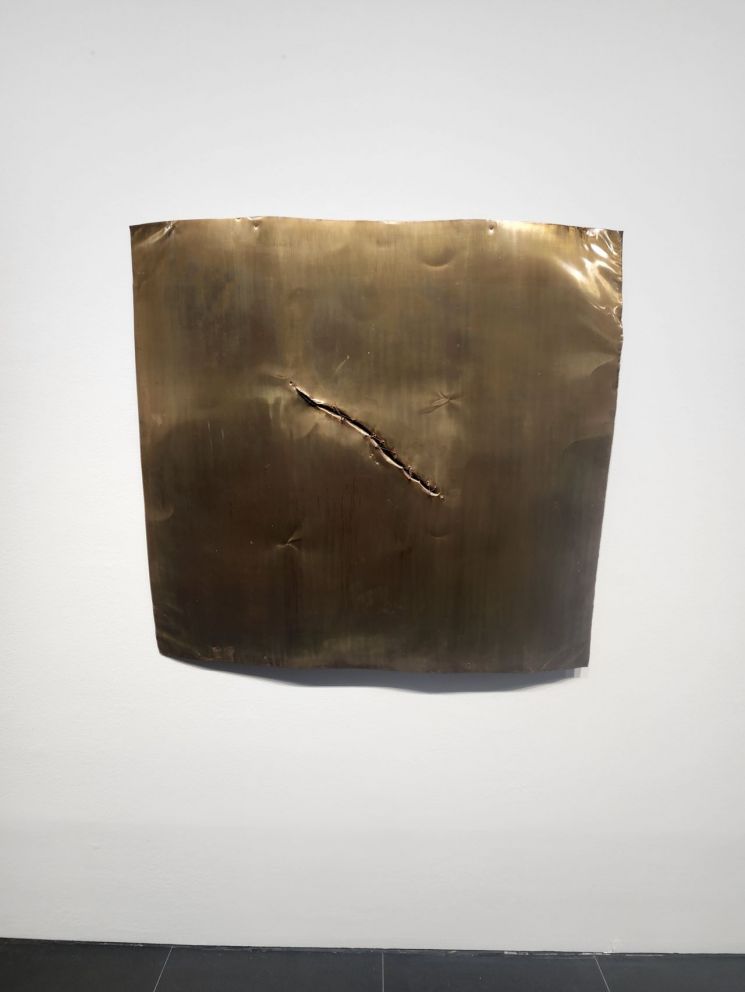
The nearby new building is curated with representative works by ‘Korean Experimental Artists’ and ‘Diaspora Artists.’ '65-5-1' by Kwak Insik (1919?1988), regarded as a pioneer of experimental art, features a copper plate artificially cracked and then stitched back together with copper wire. Director Kwon Youngsook explained, “The artist was very active in the movement for Korean reunification during his lifetime, and this work carries the meaning of questioning whether the divided North and South can be restored.”
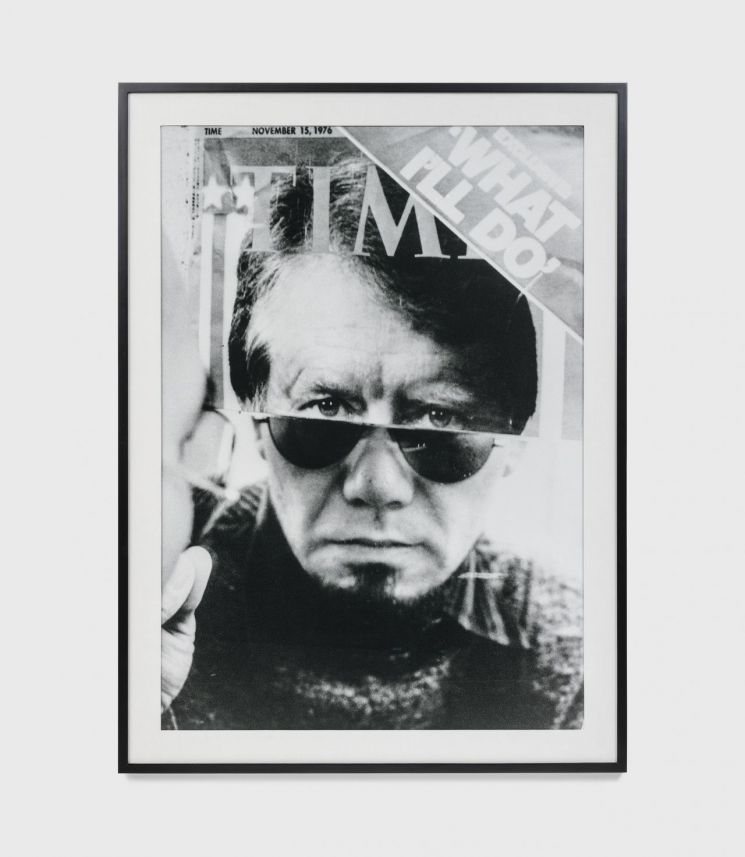
Kwak Deokjun (born 1937), recognized as a pioneer of experimental art, expressed the cynicism and ridicule he endured as a Korean resident in Japan from 1966 to 1969 through painting but completely shifted to conceptual art from 1970. Works such as 'Carter and Kwak' combine the upper half of the president’s portrait from Time magazine covers with his own lower half, continuing his artistic narrative from President Jimmy Carter to President Obama. Director Kwon Youngsook explained, “When President Obama was re-elected, the Time magazine photo of him appeared sideways, making it impossible to maintain the existing concept, so the series was discontinued.”
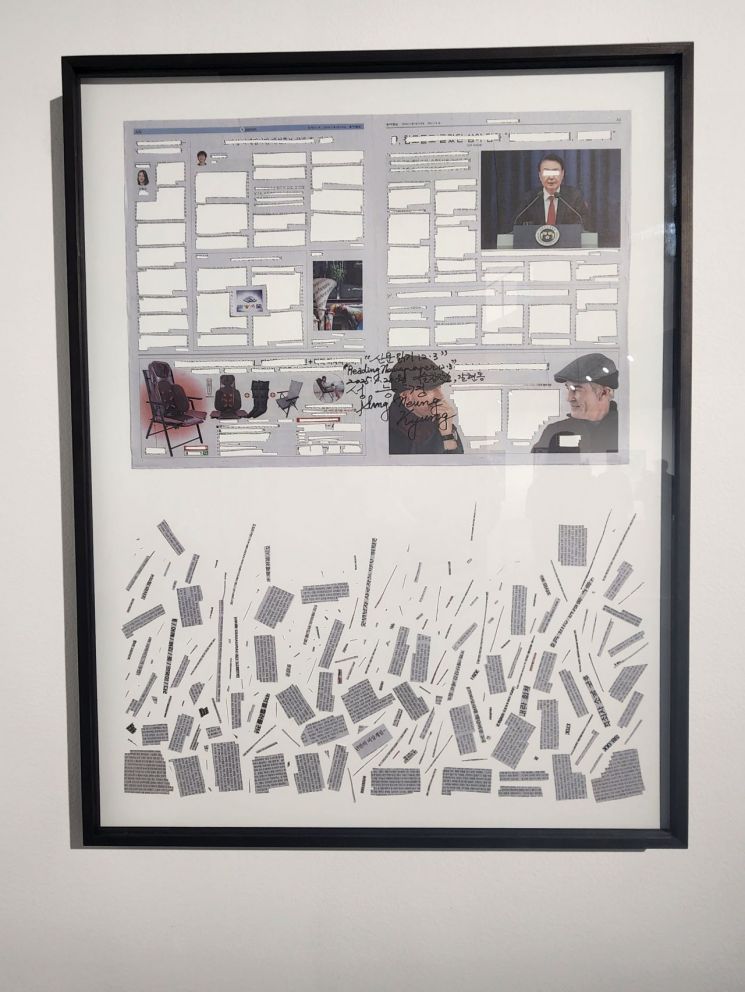 A photo work created by artist Seongneung-gyeong using the Dong-A Ilbo newspaper that prominently featured the martial law incident that occurred on December 3 last year. Photo by Seomideum.
Sung Nungkyung (born 1944) unveiled photographic works using the Dong-A Ilbo newspaper, which prominently covered the martial law incident that occurred on December 3 last year, along with a performance video titled ‘Reading the Newspaper’ conducted with 100 people in 2023.
The exhibition runs until May 15. From May 22, the second part of the exhibition will introduce representative works by Korean artists active in France from the late 1970s and painters known for abstract styles since the mid-1980s.
© The Asia Business Daily(www.asiae.co.kr). All rights reserved.
![Clutching a Stolen Dior Bag, Saying "I Hate Being Poor but Real"... The Grotesque Con of a "Human Knockoff" [Slate]](https://cwcontent.asiae.co.kr/asiaresize/183/2026021902243444107_1771435474.jpg)

















