Half of Gwangsan-gu Residents Say
"a 4-5% Increase in Compensation Is Appropriate"
Survey Reveals High Dissatisfaction with Military Noise Compensation System
"It is unreasonable that we work in the same area and hear the same fighter jet noise, but cannot receive compensation just because we are not residents."
Among residents who live or work in the noise control areas of Gwangsan-gu, Gwangju, dissatisfaction with the military noise compensation system and demands for improvement are high.
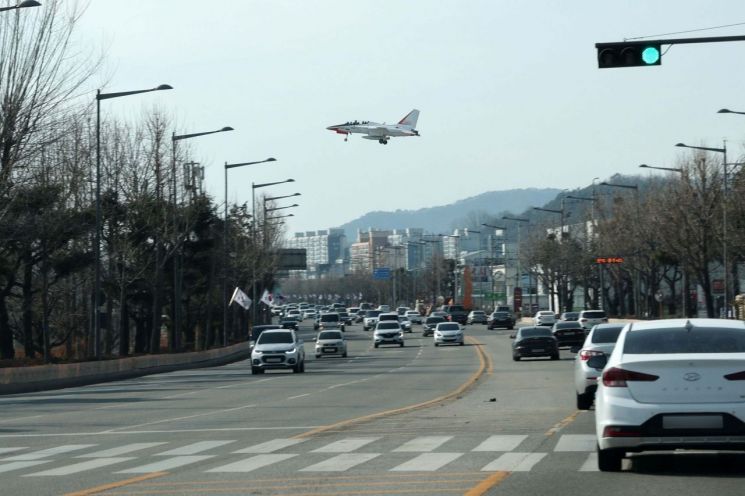
Gwangsan-gu conducted a survey from February 3 to 21, targeting 1,150 local residents, to assess their awareness and the actual situation regarding the military noise damage compensation system, and announced the results on the 2nd.
Nearly half of the respondents (47.5%) answered that "an increase of 4-5% in compensation compared to the previous year" would be appropriate, while 6 out of 10 (62.6%) pointed out that "the inflation rate has not been reflected."
There were also significant concerns regarding the current law, "Act on the Prevention of Noise and Compensation for Damage from Military Airfields and Shooting Ranges," which applies to compensation. 79.6% of respondents said that "not only residents but also workers in the noise areas should be included as compensation recipients." Under the current system, compensation is only provided based on residence, so workers or merchants who experience noise all day in the same area are excluded.
When asked about satisfaction with the current compensation, the response "dissatisfied" (43.8%) was more than twice as high as "satisfied" (18.7%), revealing distrust and fairness issues with the overall system. Regarding the criteria for reducing compensation based on the time of moving in or distance to the workplace, 35.7% "disagreed," and 38% "disagreed" with the difference in compensation standards between large cities and ordinary cities.
The perceived level of damage was much higher. 87.5% rated military noise as "serious," and experiences of damage due to noise included disruption of daily life (67.8%), sleep disturbance (35.6%), health issues (31.5%), and decline in property value (31.5%).
The demand for relocation of the military airport was also strongly expressed in this survey. Among policies to reduce noise, 62.4% chose "relocation of the military airport" as the top priority, and in the final open-ended question, 34.8% made the same demand.
Park Byungkyu, head of the district office, stated, "The survey clearly confirmed the structural limitations of the system, such as fairness and lack of reflection of inflation," and added, "Based on citizens' voices, we will establish a practical and reasonable compensation system."
© The Asia Business Daily(www.asiae.co.kr). All rights reserved.
![Clutching a Stolen Dior Bag, Saying "I Hate Being Poor but Real"... The Grotesque Con of a "Human Knockoff" [Slate]](https://cwcontent.asiae.co.kr/asiaresize/183/2026021902243444107_1771435474.jpg)















