Government: "Shared Understanding of the Role in Peace and Stability on the Korean Peninsula"
The debate over the "redefinition of the role of U.S. Forces Korea" is stirring. This follows the distribution of a document titled "Interim National Defense Strategy Guidelines," which prioritizes preventing China's invasion of Taiwan and defending the U.S. mainland, while urging allied countries to respond to threats from North Korea and others. If this plan materializes, South Korea could face immediate challenges such as increased defense cost-sharing contributions and a heavier burden in preparing for North Korean contingencies.
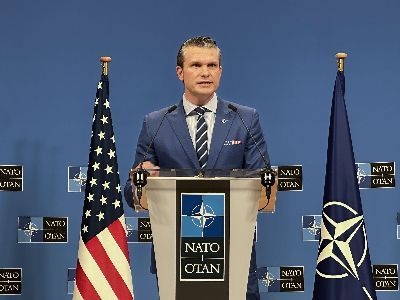
On the 1st (local time), Dan Keane, nominee for Chairman of the U.S. Joint Chiefs of Staff, stated in a written response submitted to the U.S. Senate Armed Services Committee confirmation hearing, "I will evaluate the U.S. military presence in the Indo-Pacific in line with America's national strategic interests and make recommendations to the Secretary of Defense and the President."
Keane's remarks align with the recent discussions about changes in the role and mission of U.S. Forces Korea. Earlier, The Washington Post (WP) reported that U.S. Secretary of Defense Pete Hegseth distributed a document called the "Interim National Defense Strategy Guidelines" around mid-last month, which prioritizes countering China and defending the U.S. mainland, while assigning allied countries in Europe, the Middle East, and East Asia roles in deterring threats from Russia, Iran, and North Korea. Depending on the situation, the role of U.S. Forces Korea could expand beyond the decades-long posture of maintaining peace and stability on the Korean Peninsula and responding to North Korean threats, to include supporting Taiwan's defense and countering China.
This analysis is steadily gaining traction even within U.S. circles. The Brookings Institution, a U.S. think tank, has suggested that in the event of an emergency in the Taiwan Strait, the Trump administration might pressure South Korea to support Taiwan's defense.
On the 31st of last month (local time), Andrew Yeo, Korea Chair at the Brookings Institution, and others published an article titled "Is South Korea Ready to Define Its Role in a Taiwan Strait Emergency?" stating, "Hardliners within the Trump administration toward China are likely to pressure allies to increase support for Taiwan's defense," and added, "South Korea should also be prepared to play a larger role in the Indo-Pacific region, including the Taiwan Strait."
Gwon Boram, a research fellow at the Korea Institute for Defense Analyses (KIDA), noted in a recent report, "There may be demands for renegotiation and expansion of defense cost-sharing agreements, reduction and restructuring of U.S. Forces Korea, scaling back of combined U.S.-South Korea exercises and training, increased burden of extended deterrence costs, and early completion or abandonment of wartime operational control transfer." She emphasized, "It is necessary for South Korea to anticipate how the U.S. will link detailed Korean Peninsula policy issues with U.S.-China competition and to prepare response measures based on clear priorities, either independently or in coalition with like-minded countries."
So far, the South Korean government continues to emphasize that there is no change in the existing role of U.S. Forces Korea. At a regular briefing the previous day, Defense Ministry spokesperson Jeon Ha-gyu said, "The ROK-U.S. alliance has contributed to regional peace and stability by deterring war on the Korean Peninsula through a firm combined defense posture, and we will continue to cooperate with the U.S. side to ensure this direction develops further." A Foreign Ministry official also stated, "Both South Korea and the U.S. share a firm understanding of the role of U.S. Forces Korea in maintaining peace and stability on the Korean Peninsula."
© The Asia Business Daily(www.asiae.co.kr). All rights reserved.

















