The government has decided to investigate whether residents are complying with the mandatory occupancy requirements in areas previously designated as land transaction permission zones, such as Apgujeong, Yeouido, Mokdong, and Seongsu-dong redevelopment and reconstruction complexes in Seoul. In major areas of Seoul, suspicious illegal transactions will be reviewed and, if necessary, referred to the police.
On the 1st, the Ministry of Land, Infrastructure and Transport (MOLIT) and the Seoul Metropolitan Government held a housing policy council meeting at Seoul City Hall to coordinate these matters. Earlier, in February, when Seoul lifted the land transaction permission zones that had been in place, house prices surged mainly in the Gangnam area. In response, MOLIT and related ministries, along with Seoul City, announced housing market stabilization measures in mid-last month.
The meeting reviewed follow-up implementation plans related to the measures announced at that time and discussed last year’s housing supply expansion plans. Attendees included Jin Hyun-hwan, First Vice Minister of MOLIT, Kim Seong-bo, Seoul City’s Deputy Mayor for Administration, and other officials responsible for housing policy.
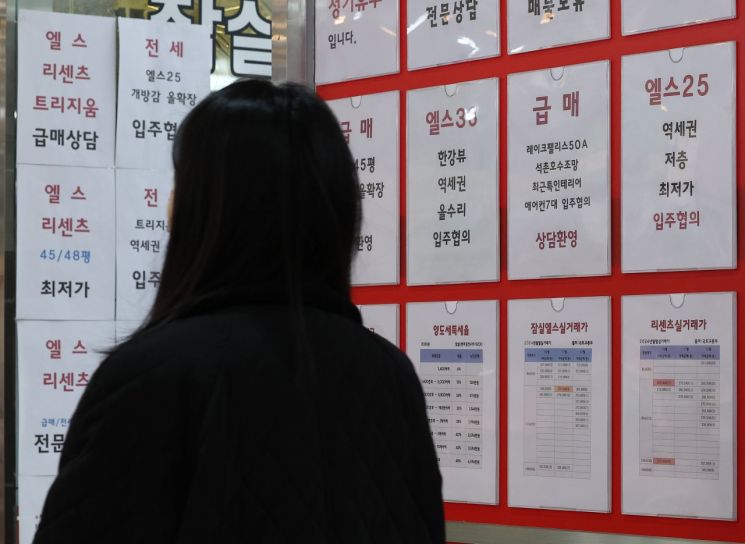 An information notice related to real estate sales is posted at a real estate office in Songpa-gu, Seoul. Photo by Yonhap News
MOLIT and Seoul City have agreed to conduct a joint special investigation targeting areas previously designated as land transaction permission zones to check for violations of mandatory occupancy requirements. The focus will be on areas such as the planned Yongsan Maintenance Depot development zone and existing designated zones including Apgujeong, Yeouido, Mokdong, and Seongsu-dong.
Additionally, regarding apartment transactions in major Seoul areas, they will closely examine the appropriateness of submitted funding plans and supporting documents, as well as suspicious illegal transactions. If necessary, they plan to notify related agencies such as the National Tax Service, Financial Services Commission, and Ministry of the Interior and Safety, and request police investigations.
Seoul City will strengthen group training for field officers in 25 basic local governments within the city to ensure proper handling and management of funding plans and supporting documents. Previously, since the 10th of last month, Seoul City and MOLIT have been conducting ongoing on-site inspections to reduce real estate market disruptions and illegal activities such as price collusion, false listings, and false reporting.
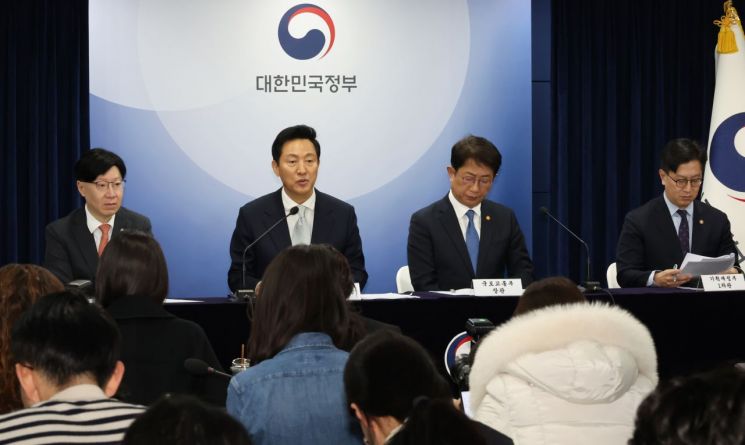 Seoul Mayor Oh Se-hoon (second from left), Minister of Land, Infrastructure and Transport Park Sang-woo, and others are speaking at the announcement of the housing market stabilization measures on the 19th of last month. Photo by Yonhap News
They also reviewed ongoing supply measures. MOLIT ordered the rapid approval of permits for newly built rental housing and the formation of a lead compensation team to promote early projects in the Seoripul district. Seoul City proposed expanding the volume of purchased rental housing to increase the supply of "Miri Nae Jip" (My Pre-Home) for newlyweds and others. To strengthen real estate market analysis, they also requested that city and provincial governors expand the sharing of real estate transaction information.
Jin Hyun-hwan, First Vice Minister of MOLIT, stated, "MOLIT and Seoul City will maintain a high level of vigilance and closely monitor market trends. We will continue to respond with full force until the housing market enters a solid stabilization phase." Kim Seong-bo, Deputy Mayor of Seoul, said, "We will meticulously manage redevelopment projects to ensure that housing supply expands rapidly without disruption, and we will expand the 'Miri Nae Jip' housing for newlyweds in Seoul to help overcome the low birthrate."
© The Asia Business Daily(www.asiae.co.kr). All rights reserved.


















