Fact-Finding Survey on Welfare Blind Spots Until the 18th
"Now I Can Finally Invite Friends to My Home"
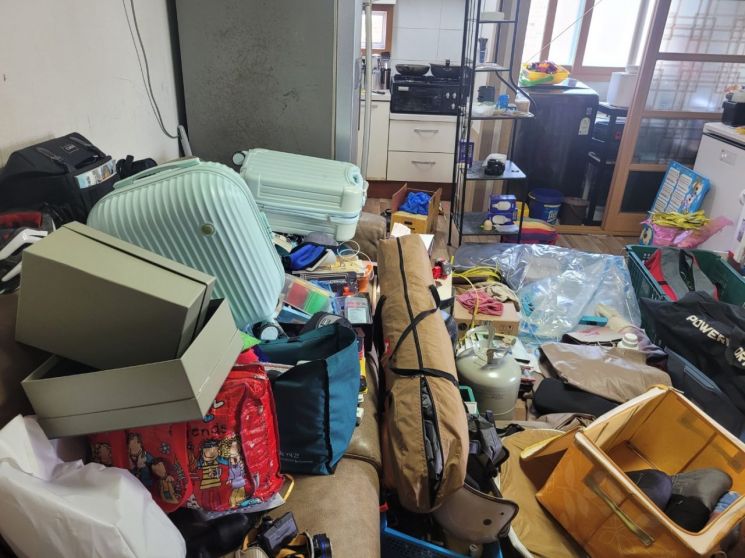 Inside a private home in Usan-dong, Gwangsan-gu, Gwangju, various items are piled up. Provided by Gwangju Gwangsan-gu
"My house used to be too small to invite friends over, but now I can finally have them come."
Last January, at a house in Usan-dong, Gwangsan-gu, Gwangju, the home of Mr. Kim was so full of belongings that there was barely any space to step. While undergoing medical treatment, Mr. Kim was spending lethargic days living with his child, but there wasn't even enough room for the child to lie down comfortably.
This case has become a representative example of how public-private cooperation can improve living conditions. Gwangsan-gu arranged for Mr. Kim to be urgently transported to the hospital and provided integrated care services, including household support. The child was also given access to programs for emotional recovery and career exploration.
Recently, due to the economic downturn, unemployment, and the increase in single-person households, reclusive individuals and hoarding households have emerged as blind spots in the welfare system. As isolation spreads not only among youth but also the middle-aged, there is a growing need for proactive community responses to support self-reliance.
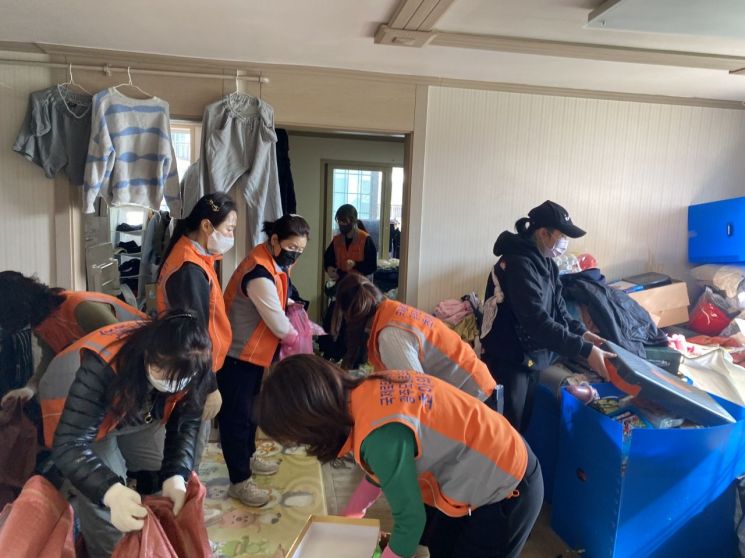 Gwangsan District, Gwangju, is carrying out activities to improve the living environment of households suspected of hoarding through public-private cooperation. Volunteers assist with organizing to support the restoration of daily life. Provided by Gwangsan District, Gwangju.
In this context, Gwangsan-gu announced on the 1st that it will strengthen support for households suspected of hoarding and reclusive individuals, and will begin a fact-finding survey on these groups.
Over the past three years, the district has designated 50 households suspected of hoarding and 19 reclusive households as high-risk cases, providing tailored services in housing, physical, and mental health to resolve crisis situations. To institutionalize this, two related ordinances were enacted last year.
The current fact-finding survey will be conducted until the 18th, focusing on 7,423 mandatory visit recipients and a total of 38,663 households, including those subject to a comprehensive survey on solitary deaths. Through this, Gwangsan-gu plans to take proactive measures such as establishing a crisis response management system, diagnosing risks by household, and providing customized services. In addition, the district will work to identify hidden crisis households early by mobilizing local human resources such as community leaders, 1313 Neighbor Watch, and health activists, and link them to relevant agencies.
Park Byungkyu, the head of the district, stated, "We will go beyond short-term support to establish comprehensive measures so that both the emotional burdens and piles of waste trapped inside homes can come out into the world," adding, "We will provide continuous support, including psychological treatment and follow-up care."
© The Asia Business Daily(www.asiae.co.kr). All rights reserved.
![Clutching a Stolen Dior Bag, Saying "I Hate Being Poor but Real"... The Grotesque Con of a "Human Knockoff" [Slate]](https://cwcontent.asiae.co.kr/asiaresize/183/2026021902243444107_1771435474.jpg)
















