The Calculation Standard is Three Months' Worth of the Average Monthly Wage
The government has announced an enforcement decree that defines the calculation standard for determining habitual wage arrears employers as three months' worth of the average monthly wage, ahead of the amendment to the Labor Standards Act, which strengthens economic sanctions against habitual wage arrears employers, scheduled to take effect in October. The period for providing wage arrears data of relevant employers to the Korea Credit Information Services is set at one year.
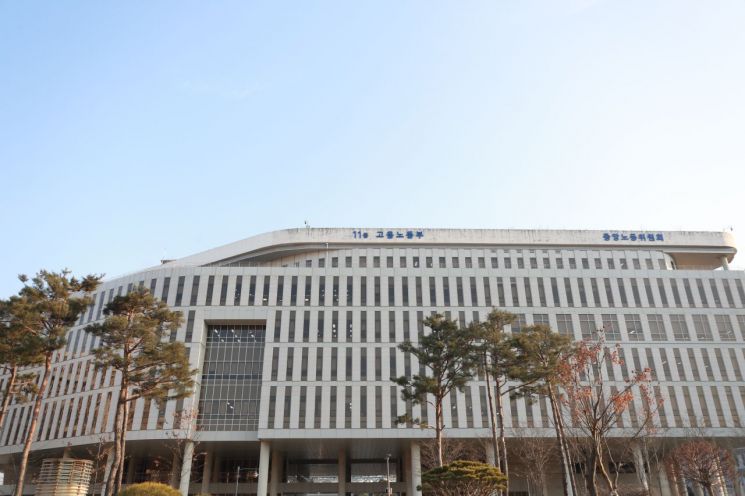
On the 1st, the government held a Cabinet meeting at the Government Complex Seoul in Jongno-gu, Seoul, where it deliberated and approved two presidential decrees under the jurisdiction of the Ministry of Employment and Labor: the amendment to the Enforcement Decree of the Labor Standards Act and the amendment to the Enforcement Decree of the Framework Act on Employment Welfare. The effective dates of the two amendments are October 23 and this month’s 8th, respectively.
The amendment to the Enforcement Decree of the Labor Standards Act was prepared as a follow-up measure to the amendment of the Labor Standards Act, which will be implemented in October. The amended Labor Standards Act strengthens economic sanctions such as disadvantages in bidding for public sector contracts against employers who habitually or repeatedly cause wage arrears to multiple workers. It also includes provisions for the Minister of Employment and Labor to designate relevant employers annually and provide their wage arrears data to the comprehensive credit information concentration agency (Korea Credit Information Services).
This enforcement decree amendment defines the calculation standard for determining habitual wage arrears employers as three months’ worth of wages calculated based on the average monthly wage determined under the Act on Collection of Insurance Premiums for Employment Insurance and Industrial Accident Compensation Insurance. The number of wage arrears incidents is calculated according to the number of workers who did not receive their wages.
The period for providing wage arrears data to the Korea Credit Information Services is stipulated as one year from the date of data provision. To protect workers’ labor conditions, the Ministry of Employment and Labor has also specified the scope of information and data that can be requested from heads of central administrative agencies during supervision, including business and labor income payment statements and information on workplaces delinquent in health insurance premiums.
An official from the Ministry of Employment and Labor explained, "Although credit sanctions against wage arrears employers existed before, the distinctive feature this time is that credit sanctions can be imposed immediately without a final guilty verdict if wage arrears amounting to three months’ wages are confirmed or if the number of arrears incidents is five or more and the arrears exceed 30 million won." The official added, "The amendment also includes provisions to request necessary information from related agencies in advance to monitor workplaces at risk of wage arrears."
The amendment also includes provisions to exclude habitual wage arrears employers from the provision of wage arrears data if they pay all or part of the arrears before the data provision date and sincerely strive to settle the remaining arrears by submitting a specific liquidation plan.
The amendment to the Enforcement Decree of the Framework Act on Employment Welfare includes provisions that allow an officer designated by the employee stock ownership association to convene a general meeting if the representative is absent or unable to hold the meeting, and if that officer does not convene the meeting, a general meeting can be held by members representing the majority of the entire association.
It also expands the scope of work of the trustee institution (Korea Securities Finance Corporation), which had been limited to supporting the introduction of the employee stock ownership system, to include support for the formation, management, and use of association funds. Additionally, it clarifies the concept of the 'ownership' requirement for shareholding by controlling companies regarding the eligibility of employee stock ownership association members as 'direct ownership.'
The employee stock ownership system allows workers to acquire and hold shares of the company they work for through the employee stock ownership association, promoting workers’ wealth formation, long-term service, and labor-management cooperation.
© The Asia Business Daily(www.asiae.co.kr). All rights reserved.
![Clutching a Stolen Dior Bag, Saying "I Hate Being Poor but Real"... The Grotesque Con of a "Human Knockoff" [Slate]](https://cwcontent.asiae.co.kr/asiaresize/183/2026021902243444107_1771435474.jpg)















