Although the large-scale wildfire that swept through the Gyeongbuk region was barely brought under control, farmers are still struggling with the aftermath of the damage. The disappearance of homes and farmland is accelerating regional extinction, and there are concerns that agricultural production will also be affected.
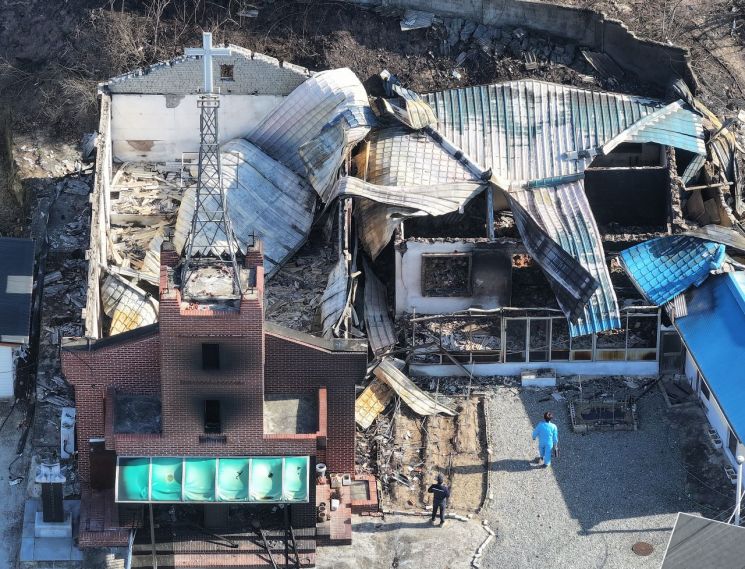
According to Gyeongsangbuk-do on the 1st, the damage to crops in the Gyeongbuk area caused by this wildfire was estimated to be 1,555 hectares. This is equivalent to the size of 2,177 soccer fields. Nationwide, based on data from the 21st to the 28th, the authorities reported that the total area affected by wildfires was 48,238 hectares, and 1,142 agricultural facilities were damaged.
In many areas affected by the wildfire, it is common to see farmhouses with roofs collapsed or only the framework remaining, burned by the fire. Power outages, water supply cuts, and communication disruptions have left evacuees unable to return home, forcing them to move between facilities such as village halls. Although the Central Disaster and Safety Countermeasures Headquarters announced plans to provide stable temporary housing such as prefabricated houses to support evacuees, it is insufficient to fully restore the damage.
The problem is not limited to houses. In most of the affected areas, orchard trees were burned, with branches scorched or unable to bloom. Seedlings planted in fields were also burned or showing growth disorders. As a result, there are concerns that regional extinction in the inland areas of Gyeongbuk will accelerate.
The harvest of specialty products in the northern Gyeongbuk region, which suffered significant wildfire damage, is also expected to decrease substantially. The areas affected by this wildfire, including Uiseong, Cheongsong, and Yeongyang, are all places where regional specialty crops are cultivated. Uiseong County is a major garlic production area, producing 9,700 tons annually; Cheongsong produced nearly 80,000 tons of apples last year, accounting for 10% of the national production. Yeongdeok is the largest pine mushroom producing area in Korea, and Yeongyang County is also a representative chili pepper production area. The core production areas of major agricultural products have been damaged by the wildfire, making this year’s production uncertain.
The Ministry of Agriculture, Food and Rural Affairs plans to analyze the damage to major crops to minimize instability in agricultural supply and demand caused by the wildfire. For spring cabbage, garlic, and apples, crop management councils will be formed by item to monitor growth conditions until harvest, and government rice for evacuee relief will be supplied free of charge to the affected areas, with the Rural-Urban Cooperation Fund being utilized to support affected farms.
© The Asia Business Daily(www.asiae.co.kr). All rights reserved.
![Clutching a Stolen Dior Bag, Saying "I Hate Being Poor but Real"... The Grotesque Con of a "Human Knockoff" [Slate]](https://cwcontent.asiae.co.kr/asiaresize/183/2026021902243444107_1771435474.jpg)















