On-site Consulting for 18 Local Governments
"Protecting Clean Water Together with the Community"
The Yeongsangang River Basin Environmental Office is expanding its customized technical support for the Total Water Pollution Load Management System to 18 local governments in Gwangju, Jeonnam, and Gyeongnam. The aim is to provide practical assistance in operating the system and to enhance water quality improvements that local residents can directly experience.
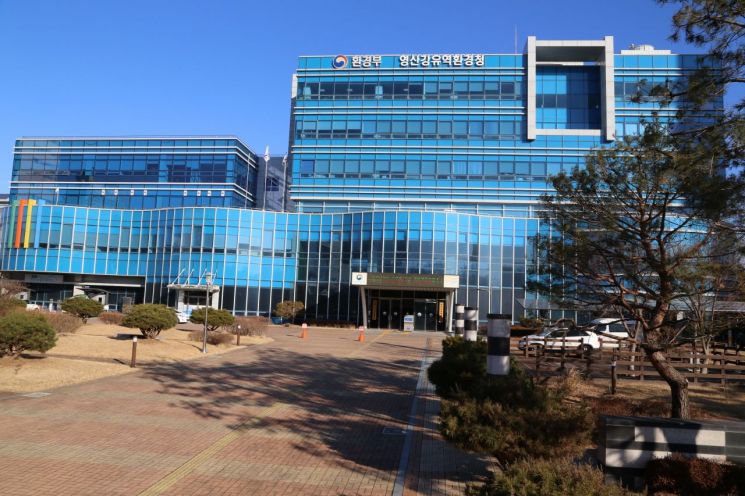
The Environmental Office announced on the 1st that starting from April 2025, it will offer “on-site one-on-one technical consulting” to water quality officials from 18 local governments, including Gwangju City, Jeonnam Province, and Hadong County in Gyeongnam. The support will cover the entire administrative process, including ▲calculation of pollution load ▲preparation of implementation evaluation reports, and more. Experts from related organizations such as the National Institute of Environmental Research and Korea Environment Corporation will also participate.
The Total Water Pollution Load Management System, introduced in 2005, sets target water quality levels for each river and requires local governments to control the total amount of pollutant discharge to meet those targets. The core goal is to balance regional development with water environment protection and to provide residents with more stable and clean water resources.
According to the Environmental Office, as a result of these efforts, the water quality of the Yeongsangang River in 2024 has improved the most in the past 11 years. Currently, each local government is promoting projects such as the construction and expansion of environmental infrastructure, strengthening effluent water quality standards, and reducing non-point source pollution. By 2030, approximately 1.2 trillion KRW will be invested to reduce biochemical oxygen demand and total phosphorus emissions to 88.7% and 73.2% of current levels, respectively.
Commissioner Kim Youngwoo stated, “The Total Water Pollution Load Management System is not just a simple regulation but a core water environment management policy for the sustainable development of the region,” adding, “We will take the lead in creating a clean Yeongsangang and Seomjingang through practical technical support and communication.”
© The Asia Business Daily(www.asiae.co.kr). All rights reserved.
![Clutching a Stolen Dior Bag, Saying "I Hate Being Poor but Real"... The Grotesque Con of a "Human Knockoff" [Slate]](https://cwcontent.asiae.co.kr/asiaresize/183/2026021902243444107_1771435474.jpg)
















