Following the plunge in Asian stock markets two days before President Donald Trump's announcement of reciprocal tariffs, European stock markets also opened on a downward trend.
As of 10:18 a.m. local time, the Euro Stoxx 600 index stood at 537.52, down 0.84% from the previous day. The UK FTSE index fell 0.72% to 8596.61 compared to the last trading day. The French CAC index traded at 7853.21, down 0.79%, and the German DAX index was down 0.66% at 22,314.10, with most European countries' stock markets showing declines.
Large-cap stocks exposed to tariff threats, such as Dutch semiconductor equipment maker ASML, Italian automaker Stellantis listed on the Italian stock exchange, and Danish pharmaceutical company Novo Nordisk, fell around 2%. German chemical company BASF, which had recently surged as a beneficiary of monetary easing policies, was down more than 3%.
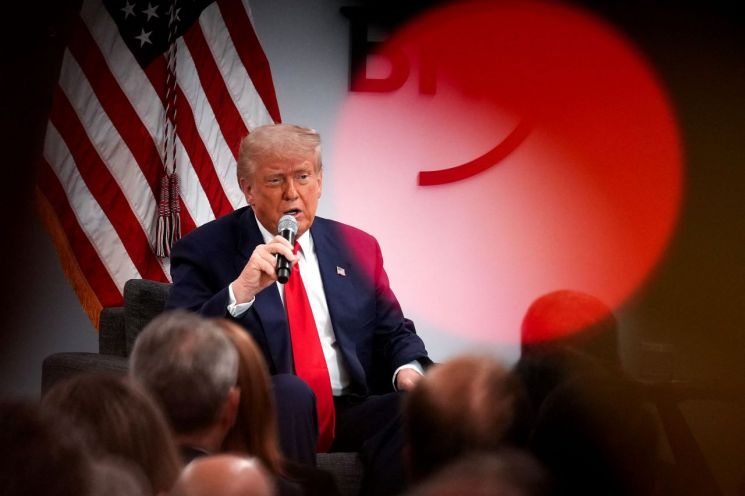
Since the beginning of this year, European stock markets had risen more than 10% at one point, buoyed by expectations of an end to the Ukraine war and expansionary fiscal policies such as increased defense spending. However, following President Trump's sudden announcement of automobile tariffs on the 26th, the US and Asian stock markets, along with Europe, have declined for four consecutive trading days. The Euro Stoxx 50's year-to-date gain fell to the 7% range on this day.
German economic newspaper Handelsblatt reported, "Until now, the German stock market had barely reflected tariff concerns," adding, "Instead, it benefited from a flight of investment funds due to weakness in the New York stock market."
President Trump has announced that starting from the 2nd of next month, reciprocal tariffs will be imposed at levels equivalent to tariffs imposed by other countries. He warned that not only items such as automobiles and steel but also cloud security certification systems and discrimination in electric vehicle subsidies could be subject to tariffs.
© The Asia Business Daily(www.asiae.co.kr). All rights reserved.
![Clutching a Stolen Dior Bag, Saying "I Hate Being Poor but Real"... The Grotesque Con of a "Human Knockoff" [Slate]](https://cwcontent.asiae.co.kr/asiaresize/183/2026021902243444107_1771435474.jpg)















