Highly pathogenic avian influenza (AI) was detected in a dead freshwater cormorant collected around Chukmanje Reservoir in Suwon-si, Gyeonggi-do.
Suwon City has restricted access around Chukmanje Reservoir and conducted disinfection in the surrounding area where the virus was detected.
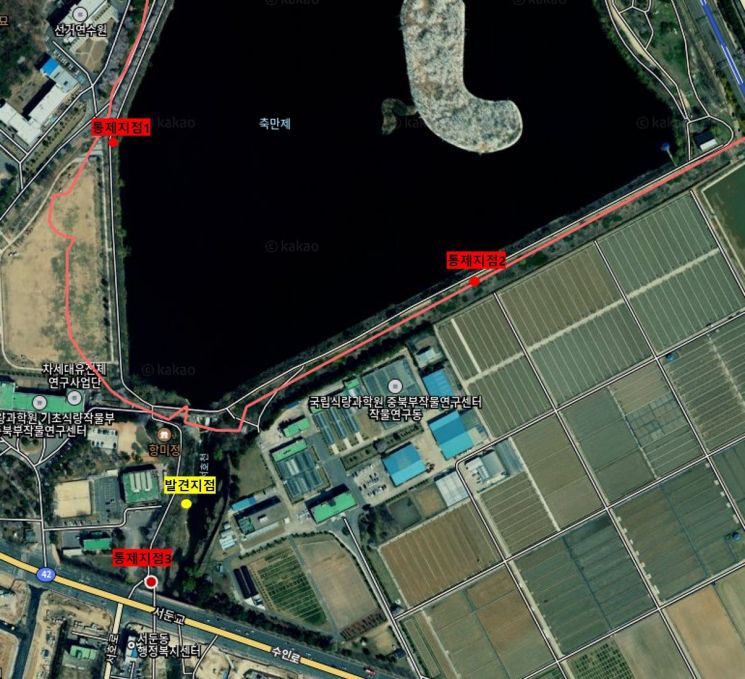
On March 24, Suwon City collected the carcass of one freshwater cormorant near Chukmanje Reservoir (Seodun-dong) and immediately requested AI testing from the National Wildlife Disease Control Center. Subsequently, on March 26, the screening test detected the ‘H5 type AI antigen,’ and on March 29, it was confirmed as ‘highly pathogenic AI.’
The Gyeonggi-do Livestock Hygiene and Veterinary Support Headquarters assisted with initial quarantine measures. Disinfection was carried out within a 60-meter radius of the detection site, and access restriction banners were installed.
 Suwon City restricted access to nearby areas after highly pathogenic avian influenza (HPAI) was detected in dead freshwater cormorants collected from Chukmanje. Photo by Suwon City
Suwon City will restrict access and conduct disinfection on the Chukmanje walking trail and Seohocheon entrance road until April 14. A 10 km radius around the detection site has been designated as a wild waterfowl surveillance zone, with enhanced monitoring in place.
Additionally, nearby farms and other locations have been disinfected, and an access restriction order was issued on March 31. Poultry farming households received text messages informing them of the AI outbreak and the quarantine measures.
Suwon City is strengthening surveillance of wild birds exhibiting abnormal behavior and carcasses, and will promptly collect and test any carcasses found.
A Suwon City official stated, "We ask citizens to actively cooperate with the access restriction measures to prevent the spread of AI," and urged, "Please avoid contact with migratory birds and maintain a safe distance when walking near reservoirs or rivers."
© The Asia Business Daily(www.asiae.co.kr). All rights reserved.
![Clutching a Stolen Dior Bag, Saying "I Hate Being Poor but Real"... The Grotesque Con of a "Human Knockoff" [Slate]](https://cwcontent.asiae.co.kr/asiaresize/183/2026021902243444107_1771435474.jpg)















