U.S. Congress Releases 30-Year Long-Term Budget Outlook
Fiscal Deficit Remains Substantial
Population Projected to Begin Declining from 2033
Federal public sector debt in the United States is projected to rise to 107% of Gross Domestic Product (GDP) by 2029, surpassing the highest level reached immediately after World War II. If the U.S. government continues its policies to curb foreign inflows, the U.S. population is expected to begin declining from 2033, seven years earlier than previously anticipated.
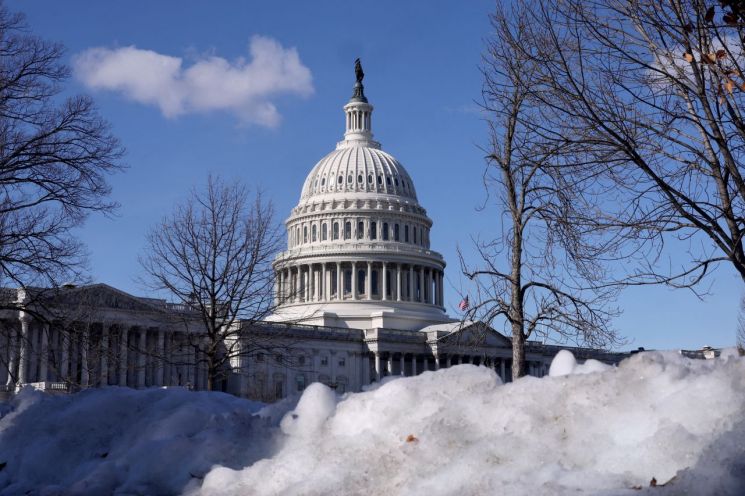
On the 27th (local time), the Congressional Budget Office (CBO) released a long-term budget outlook for the next 30 years (2025?2055), forecasting that debt will reach 156% of GDP by 2055 and continue to increase thereafter.
In the report, the CBO warned, "As debt increases, economic growth slows, interest costs paid to foreign investors holding U.S. bonds rise, and significant risks to fiscal and economic outlooks may arise," adding, "Legislators may also face constraints when choosing policies."
The day before, the CBO also warned that if the U.S. Congress does not raise the debt ceiling, the federal government could default as early as the end of May. Currently, federal government debt stands at $36.1 trillion, having already reached the debt ceiling on January 21, and the Treasury Department is using existing cash assets and special measures to secure necessary funds.
The CBO expects the U.S. fiscal deficit to remain large over the next 30 years. The ratio of fiscal deficit to GDP over the next 30 years is projected to be 6.3%, more than 1.5 times the average ratio over the past 50 years, and is expected to reach 7.3% by 2055.
Federal spending is projected to steadily increase, reaching 26.6% of GDP by 2055. The CBO explained that spending has only exceeded this level twice before: during World War II and the COVID-19 pandemic.
The CBO stated, "Rising interest costs, major healthcare programs including Medicare, and Social Security spending over the next decade are driving the increase in federal spending."
The CBO also forecasted that the U.S. population will begin to decline from 2033 without immigrant inflows. This is seven years earlier than the previously expected 2040 start of population decline excluding immigration.
Regarding this, Bloomberg News noted, "Last year, the CBO expected the U.S. population to start declining in 2040," adding, "This outlook highlights the risks of strict immigration policies implemented amid broad measures by the Trump administration to curb foreign inflows."
Regarding inflation, it is expected to slow down to the Federal Reserve's long-term target of 2% by 2027 and maintain a similar level from 2027 to 2055.
© The Asia Business Daily(www.asiae.co.kr). All rights reserved.

















