Review of Emergency Tariff Imposition
Possible Immediate Auto Tariffs on April 2
Potential Revival of 'National Security Study' on the Global Automotive Industry
The Donald Trump administration in the United States is reportedly considering imposing tariffs in two phases, ahead of announcing reciprocal tariffs on the 2nd of next month, according to the Financial Times (FT) on the 25th (local time).
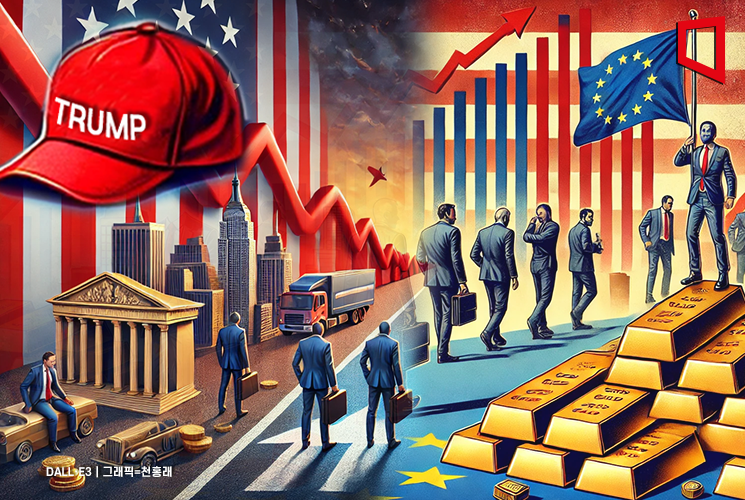
According to sources, the Trump administration is exploring the use of rarely employed legal provisions to immediately impose emergency tariffs until investigations into trading partners are completed.
The discussed measures include initiating investigations into trading partners based on Section 301 of federal law, and immediately applying tariffs using Section 338 of the Tariff Act of 1930 or the International Emergency Economic Powers Act (IEEPA). Based on this, tariffs of up to 50% could be imposed on trade partners. Earlier, Reuters also reported last month that the Trump administration might invoke these provisions.
Sources indicated that President Trump could immediately apply tariffs on vehicle imports on the 2nd of next month and might revive the national security study on the global automotive industry, which was suspended during the first phase of the trade war. President Trump stated the day before that auto tariffs could be announced "within the next few days."
Another recently discussed but unlikely to be adopted measure is Section 122 of the Trade Act of 1974. This provision allows the U.S. to temporarily impose tariffs capped at 15% for up to 150 days.
President Trump has caused confusion by threatening trading partners with tariffs and then changing his stance on the timing of their imposition. FT pointed out that although Trump announced destructive tariffs on allies such as Mexico and Canada, he withdrew the tariffs within hours after intense lobbying from businesses.
While President Trump indicated the day before that he would impose significant tariffs on trading countries, he also suggested that many countries might receive exemptions. After previously taking a hardline stance of "no exceptions," he said as the reciprocal tariff announcement date approached that "many countries might be exempted." FT interprets these mixed messages as reflecting ongoing debates within the Trump administration over new tariff systems and enforcement methods.
As President Trump complains that trading partners treat the U.S. unfairly, sources say officials appear more focused on using tariffs to offset lost tax revenues due to tax cuts rather than as a bargaining chip in negotiations with governments.
© The Asia Business Daily(www.asiae.co.kr). All rights reserved.

















