Amendment to the Basic Korean Language Act Passes National Assembly
Mandatory Establishment of Councils in Central Government Agencies
Japanese-Style Sino-Korean and Foreign Terms to Be Replaced with Korean Expressions
On March 25, the Ministry of Culture, Sports and Tourism announced its commitment to further improve complex policy terminology, following the passage of an amendment to the Basic Korean Language Act in the National Assembly. The amendment mandates the establishment of a Technical Terminology Standardization Council and requires the council to hold annual meetings.
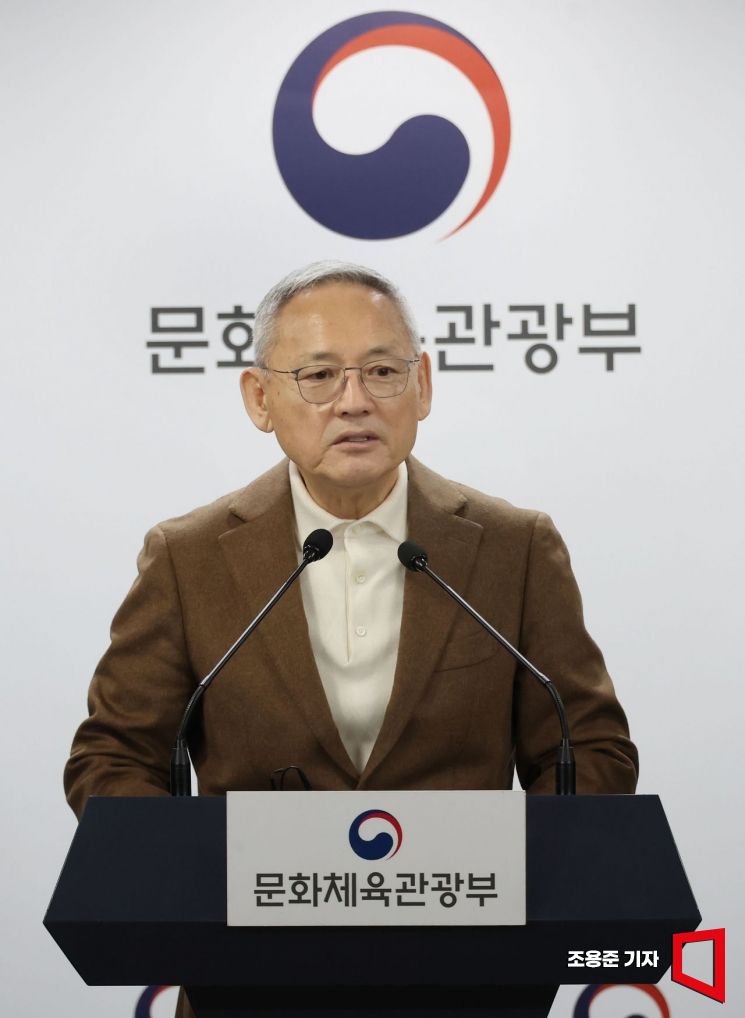
According to the amendment, a Technical Terminology Standardization Council must be formed, and each council is required to convene at least once a year. Until now, central government agencies, including the Ministry of Culture, Sports and Tourism, have worked to replace Japanese-style Sino-Korean words and foreign terms. However, since there was no obligation to hold council meetings, each agency had to rely on its own efforts. Despite some changes-such as replacing "waiting room" with "greeting room" and "IP" with "intellectual property"-complex terminology has continued to be widely used.
With the amendment to the Basic Korean Language Act passing the National Assembly on March 20, Technical Terminology Standardization Councils will now be established in all 48 central government agencies. Previously, only 33 agencies had such councils, and since the system was introduced in 2017, only 21 agencies have ever held a council meeting.
Minister Yoon Inchon stated, "With this amendment to the Basic Korean Language Act, we will continue to promote the establishment of Technical Terminology Standardization Councils to central government agencies. We will actively work to refine policy terminology that directly affects people's daily lives and replace complex terms with more accessible Korean expressions, thereby enhancing public access to policy information."
© The Asia Business Daily(www.asiae.co.kr). All rights reserved.
![Clutching a Stolen Dior Bag, Saying "I Hate Being Poor but Real"... The Grotesque Con of a "Human Knockoff" [Slate]](https://cwcontent.asiae.co.kr/asiaresize/183/2026021902243444107_1771435474.jpg)















