Service Launched for Spatial Innovation Zone Pilot Sites
Four Candidate Areas Including Yangjae Station Transfer Center and Cheongnyangni Station
Draft Plans to Be Prepared, with Zone Designations Possible as Early as Next Year
Seoul City will actively promote the pilot project for the 'Spatial Innovation Zone,' which relaxes regulations on building use, floor area ratio, and building coverage ratio to create growth hubs in the urban center.
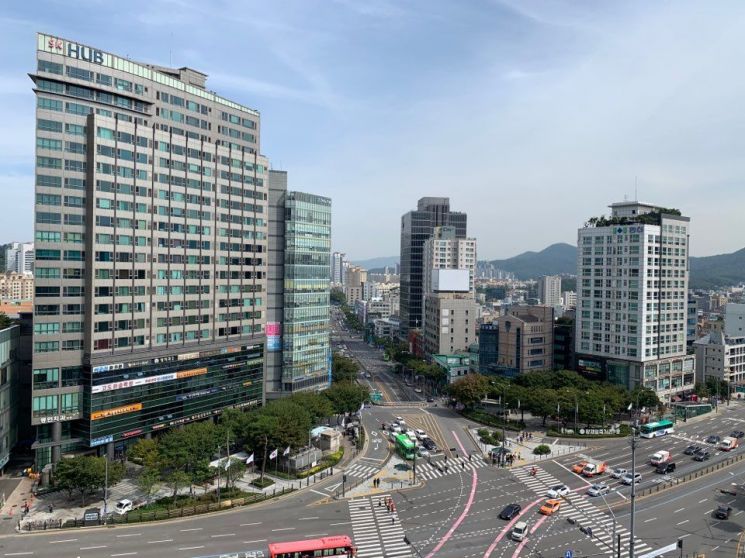
On the 25th, Seoul City announced that it will begin a service next month to prepare a development plan (draft) for candidate sites of the Spatial Innovation Zone pilot project. The service is planned to be completed by October next year.
The Spatial Innovation Zone is a 'special urban planning zone,' for which a legal foundation was established through the revision of the National Land Planning and Utilization Act in February last year, and it has been officially implemented since August last year.
The Ministry of Land, Infrastructure and Transport selected 16 candidate sites for the pilot project, including four in Seoul. The selected areas are Yangjae Station Complex Transfer Center, Gimpo Airport Station Complex Transfer Center, Doksan-dong Air Force Base in Geumcheon-gu, and the area around Cheongnyangni Station.
Through this service, the city aims to increase the predictability of the project and minimize risk factors. Sequential zone designations are expected to begin as early as next year.
Seoul City plans to actively support the designation of Spatial Innovation Zones in various ways, including establishing development plans (drafts) through consultations with project stakeholders of the pilot sites, reviewing and improving existing plans (drafts), and coordinating administrative procedures.
Among the Spatial Innovation Zones, the designation of Urban Innovation Zones and Mixed-Use Zones requires deliberation by the Central Urban Planning Committee. Since consultation with the Ministry of Land, Infrastructure and Transport is essential for zone designation, the city will closely coordinate with the ministry.
In addition, continuous monitoring of the pilot projects will be conducted, and based on this, the city plans to establish operational standards for Seoul’s Spatial Innovation Zones through system specification and supplementation to ensure stable settlement.
Based on the standards related to the National Land Planning and Utilization Act and considering the city’s conditions, Seoul City will establish operational standards for Spatial Innovation Zones to accommodate creative plans.
The city will also discover additional target sites and explore various realization methods to ensure that Spatial Innovation Zones become a core system for urban transformation.
Jo Nam-jun, Director of the Urban Space Headquarters of Seoul City, said, "Through the Spatial Innovation Zone, we will realize new urban spaces with flexible land use, purposes, density, and building forms," adding, "We will actively promote this service so that the Spatial Innovation Zone can establish itself as an innovative system leading changes in Seoul’s urban space."
© The Asia Business Daily(www.asiae.co.kr). All rights reserved.
![Clutching a Stolen Dior Bag, Saying "I Hate Being Poor but Real"... The Grotesque Con of a "Human Knockoff" [Slate]](https://cwcontent.asiae.co.kr/asiaresize/183/2026021902243444107_1771435474.jpg)















