Japan's "Joint Operations Command" Officially Launched
Unified Command for Ground, Maritime, and Air Self-Defense Forces
Japan's "Joint Operations Command," which commands the Ground, Maritime, and Air Self-Defense Forces, was launched on the 24th.
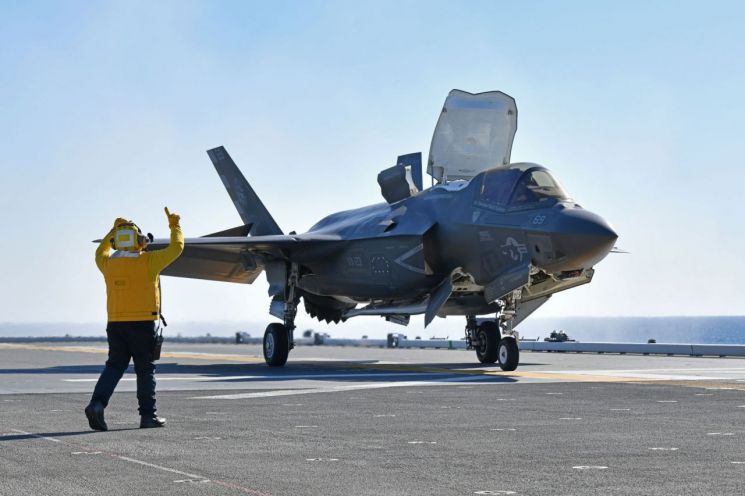
According to foreign media such as Japan's Kyodo News and Yomiuri Shimbun, the Joint Operations Command officially launched at the Ichigaya Defense Ministry building in Tokyo on that day. The first commander appointed was Lieutenant General NAGUMO Kenichiro, a former Air Self-Defense Force officer, and the staff consists of about 240 personnel.
This large-scale organizational restructuring of the Self-Defense Forces' operations is the first since the establishment of the Joint Staff Office in 2006. Japan's Joint Staff Office corresponds to South Korea's Joint Chiefs of Staff.
Until now, operational command of Japan's Self-Defense Forces was handled by the Chief of the Joint Staff Office. However, there were concerns about the heavy workload, as the Chief of the Joint Staff Office was responsible for both operational command of the Self-Defense Forces and assisting the Minister of Defense. In response, the Japanese government established an independent command organization to unify the Self-Defense Forces' command and coordinate unit operations with the United States.
From now on, operational command of the Self-Defense Forces will be handled by the Commander of the Joint Operations Command. The Joint Operations Commander will oversee peacetime surveillance, dispatch of units during disasters, protection of Japanese nationals abroad, missile response, and defense duties in emergencies. The Chief of the Joint Staff Office will focus on assisting the Minister of Defense and managing Self-Defense Forces operations.
The Joint Operations Command is also expected to contribute to strengthening military cooperation between the United States and Japan. Previously, in July last year, the United States and Japan agreed to reorganize the U.S. Forces Japan in line with the launch of the Joint Operations Command and to transfer some command authority from the Indo-Pacific Command to the U.S. Forces Japan. Through this, both countries plan to establish a close cooperation system that enables real-time communication even during peacetime.
However, it remains uncertain whether the Trump administration will implement the plans related to U.S. Forces Japan that were promised by the previous Biden administration. The Japanese government emphasizes that there is no change in the U.S. policy.
© The Asia Business Daily(www.asiae.co.kr). All rights reserved.
![Clutching a Stolen Dior Bag, Saying "I Hate Being Poor but Real"... The Grotesque Con of a "Human Knockoff" [Slate]](https://cwcontent.asiae.co.kr/asiaresize/183/2026021902243444107_1771435474.jpg)















