EU Imposed Anti-Subsidy Tariffs on China Last October
Calls on BMW to Help Resolve the EV Dispute
EU is the Largest Buyer of Chinese Electric Vehicles
Amid U.S. President Donald Trump’s pressure on China using tariffs as a weapon, China has urged the European Union (EU) to resolve the subsidy dispute over Chinese electric vehicles (EVs) and become a key pillar of the multilateral trade system.
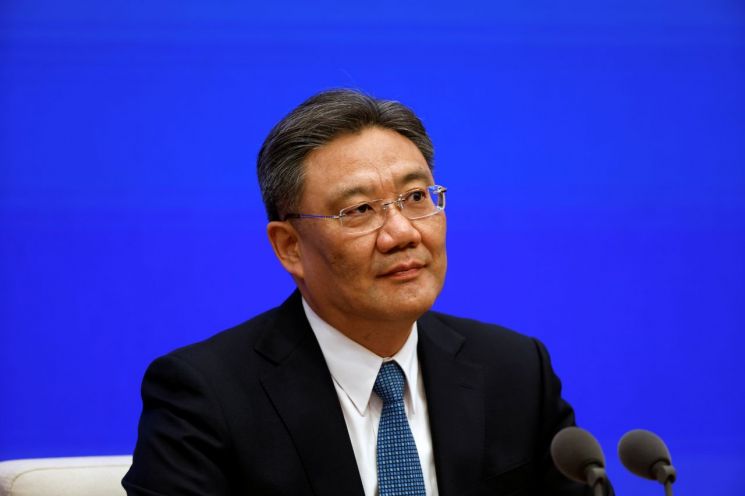
According to the South China Morning Post (SCMP) on the 23rd, Wang Wentao, China’s Minister of Commerce, met with Oliver Zipse, Chairman of BMW, in Beijing ahead of the China Development Forum. Considering the complex international situation summarized as unilateralism and protectionism, Wang emphasized the importance of properly resolving the subsidy dispute between China and the EU. More than 80 executives from global multinational companies are expected to attend the two-day forum starting on the 24th.
Minister Wang Wentao stated, "History has repeatedly proven that tariff wars and trade wars lead to situations where everyone suffers," and argued that if China and the EU end the subsidy dispute, it could send a clear and positive signal to the international community. He also expressed hope that BMW would play an active role in helping both sides reach an acceptable solution as soon as possible.
Earlier, the EU conducted an investigation into subsidies for China’s electric vehicle industry. Following this investigation, the EU raised tariffs on Chinese electric vehicles by up to 45% at the end of October. The reason was that China distorted market order by lowering prices of Chinese EVs through subsidies to domestic companies that violated World Trade Organization (WTO) rules. Chinese authorities tried various means to persuade the EU to prevent the imposition of tariffs but ultimately failed.
After the EU’s tariff measures, shipments of Chinese electric vehicles were hit hard, with sales plunging by 40% in October last year. November sales also dropped to a quarter of the previous volume. The EU is the largest buyer of Chinese electric vehicles and accounts for about 30% of China’s overseas export volume.
German automakers such as BMW expressed opposition to the EU’s tariff measures, fearing that Beijing’s retaliatory actions could affect their business in China. While the EU has imposed anti-subsidy tariffs to curb Chinese EVs, which are increasing their market share in Europe, the situation changed after President Trump took office. Both sides now have to respond to Trump’s America First trade policies. However, the EU also remains cautious of China. The EU worries that tariffs imposed by President Trump on Chinese products could lead to those products entering the European market, weakening the competitiveness of European manufacturing and putting downward pressure on prices.
Despite the EU’s tariff pressure, emerging Chinese EV companies continue to knock on the door of the European market. Chinese EV maker Xiaopeng stated that EU tariffs had a "significant impact" on the economy but would not stop the company’s plans to enter the European market. Minister Wang Wentao said in a statement, "The Chinese government will continue to expand openness to the world and optimize the business environment," adding, "This is a commitment to foreign companies, including the BMW Group."
Meanwhile, the EU recently launched an investigation into subsidies for BYD’s electric vehicle factory. On the 20th, the UK’s Financial Times (FT) reported that the EU is investigating whether China provided unfair subsidies to BYD’s electric vehicle factory established in Hungary.
© The Asia Business Daily(www.asiae.co.kr). All rights reserved.
![Clutching a Stolen Dior Bag, Saying "I Hate Being Poor but Real"... The Grotesque Con of a "Human Knockoff" [Slate]](https://cwcontent.asiae.co.kr/asiaresize/183/2026021902243444107_1771435474.jpg)















