Calls for Presidential Veto Amid Criticism of "Burden on the Young"
Lee Junseok Proposes Alliance with Ahn Cheolsoo, Yoo Seungmin, and Han Donghoon
Ahn Cheolsoo Presents Alternatives to Pension Reform, Including Employment Extension
The aftermath of the national pension reform bill, passed by the National Assembly for the first time in 18 years, is intense. Amid criticism that it "shifts the burden onto the younger generation," political alliances to block the pension reform bill are even being discussed. Attention is focused on whether the pension reform bill could become a major issue if an early presidential election scenario unfolds.
On the 24th, Lee Jun-seok, the presidential candidate of the Reform New Party, held a press conference at the National Assembly and proposed a political alliance to block the pension reform. He argued that "the government should exercise its veto power to withdraw the pension reform bill."
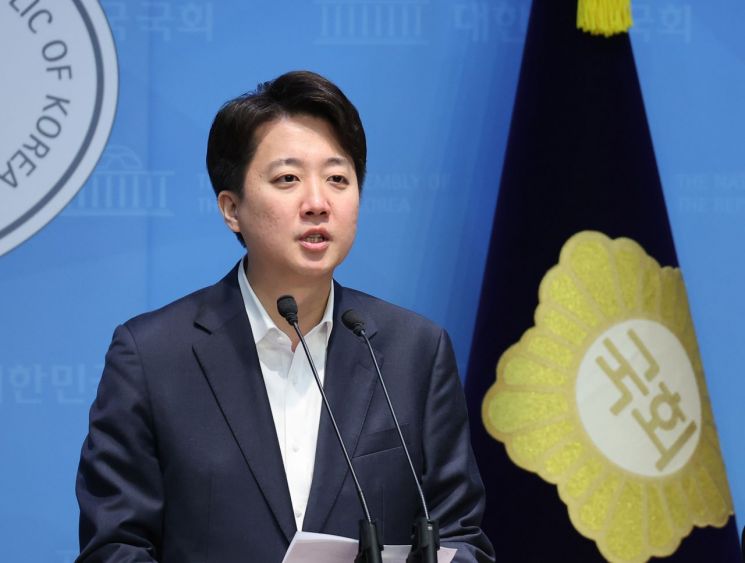
The counterparts he reached out to are Ahn Cheol-soo, a potential ruling party presidential candidate from the People Power Party, former People Power Party leader Han Dong-hoon, and former People Power Party lawmaker Yoo Seung-min. They all collectively stated the day before, "The government should exercise veto power on the national pension amendment." Lee said, "I proposed the alliance out of a sense of crisis that the crucial pension issue might be buried ahead of the judicial super week," adding, "I believe pension should not be excluded as a major agenda in the presidential election."
Ahn went further and proposed an alternative to the pension reform bill. He suggested readjusting the income replacement rate from the 43% agreed upon by both parties to 40% and insisted on the mandatory introduction of an automatic adjustment mechanism. The automatic adjustment mechanism automatically adjusts the insurance premium rate or pension amount according to demographic or economic conditions. Additionally, he proposed an employment extension plan to extend the mandatory national pension payment age from the current 59 to 64 years old by five years. On the same day, Ahn wrote on social media (SNS), "For small and medium-sized enterprises, voluntary retirement age extension should be achieved through employment extension, and for large corporations, reemployment after retirement is the solution."
Voices of criticism are also rising among lawmakers in their 30s and 40s from both ruling and opposition parties. On the 23rd, People Power Party lawmakers Kim Yong-tae, Kim Jae-seop, and Woo Jae-jun, Democratic Party lawmakers Lee So-young, Jang Cheol-min, and Jeon Yong-gi, and Reform New Party lawmakers Lee Ju-young and Chun Ha-ram held a press conference expressing, "The enhanced benefits are enjoyed by the current generation, while the burden falls on future generations." They argued that more than half of the members of the National Assembly's Special Committee on Pension Reform should be lawmakers in their 30s and 40s to reflect the voices of the younger generation. They also proposed injecting at least 1 trillion won annually from the national treasury starting next year to prevent fund depletion.
According to the pension reform bill passed by the National Assembly on the 20th, the insurance premium rate will increase from the current 9% by 0.5 percentage points annually for eight years, reaching 13% in 2033. On the other hand, the income replacement rate will rise from 40% to 43% starting in 2026. This has led to claims that young people, who have to pay higher premiums over a relatively longer period, are at a disadvantage.
© The Asia Business Daily(www.asiae.co.kr). All rights reserved.

















